
Five buildings added to Derelict Sites Register in one of Tipperary largest towns

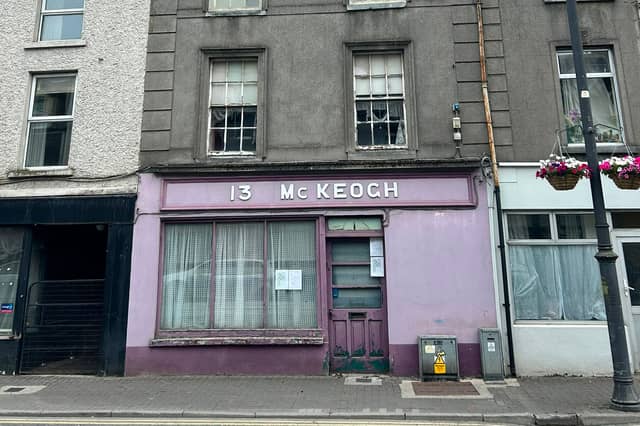

One Nenagh building is on the Derelict Sites Register for ten years
’13 McKeogh’ reads the old-fashioned lettering on the faded purple façade of 13 Mitchel Street in Nenagh, a reminder of the business that once traded there. Today, the building stands empty and is one of five Nenagh properties added to Tipperary County Council's Derelict Sites Register in 2026.
The five additions include two buildings on Mitchel Street, one on Pearse Street and two further properties on the Lower Birr Road and in the Tyone area of the town. Three of the buildings are in what were once prominent locations in Nenagh’s commercial centre but these areas on the fringe of the town centre have started to feature more and more buildings in apparent disrepair.
The oldest entry in Nenagh is 11 McDonagh Street, a property that has remained on the register since 2016. Situated along what many locals refer to as the Dublin Road, the house has now stood derelict for a decade between two seemingly occupied residential properties.
Together, the buildings bring the number of currently registered derelict sites in Nenagh to 11, accounting for just under 10% of all properties currently listed across the county.
For most people, these buildings are simply part of the scenery. Residents pass them every day, perhaps remembering the shops they once housed or the families who once lived behind their doors. But what actually happens once a property is officially declared derelict?
Under the Derelict Sites Act, property owners have a legal responsibility to ensure that their land or buildings do not become, or continue to be, derelict.
Once a site is reported, Tipperary County Council investigates the complaint, establishes ownership and inspects the property to determine whether it meets the legal definition of a derelict site.
Council officials first prepare an inspection report and the owner is then contacted and given an opportunity to address the issues identified.
If no satisfactory action is taken, the council may issue a Notice of Intention under the Derelict Sites Act outlining the works required to bring the property back into an acceptable condition. Owners are given four weeks to make submissions before the property is entered onto the Derelict Sites Register.
Once added to the register, the owner is formally notified and may also receive a further notice requiring specific works to be completed within a set timeframe.
The council can require owners to restore their property to a non-derelict condition, typically within six weeks. Failure to comply can result in financial penalties, while properties in urban areas may also become subject to an annual levy equal to 7% of the site's market valuation for every year it remains on the register.
In more serious cases, local authorities also have the power to acquire derelict properties either through agreement with the owner or by compulsory purchase.