
The clocks go forward, the clocks go back, but there's never enough time
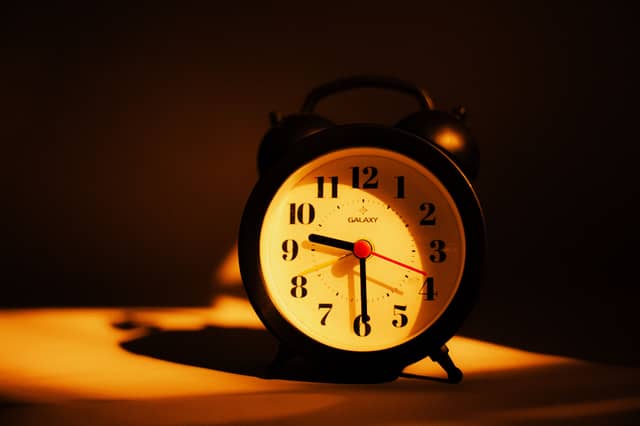

An hour forward, an hour back. Whatever way you look at time, there never seems to be enough
Cows have little interest in clock changes. Neither do children. But twice a year we are gifted plus or minus an hour in bed by people who have apparently never met neither.
My phone adjusts itself overnight, while the rest of the household continues operating as normal. Maybe a week or so will pass when I find myself google-ing how to change the car clock on my Toyota.
On October 25, the clocks go back, and we resume our twice annual debate. Are we gaining or losing? Will the mornings be brighter? And weren’t we supposed to have stopped doing this?
In 2019, the European Parliament voted to end the twice-yearly changes, with 2021 proposed as the finish line. The necessary agreement never followed.
For a debate about saving time, it has consumed quite a lot of it. Iceland keeps the same time throughout the year. Turkey stopped switching in 2016. The difficulty is deciding which time to keep. Brighter winter evenings sound lovely, but the payment comes in darker mornings. We are rearranging daylight, rather than ordering more.
Then I heard a discussion on RTÉ last week with UCD physicist Dr Shane Bergin, which revealed that even the seconds are causing trouble. Apparently, the Earth does not rotate with the consistency demanded by atomic clocks. Occasionally, an extra “leap second” has been added to our official time to keep the two aligned. This is awkward for computer systems, so international timekeepers have agreed to stop the adjustments from next May.
I actually found this reassuring. Even the planet and heavenly bodies cannot maintain the level of punctuality modern life requires. Perhaps the rest of us could be allowed a little flexibility.
My difficulty with October’s extra hour is that I have already spent it. Between farming, college, children and work, I could allocate sixty spare minutes before the kettle boils. An assignment. Emails. Washing. Some administrative task that became my responsibility because I once demonstrated competence and the innocence of eagerness.
I keep saying things will settle down “once this week is over”. We have become strange about spare time. A walk needs a step count. A hobby needs a business plan. Even rest is recommended because it improves productivity, which seems a demanding condition to attach to sitting down.
With Halloween and midterm approaching, there are more opportunities to organise enjoyment. But does every school break need a programme? Can a family have a pleasant afternoon without producing an itenary? Recently, I shared a thought on my Instagram: what if nothing exciting happens today, and it is still a really good day?
Everyone fed. Work reasonably under control. Tea consumed at its intended temperature. There are worse ambitions.
The cows will still need milking, whatever Brussels decides. But perhaps some time afterwards could remain unallocated.
If the Earth is allowed to drift slightly out of step with the clocks, I might stop trying to squeeze quite so much between the clocks hands. I don’t want to get ahead with my extra hour. I would quite like to have it all to myself.