
Tipperary patriot and Government Minister to be commemorated in his native Cloughjordan
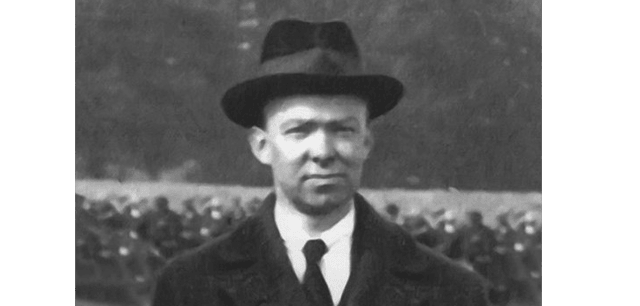

A commemoration will be held by the North Tipperary Memorial committee to remember Irish revolutionary, patriot and former Government Minister Joseph (Joe) MacDonagh in his native Cloughjordan this Sunday, December 18, at 1pm.
Joseph MacDonagh, born in 1883, was the youngest of the MacDonagh boys. Thomas was the eldest then came John, James and finally Joe was educated in Cloughjordan National school where his father was the headmaster. Like his brothers he went to Rockwell College.
During their youth, two of the brothers, James and Joseph, travelled to a neighbouring town in Tipperary and enlisted in the British army.
When their father discovered this he immediately followed them to England he bought back Joe for £5, but, as a schoolteacher, he couldn’t afford the £10 buy out fee fee for James as well.
James became a musician in the British Army Band, and his son later became a founding member of the BBC Symphony Orchestra.
Joseph entered the civil service at an early age. While he was studying for his service exams Joseph worked at several jobs , he worked as a nurse in Grangegorman Psychiatric Hospital, he gave grinds for pupils attending Trinity College Dublin where he met his future wife, Miss O'Toole.
He was accepted into the Civil service into the Excise department where he was appointed to Thurles as an Inland Revenue Officer.
The MacDonaghs had three children Mary (Moll) , Thomas and Joseph.
The Volunteers were formed in 1913. Joseph was heavily involved in the Volunteers acting on committees making many journeys at his own expense up and down the country.
In the aftermath of the 1916 Rising, Joe cycled from Thurles to Dublin as he wanted to see his brother, Thomas, for the last time. He made contact with the religious orders who were attending to the captured leaders. A Fr Aloysius advised him not to try to get in contact with his brother as they were “arresting everyone”.
Joe was interned for a while after the Rising, and, following his release, the authorities sought to transfer his services to a centre in England, but instead of accepting the transfer, he resigned and went to Dublin.
Together with WT Cosgrave he set up and insurance business called the Income Tax Recovery Agency. For a time he was also president of St Enda's College, the school which Patrick Pearse founded.
After settling in Dublin, he took part in municipal politics and was elected an alderman on Dublin Corporation. He was also a member of Rathmines Urban Council.
He assisted de Valera during the East Clare election of 1917, and was subsequently arrested and imprisoned for a speech he made in Reiska, Kilcommon. He was imprisoned in Mountjoy Prison with Séan Treacy, and took part in the hunger strike during which Thomas Ashe died after being force fed.
He later gave evidence at the inquest; in October 1917 he was elected as a member of the Sinn Féin executive.
At the general election of 1918 he was returned as a Sinn Féin candidate in North Tipperary. MacDonagh subsequently became Minister Labour in the First Dáil, and again in the 1921 election.
During the Tan War and leading up to it the MacDonagh household was constantly raided and Joseph was moving all over Dublin in various disguises, including as an American and also disguised as a priest.
Joseph MacDonagh was re-elected to the Dáil in 1921. He voted against the Treaty, and, along with Mary MacSwiney of Cork, sought the imposition of restrictions of the pro-Treaty delegates in the Dáil.
When the Civil War broke out MacDonagh was arrested and imprisoned in Portobello . He escaped from there and took part in the fighting in York Street . He was subsequently rearrested and imprisoned in Mountjoy. A letter written by Joe from his wife during this tragic period still survives.
While in prison he developed appendicitis. In great pain he wrote to his family complaining that he had not seen a prison doctor in 16 days. In another letter he stated that his whole body had broken out in boils.
According to a Republican newspaper, his demands for release for proper medical attention gave his jailers the chance of exercising one of their peculiar forms of cruelty - offering immediate release in return for an oath of allegiance to the British, abjuring his principles and forswearing the Republic, which Joe refused to sign.
MacDonagh was removed to the mater Hospital in December 1922 , and died a few days later on Christmas Day.
All are welcome to attend this event which takes place in the 1916 Memorial Garden across the road from MacDonagh Park which was named after his brother Thomas, the executed Easter Rising leader and signatory to the Proclamation.