
BREAKING: Permission granted for 319 acre solar farm near Kildare racecourse


It will be operational for 35 years
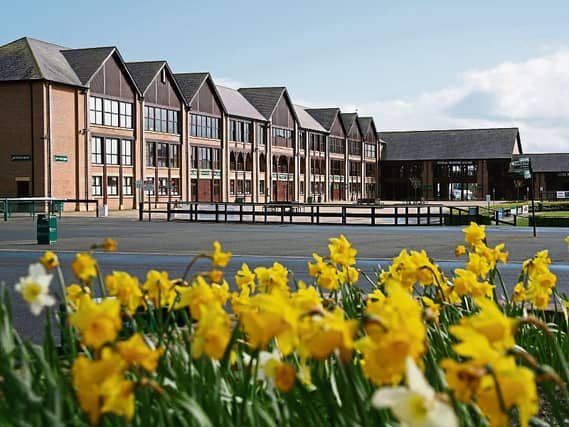
A proposal to build a solar farm on a 319 acre site on the outskirts of Naas, near Punchestown Racecourse, has been given the green light.
An Bord Pleanála has upheld Kildare County Council’s decision to permit Strategic Power Projects (SPP) to install solar panels on ground mounted frames, along with 51 transformer units and a CCTV system, at Swordlestown.
Dublin-based SPP is involved in projects designed to produce electricity without creating emissions which harm the climate.
Last April, SPP won an appeal to An Bord to launch a battery storage project envisaging a compound with 76 battery storage units, each the size of a shipping container, which will be used to produce power, at Dunnstown, near Two Mile House and Brannockstown, just off the Naas to Kilcullen route.
That plan was rejected by Kildare County Council in June 2021 after it received a raft of objections from local residents.
The Swordlestown proposal also attracted a raft of objections before it was approved by Kildare County Council.
Some of these came from figures in the bloodstock industry as well as local politicians and some 120 submissions were made.
The Irish Thoroughbred Breeders Association said there are few places in the world with a breeding and horse racing tradition as rich as County Kildare’s and the industry employs 4,700 people in the county.
It said the area immediately adjoining the proposed site contains five stud farms occupying 533 acres and the development will consist of 230,000 solar panels “across acres of prime grazing land.”
The then chief executive officer of the ITBA Shane O’Dwyer said the plan is not compatible with the business of stud farming and “our members are very concerned that this will have a negative impact on their livelihood.”
Punchestown Racecourse CEO Conor O’Neill said the proposal “is of grave concern”.
However, according to ABP it will not have an “unacceptable impact on the character of the landscape” and will not “seriously injure the visual and residential amenities of the area.”
The development must be carried out within ten years.
It will be operational for a period of 35 years after which the panels and associated structure will be removed and the site reinstated - unless before that permission is granted for retention for a further period.
ABP imposed a number of conditions relating to archaeology, landscaping, a glint and glare assessment, a construction and environmental management plan, fisheries protection, construction traffic management and noise monitoring.