
KILDARE WILDLIFE WATCH: A carrot with no place on your dinner plate

With Nuala Madigan from the Bog of Allen Nature Centre
While many of us enjoy carrots with our roast dinner, this week’s species, although named wild carrot (mealbhacán as Gaeilge) does not provide the dinner time vegetable that we are all familiar with.
Wild carrot is a common native wildflower that can be found growing along roadside verges, grasslands, coastal areas and urban areas including gardens and parks.
The plant can reach a height of 120cm. The flower can be seen from May to September and is described as umbrella-like with blooms that appear reddish before maturing to white in colour.
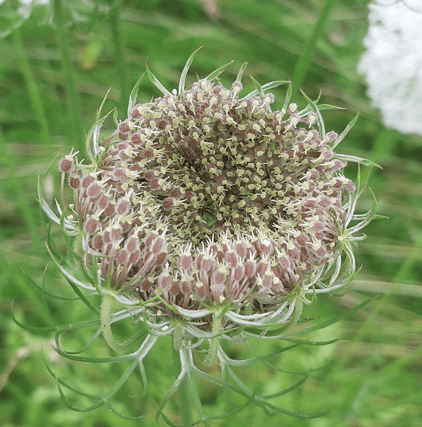
Once pollinated, the flower head turns concave and looks like a bird-nest filled with the seed heads. Eventually this will detach from the stem and the wind will carry it, helping to disperse the seeds. You will have heard the term ‘tumbleweed’ used to describe these structures that detach from plants and are carried in the wind.
The stem is stiff and solid with hairs. The green leaves are arranged alternately along the stem, with each leaf divided into leaflets which create a feather-like appearance. The leaves are said to cause irritation to our skin after exposure.
While the roots do not provide us with carrots for harvesting for dinner, it is said they do smell like carrots — however, I have never picked a wild carrot to check for myself. As you will know, I don’t recommend picking wild plants. According to the Wild Flowers of Ireland website, wild carrot can sometimes be confused with hemlock. Hemlock is a poisonous plant, with an unpleasant smell, and while it prefers to grow along waterways it can be found flourishing on roadside verges and grassy places, similar to wild carrot.
Wild carrot oil, extracted from the plant’s seeds, is used in the food industry for flavouring and it is also used as a fragrance in cosmetics.
I wonder if you will come across wild carrot in your community this week?
Don’t forget, if you come across a wildlife species that you would like help identifying I would be happy to help. Contact me at [email protected]