
Kildare Wildlife Watch: Ladybirds get ready for hibernation
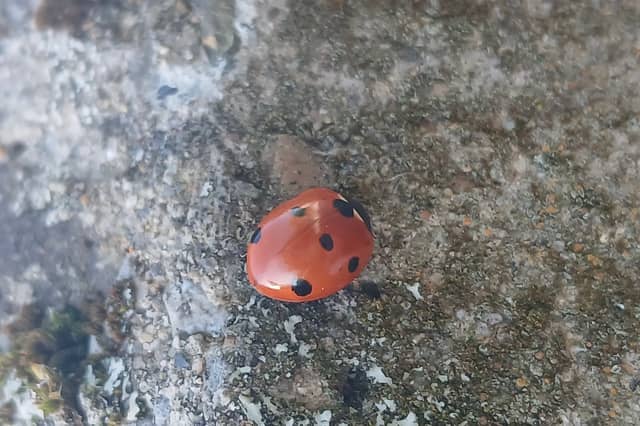

Nuala Madigan of the Irish Peatland Conservation Council reveals the secrets of the life of the ladybird
Ladybirds are one of the most loved and recognisable invertebrates one can come across in our communi;es.
I photographed this seven-spot ladybird (Bóín Dé as Gaeilge) moving across a stone recently. They are invertebrates, which means they don’t have a backbone and can be described as ‘gardener’s friend’ as their diet consists mainly of aphids. Aphids have these specially adapted mouth parts that are needle-like allowing them to suck valuable nutrients and water sap from plants. Aphids are also really good at reproducing as females can give birth to live young that are genetically identical to the female without having to mate with a male.
This means that aphids can cause a lot of harm to plants in our gardens in a relatively short space of time highlighting the importance of welcoming ladybirds to your garden. What happens to a ladybird in winter? Well ladybirds go into a type of hibernation. known as over wintering at this time of year. They can be found over wintering in homes around window frames, in attics, in walls and outside in leaf piles, under tree bark, in cracks in stones and in compost heaps.
During this over wintering phase between October and March, the ladybird does not eat, but lives off fat reserves they have built up over the summer months. In March, the adults emerge and begin to feed and by May the adults mate. The female will lay her eggs on the underside of leaves, choosing plants that aphids like to feed on ensuring the young, which emerge in June and July, have a readily supply of food.
The young are called larvae who must go through up to four phases before pupating. The new generation of adult ladybird will then emerge in August and begin to feed in preparation for their winter hibernation. This winter if you come across an over wintering ladybird let it rest, as in spring it will soon move on and be a helpful friend in your garden next summer.
If you would like help identifying one of your wildlife observation contact the Bog of Allen Nature Centre on 045-860133 or [email protected].
- Nuala Madigan, Irish Peatland Conservation Council, Lullymore, Rathangan, Co. Kildare