
KILDARE WILDLIFE COLUMN: The mystery of the native Pignut plant

Nuala Madigan from the Bog of Allen Nature Centre
Ireland is in a biodiversity crisis. To support Ireland halt the loss of biodiversity the government is currently preparing its fourth biodiversity action plan.
A biodiversity action plan sets an agenda for a period of time and aims to deliver the transformative changes required to the ways in which we value and protect nature.
At a county level Kildare County Council have a biodiversity action plan and communities are also encouraged to develop a local plan supporting both their community halt the loss of biodiversity and contribute to the county and national biodiversity action plans efforts.
This year I will be working with a community group in Westmeath to help them develop their own community biodiversity action plan and as part of this plan a baseline biodiversity survey is required.
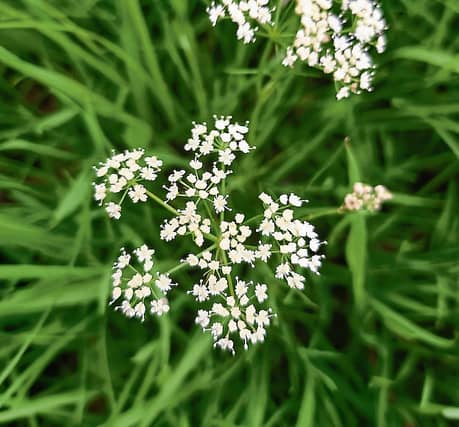
Recently I visited the community and while there I observed and identified a wildflower I had never come across before, Pignut (Cúlarán as Gaeilge). Once identified I was sure with this unusual name that this wildflower must be introduced, but Pignut is actually a native wildflower and can be found growing in hedgerows, grasslands and woodlands.
Indeed the website www.wildflowersofireland.net note that ‘there are few places in Ireland that this plant is absent from’. Pignut can grow to a height of 50cm, the leaves are feathery and finely divided.
The flowers bloom from late April and are described as ‘umbels’, that is the flowers are carried like an upside down umbrella.
The stems are hollow and the plant is hairless. The roots of this plant are rounded and are similar to tubers.
It is said in times past these were a popular source of food for pigs and I can only presume this is where this wildflowers unusual name comes from. Identifying this plant has once again highlighted to me that while I may work in the outdoor environment my discovery of the diversity of Ireland’s biodiversity will be a lifelong learning process.
Don’t forget if you come across a wildlife species that you would like help identifying I would be happy to help, contact me at [email protected].