
Kildare Wildlife Watch: Emperor Moth caterpillar too hairy to eat


Find out more about our wildlife in Kildare
Bogs are home to a wide variety of fascinating plants and animals. To me, what makes bogland plants and animals fascinating is the many adaptations they have evolved to live in their wet and open bogland habitat.
These adaptations are varied, for example the skylark and meadow pipit survive on bogs all year by adapting their diet. In summer they feed on the many invertebrates available to them, but by autumn they survive on the variety of seeds that the summer flowing plants have produced.
I have written before about Ireland’s insect eating plants, the sundew and butterwort, which can survive on the nutrient poor peat soils through a special adaptation that allows them to trap and eat insects to supplement their growth.
Amphibians including the common frog and smooth newt make use of the water logged conditions of boglands to support them to complete their lifecycles.
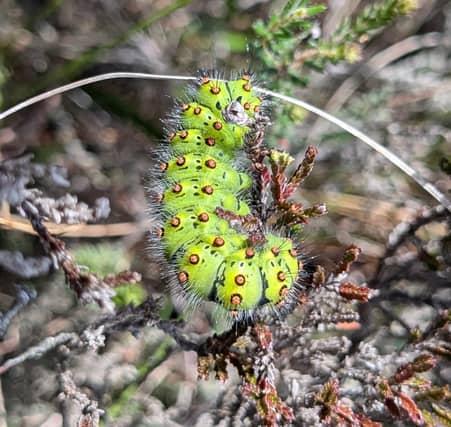
This week’s species, the caterpillar of the emperor moth, has adapted by feeding on a bogland plant, heather. The caterpillar of the emperor moth emerges between May to August each year.
The adult female will start to lay eggs from April, always choosing to lay the eggs on the foodplant of the caterpillar, heather, although caterpillars have also been recorded on meadowsweet, bramble and hawthorn. When it first emerges, the caterpillar is black and orange in colour.
As it feeds and grows it soon changes to a beautiful bright green colour with segments divided by black rings and yellow and black spots.
This caterpillar is unmistakeable, if you are fortunate enough to come across it on your local bog this week.
Similar to many caterpillars, it is also hairy.
These hairs are a type of defence against predation, as the hairs will irritate the predator, who in turn will choose to abandon its prey and look for an alternative feast.
In early autumn the emperor moth caterpillar will spin a flask shaped cocoon and overwinter as a pupae before emerging the following spring in search of a mate to start their lifecycle all over again.
If you would like help identifying a wildlife observation in your community you can contact me on [email protected]
- Nuala Madigan from The Bog of Allen Nature Centre, Lullymore