
Kildare Wildlife Watch: Enchanter’s-nightshade is poisonous


Find out more about wildlife in your area
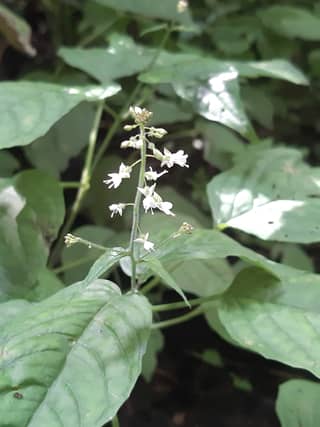
A wildflower that is just bursting into bloom is enchanter’s-nightshade (fuinseagach as Gaeilge). While we might be enjoying this latest spell of sunshine this native wildflower, as its name suggests, prefers the cooler shaded habitat of woodlands and hedgerows.
The leaves are oval, long, pointed at the tip and heart shaped at the base. The paired leaves are also always arranged opposite one another along the stem. The flowers are small with two white petals, each deeply notched with the stamens (the male part of the flower making up the pollen bearing anther and filament) extending beyond the petals.
The fruits are covered in bristles each with a hook to attach to passing animals allowing for seed dispersal.
The botanical name for enchanter’s-nightshade is Circaea lutetiana, Circaea comes from the enchantress in ancient Greek mythology, Circe, who was renowned for her potion making skills. I am presuming this is why enchanter’s-nightshade is also referred to as ‘witch grass’.
While many wildflowers were used in the past for some time of traditional medicine, despite its name and its links to the Greek enchantress enchanters-nightshade is one of the few plants that has no known herbal uses in fact enchanter’s-nightshade is actually very poisonous to eat.
While we might not get any herbal benefit from this wildflower it is an important food plant for the caterpillar of the elephant hawk moth. When many people think of moths we often associate them with dull colours, however the elephant hawk moth is an exception as it is an extremely pretty gold and pink moth.
Enchanters-nightshade can reach a height of 70cm and it is said to sometimes frequent gardens.
It is easily removed by pulling but if you have a shaded area in your garden this wildflower will bring some colour to this area in summer when all of the other woodland plants flowering season has ended.
Don’t worry if you don’t come across enchanter’s-nightshade this week you have all summer, as it blooms until August each year.
If you would like help identifying a wildlife observation in your community you can contact me on [email protected]
- Nuala Madigan from the Bog of Allen Nature Centre, Lullymore