
Kildare writer and US musician release a new book

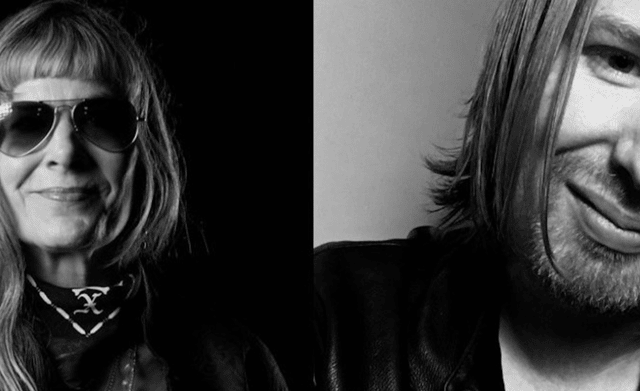

The pair are close personal friends
As if publishing two books in the past eight months wasn’t enough, prolific Naas writer Wayne Byrne is set to release his latest work, The Evolution of American Film Music, 1960s – 1990s shortly.
The book is Byrne’s second collaboration with musician Amanda Kramer, the keyboardist of new wave icons The Psychedelic Furs. Kramer has also performed with 10,000 Maniacs, World Party, Siouxsie Sioux, Eurythmics, and The Golden Palominos, so her experience in the music industry married well with Wayne’s work as a film historian in jointly documenting the history of soundtracks.
The pair are close personal friends and previously released an acclaimed book on the music business from the perspective of female touring musicians, Hired Guns: Portraits of Women in Alternative Music.
“We had such a good time working together on that book we just wanted to keep going,” Byrne says, “and this subject came out of our casual conversations about music and films that we loved – stuff from the New Hollywood era (60s and 70s) and New York’s underground No Wave movement of the late-70s and early-80s.
And with Amanda being a keyboard player, the rise of the synthesizer in the 80s and how that shaped the sound of cinema was particularly interesting.
“But for me the main attraction is working with Amanda; we simply enjoy each other’s company.”
The authors brought in notable voices from the film music industry, including composers David Mansfield, Mark Mothersbaugh, Thomas Dolby, Mark Isham, John Lurie, music supervisors Blake Leyh and Tarquin Gotch, and label executive Doreen Ringer-Ross.
“We knew it would be interesting to include people who represented both the artistic and executive sides; when pop and rock soundtracks ruled in the 80s they were very much led by people like Tarquin, who famously compiled iconic soundtracks for John Hughes. What is interesting is that he and Hughes didn’t simply place tracks in scenes, they sourced songs that Tarquin had access to and used the music in an artistic way. For example, the climactic montage of She’s Having a Baby is edited to the song “This Woman’s Work”, which Kate Bush wrote and recorded for the film. Hughes considered the song so powerful that he refused to place snippets of it, so he re-structured the end of the film around the entire song. As a respected and successful auteur filmmaker, Hughes could do that.”
While the title mentions three specific decades (60s – 90s), Byrne says the book begins in the early days of American Cinema to set up how the seismic shift in film music occurred decades later.
“I loved going back to the earliest musical films to trace how things went from classical orchestrations in the Golden Age to the introduction of jazz scores in the late-50s. Jazz music and the Counterculture movement are responsible for how films and film sound changed irrevocably.”
Another boon for the authors was getting indie film legend and musician Tom DiCillo (director of Brad Pitt starrer Johnny Suede) to provide the foreword. DiCillo was the subject of Byrne’s debut book released in 2017, and now he has come full circle with DiCillo contributing to Byrne’s ninth literary release.
“It means a lot to have Tom be part of this book. He has been such an important figure in my life, as has Amanda. So, to share a book cover with those two dear friends of mine is an incredible and surreal feeling.”
The Evolution of American Film Music, 1960s – 1990s will be available from all booksellers and is available for pre-order now.