
Energy masterplan for Laois town that once burned 200k tonnes of turf annually

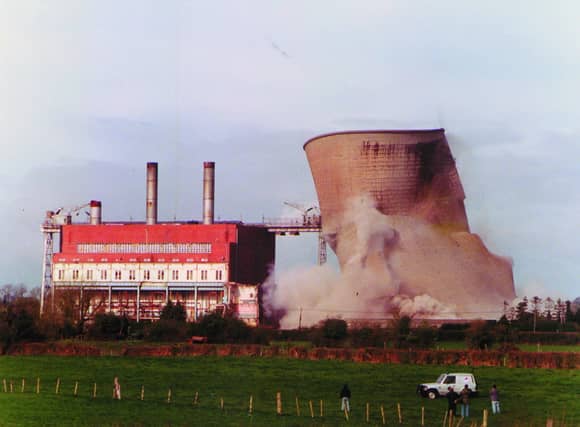

Work is underway in Portarlington on a blueprint to make the town which once burned nearly 200,000 tonnes of peat for power each year more energy efficient.
The Portarlington Business Association (PBA) Sustainable Energy Community (SEC) has appointed Tipperary Energy Agency (TEA) as consultants to work with the group to develop an Energy Master Plan for Portarlington.
Work on the plan is underway and a launch event will be hosted in the coming months. This project is grant funded by the SEAI with support from Laois County Council under the Sustainable Energy Communities programme.
The PBA outlined what is involved in an energy master plan for a town that was once home to a peat-fueled power station.
It said it includes three main elements the first of which will be an analysis of baseline energy usage for the town to understand the current level of energy consumption by homes, businesses and transportation within the town. The data collected will be used to measure the success of any future projects of the group aimed at reducing energy usage and CO2 emissions.
Secondly, energy surveys will be conducted in homes that represent different types of residential properties in the town. The group say a summary of the results of these audits will be included in the final plan and will be a useful guide for local residents on the basic steps needed to retrofit their homes, improve their BER rating, an estimate of the costs involved and the grant supports available from the SEAI/government.
Finally, the master plan will include a Register of Opportunities which will comprise a list of projects as well as a detailed guide on implementation which the SEC group can take on to improve energy efficiency, reduce energy usage and improve the overall level of sustainability of Portarlington.
Caroline Whitelegg, PRO for PBA SEC group, explained what's involved.
“An Energy Master Plan (EMP) is a planning document for SEC groups around the country who want to take on projects within their local communities to reduce energy usage and improve energy efficiency. We are delighted to be working with Tipperary Energy Agency in preparing this plan which, once completed, will put us in a position to take on projects within the town,” she said.
John Holland is the Secretary of the SEC group.
“It is vital that local communities take ownership of the transition to a low or zero-carbon economy. This transition can be a win-win for the environment and local communities as it is possible to reduce energy usage and save money for local households and businesses.
"There is great scope within the SEC programme for groups such as ours to work with the local community to implement projects supported with grant funding from the SEAI, local authority or central government. We all need to do our bit to be sustainable and we look forward to publishing this plan and getting started on implementing its recommendations,” he said.
The PBA SEC group would like to thank the SEAI for the €15,000 grant funding that was provided to complete this project, as well as Laois County Council for the provision of bridge funding which made it possible to get to this point.
Portarlington SEC, in conjunction with Tipperary Energy Agency, aim to launch the final Energy Master Plan once completed in the coming months.
The ESB says the Portarlington station was opened in 1950 and at the time it was Ireland’s first turf-fired generating station. It was decommissioned in 1988. The station was designed to use the full output of sod peat fuel produced on the adjoining Clonsast bog.
At its peak, the station consumed approximately 195,000 tonnes of peat per annum, producing 150 million units of electricity.
The building was demolished in 1997.