
'It was a privilege to have served the people of Laois' - arts officer retires after 35 years

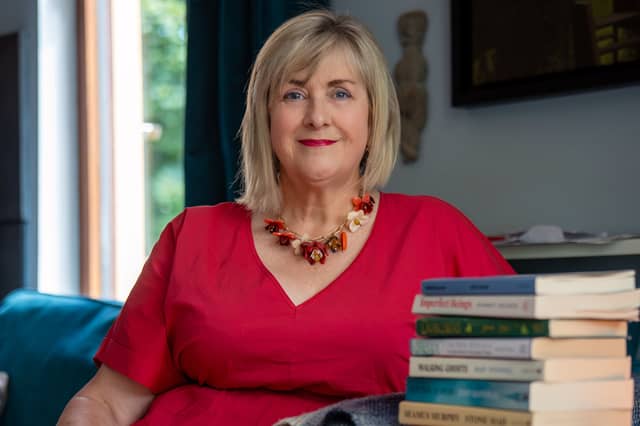

Laois arts officer Muireann Ní Chonaill spoke to Laois Life magazine about her career and life in the co
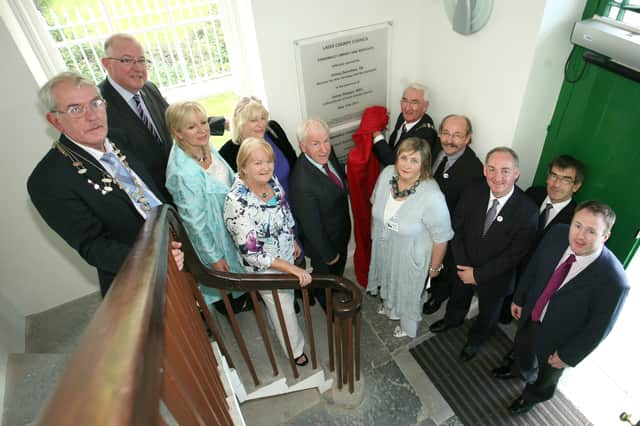
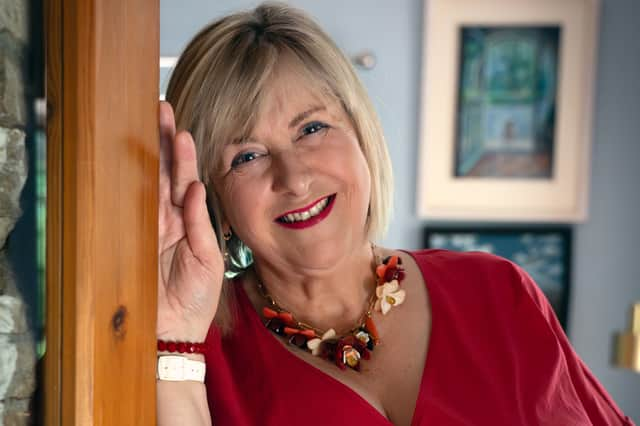
Laois Arts Officer Muireann Ni Chonaill enjoyed a fond farewell by colleagues, the Laois arts community, friends and family last Friday, October 9 in the place she had a hand in founding, the Laois School of Music.
In the recent Leinster Express Laois Life magazine, we featured a special interview with Muireann, where she reflected back on her career, the loss of her beloved husband John, and the passionate role that the women in her family played in the foundation of the Irish state.
Dublin native Muireann Ní Chonaill has played an extraordinary 35 year role in the arts in Laois.
Among the milestones achieved during her tenure were the Dunamaise Arts Centre, Stradbally Arthouse and Laois School of Music.
Now aged 60, she is settled in her beautiful art filled family home in the Slieve Bloom mountains.
The daughter of Irish Press subeditor Sean O’Conaill and teacher Kitty McKeon, Muireann was bitten by the stage bug early on.
“We were very fortunate, we had a primary school that had a magnificent speech and drama teacher, which was a key influence on me.
“I went to the Royal Irish Academy of Music and the Dublin College of Music, achieving certs in drama teaching. I taught music and drama in my old secondary school, Coláiste Iosagáin. That was a hotbed for the arts. Liam O’Maonlai was in my class, many of my friends went into the arts,” she said.
She became a Montessori teacher, working for the ISPCC. She became PRO of the Irish Theatre Archive aged just 18.
“I worked in Neilstown where the Montessori was in a family support centre. I liked that very much. It was all social housing. The 80s were a very difficult time, with huge degrees of poverty. But there was also a burgeoning community activism.
All the while she was taking evening classes in music and theatre.
“I was promoted to work in Bray but I didn’t like it as much, so I changed career and left to study arts administration in UCD instead.”
“I was so fortunate to get into the theatre class in the College of Music. I studied drama, acting, opera in the chorus, piano and harp. I studied with the late Sean Rocks, he was a very good friend.
“I thought I wanted to be an actor, but I saw what hard work it was, the uncertainty of it and the physical stamina that requires huge discipline.”
She met her future husband John Duffy there.
“He then went to the UK to carve out a singing career as a tenor. I would bump into him if he was home and he’d ask me out. I finally agreed during Italia 90. We had a wonderful evening, we went first to Lady Windermere’s Fan, then to Aztec Camera then dancing in Sides nightclub. He pulled out all the stops.
“He was such a gorgeous man, I’m glad I took that chance and we were together from then,” Muireann said.
After a stint managing Damer House in Roscrea, Muireann got the job as Laois arts officer in 1991.
To be near her, John rented the walled garden in Emo Court in 1993 and started an organic vegetable business. Owner Major Cholmeley Harrison later offered him a gardening job, which luckily came with accommodation for the couple in the coach house.
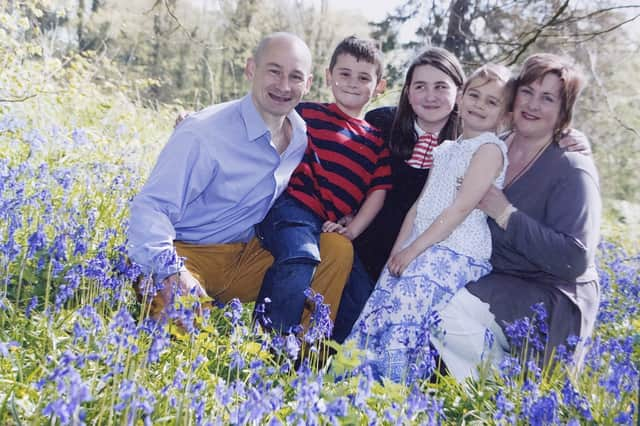
There they stayed for 17 years, marrying and welcoming three children, Doireann, Rossa and Maebh Áine, who had the luck to roam the grounds as their magical private garden.
“We had fabulous parties in the walled garden, Cholmelely joined us for one, we were probably one of the few who didn’t fall out with him. You had to respect him.
“He would only open the gardens seasonally, Mrs Mathews took the entry fees. They were great pals, they’d have their gin nights and dances. He had a lot of company. He’d invite you for drinks, but if you didn’t come precisely on time you weren’t welcome,” she recalls.
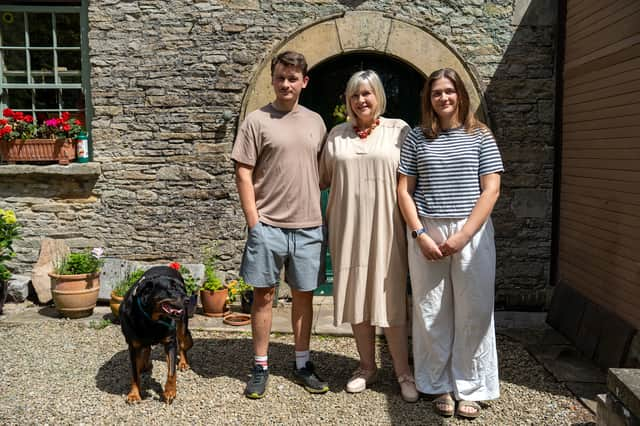
The family home is now a restored stone forge in the Slieve Blooms, with John’s own small arboretum echoing his gardening legacy in Emo Court.
“It’s been fabulous, we adore this place. We walk and cycle the quiet roads and bring the dog up the mountains,” Muireann said.
Her husband John passed away with cancer in February 2025.
“It’s very tough but we had a great marriage, a great family life, great laughs, we shared common interests, we had a charmed life. But John is around, you can feel him. We miss him terribly, he’s irreplaceable,” she said.
She is grateful for the support they received.
“It’s extraordinary the impact John had in his own quiet way. The turnout to the wake, the support from the community, all the friends coming from Ireland and abroad. It was very touching, very kind. His Emo colleagues planted a tree there in his memory, a Ginkgo Biloba as requested by John,” she said.
At the start of her tenure, she said the arts scene in Laois was quiet, albeit with “a good coterie” of writers and poets, painters and musicians.
Creating the Dunamaise Arts Centre was a target from day one.
“It was the first thing that the county manager Michael Deegan brought to my attention, It took a few years but he had that vision. It’s very important that we have these public spaces. That they are cared for and cherished, and that the people who work for them are cherished as well.
“The approach I took in the job was systematic, following all I had learned. I made a plan, with summer arts programmes for children. I used spaces like Egans, the Killeshin Hotel and Greys Cafe in Portlaoise and Emo Court for theatre performances.
“I started the Bealtaine literary Festival in 1995, it morphed into Leaves because Bealtaine became the national older persons festival.
“I later got assistants, first volunteers, then in 1999 the lovely Bridie Keenan and Rosa Bray came on a FÁS scheme then got jobs as clerical officers .
“Residencies were very important. Mary O’Donnell was the first writer in residence in 1996 I think, to work here for six months.
“I began a musician in residence programme too. We had Nóirín Ní Riain who was married to Micheál O Suilleabháin, she was brilliant. They helped me to start Laois School of Music and he was the opening act in 2001. That took a big leap of faith by the council.
“From day one it was filled to capacity, 350 students, primarily children.
“The ETB came in as partners. I got a great team, Nuala Kelly ran it, with clerical support from the council.
“Music Generation was another huge boost,” she recalls.
The music school is now run by the ETB, housed in the former Scoil Mhuire school inside Portlaoise Fort, with support from the council, and for Muireann is a “career highlight”.
Another is The Arthouse in Stradbally that opened in 2011. It houses Laois’ only residential studios for visiting artists, sharing the former courthouse with the library.
“We saw the potential of the place. It dovetailed with the library nicely,” she said.
In 2017, she coordinated a nationwide exhibition; 30 Years Artists Places. It had one piece of artwork from all 30 local authorities, with Lisa Fingleton representing Laois, marking 30 years of arts offices.
She has suggested artists’ studios in the Portlaoise Convent.
“You need to support artists, it’s tremendously important,” she said.
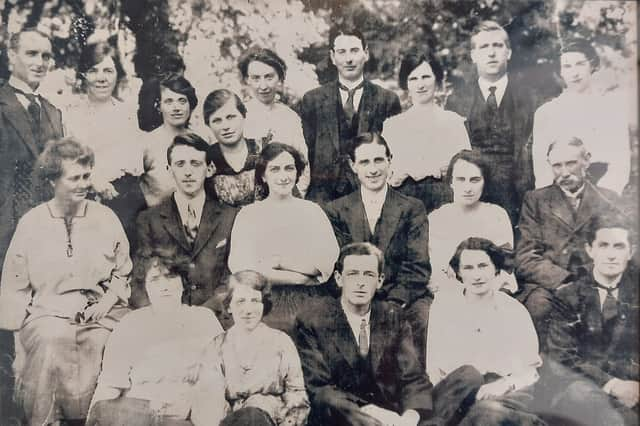
Muireann has a fascinating family heritage of revolutionary women. Her grandmother and grand aunt were actively involved in the 1916 Rising; Longford sisters Eilís and Áine Ní Riain.
“Eilís was later secretary in Dáil Éireann to Countess Markievicz and Michael Collins. The countess was at her wedding to my grandad Sean.
“There were amazing people, I am proud of their contribution to Irish society and to our freedom. The courage it took,” she said.
She won’t be idle in retirement.
“I trained as an audio describer in recent months, to assist people with additional needs at performances and exhibitions. It was just amazing to do it.
“I’m thinking of developing holiday accommodation here, for tourists or artists to explore the mountains. I will be going to more arts events. I’m looking forward to it.
"It was a privilege to have served the people of Co Laois for the last 35 years. The support received from the members, management and staff made it all the easier,” Muireann Ní Chonaill said.