
Juggernaut of dairy cow increase in Laois
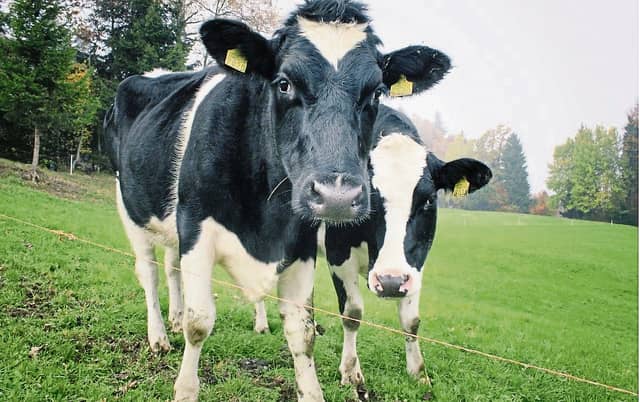

The juggernaut in the increase in the number of dairy cows in Laois in the aftermath of the abolition of milk quotas, is evident in figures released from the Central Statistics Office.
The figures show that the number of dairy cows in Laois has jumped by 52 per cent in the space of seven years, since the abolition of milk quotas.
In June 2022 the number of dairy cows in the county was 54,000. In 2015, the year milk quotas were abolished, the figure stood at 35,500. This represents a jump of 18,500, an increase of 52 per cent.
The knock on effect of the abolition of milk quotas was immediately evident in the three years after 2015, when the number of dairy cows rose by 10,000 in the county, bringing the number to 45,000.
The total number of cattle in Laois as of June 2022 was 266,400. In 2015 it was 242,900, an increase of 23,500.
The number of what is classed as ‘other cows’ stood at 27,900 in 2022, which represented a drop from the 2015 figure of 34,100.
The number of male cattle in 2022 was 93,600, in 2015 it was 94,400. The number of female cattle stood at 172,900 in 2022, compared to 148,500 in 2015.
Nationally, compared with June 2021 the total number of cattle increased by 37,300 to 7,396,200 (+0.5%).
Sheep numbers rose by 358,200 (+6.4%) to 5,967,600. Breeding sheep increased by 153,600 (+5.3%) to 3,054,000 while Other sheep rose by 204,600 (+7.6%) to 2,913,600.
Pig numbers decreased by 59,500 (-3.5%) to 1,634,800. Breeding pigs fell by 14,700 (-9.7%) and Other pigs dropped by 44,800 (-2.9%).
Commenting on the release, Donal Kelly, Senior Statistician in Agriculture Division, said, "The final results for June 2022 show that the total number of cattle in the country increased by 37,300 (+0.5%) to 7,396,200 when compared with June 2021.
“The total number of dairy cows grew by 22,800 (+1.4%) while the total number of other cows fell by 27,100 (-2.9%).
“A regional analysis of the livestock numbers shows that the largest number of cattle (1,483,100) was in the Mid-West region, the largest number of sheep (1,638,800) was in the West region and the largest number of pigs (386,400) was in the Border region.
"The total number of cattle aged 2 years and over has risen by 17,000 (+2.4%) while the total number of cattle aged 1-2 years also rose by 38,100 (+2.0%) in the year since June 2021.
The report of the Food Vision Dairy Group was submitted to the Minister for Agriculture Charlie McConalogue last Autumn. It contains measures on how to mitigate greenhouse gas emissions from the dairy sector.
Speaking last year IFA President Tim Cullinan said, “It’s paramount that any proposals arising from this group do not endanger the low-cost, carbon-efficient dairy production model we have in Ireland.
“Any moves which may restrict production here will result in production moving to regions with a much higher carbon footprint.” The dairy sector is a key driver of economic and social sustainability in many parts of rural Ireland.
“This sector must be supported, not restricted, if the Government wants to have a vibrant rural economy,” he said.