
Laois council and Birdwatch Ireland team up to help create new video

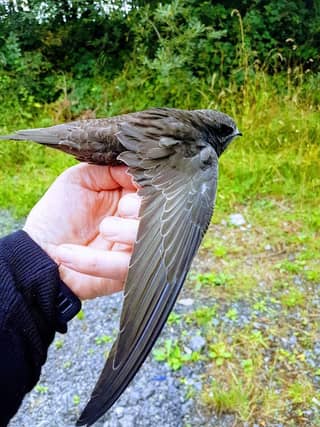

Laois County Council has collaborated with Birdwatch Ireland and others to highlight the importance of buildings, both occupied and ruined, to birds and mammals.
The council were involved in the production of a new video highlighting the importance of the built environment for wildlife. It celebrates the species which have adapted to live alongside us and share our homes, and the measures that can be taken to ensure space is made for nature.
People live in buildings, and wildlife lives in “nature” – right? Well, not quite. For as long as humans have built structures for protection and shelter, wildlife has taken advantage of these buildings for the very same reasons.
In order to highlight this interaction, BirdWatch Ireland and Crow Crag Productions in partnership with Laois, Tipperary and Clare County Councils have produced a nature documentary. It celebrates the wildlife which have taken up residence in the built environment and showcases some of the most iconic wildlife species which are reliant on buildings for their survival. The project was supported by the National Biodiversity Action Plan Fund of the Department of Housing, Local Government and Heritage and the Heritage Council.
From the diverse range of birds and mammals which have colonised abandoned ruins in remote rural landscapes, to wildlife which has moved into suburban and urban areas to live alongside people and even share their homes, buildings have become an integral component of the Irish landscape for biodiversity.
Certain species are expected residents within our buildings, and for some the association with buildings is apparent even from their names, such as the ‘House Martin’ which builds its mud nest in the apex of the roof of occupied houses, and the ‘Barn Swallow’ which travels from Africa to nest in farmyards throughout the country. The vision of a Barn Owl floating silently from a ruined castle at dusk may seem familiar, but less expected occupants may be a pair of Kestrels nesting in a flower box outside a busy kitchen window, or a female Pine Marten raising her kits in the roof space of an occupied dwelling. Of course, much of the wildlife which use buildings go unnoticed, such as bats roosting in the attic of a house in which the inhabitants beneath remain blissfully unaware of their presence.
Given the importance of buildings for wildlife, changes to the built environment can affect wildlife associated with it. Wildlife in buildings can often be harmed during works due to a lack of awareness of their presence or indeed knowledge of how to plan renovations and works in order to avoid disturbance, which is usually possible. The loss of old stone structures due to demolition, dilapidation or renovation is linked to declines in species such as Barn Owl and Swift, which are dependent on these structures. Modern buildings do not provide the same opportunities for wildlife. However, there is a lot that we can do to improve modern buildings for wildlife to ensure that we continue to make space for nature.
BirdWatch Ireland’s John Lusby said: “We wanted to celebrate the importance of buildings for wildlife and to create a better link between our built heritage and our natural heritage – as the two are intertwined. The diversity of species which use buildings, and the ways in which they have adapted to use the built environment, is truly astonishing.
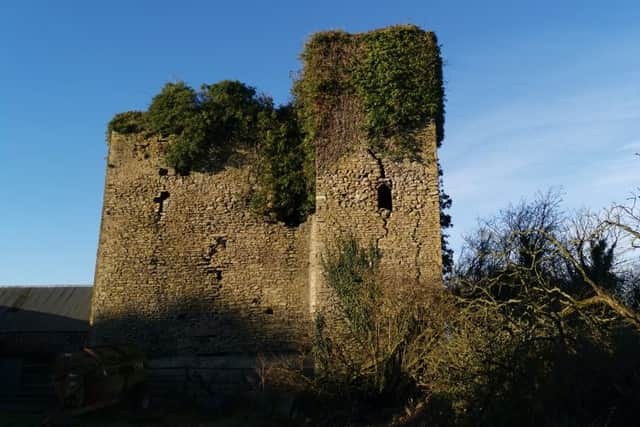
According to Heritage Officer with Laois County Council, Catherine Casey, “linking our built and natural heritage is central to our message as heritage officers and we were delighted as a network to work with BirdWatch Ireland on this wonderful film and companion booklet, which celebrates the natural heritage of our birds, bats and others and looks at how we can manage our built heritage with wildlife in mind.”
The video ‘Wildlife in Buildings: linking our built and natural heritage’ is available to view at https://www.youtube.com/c/LaoisHeritageForum. The companion booklet ‘Wildlife in Buildings: linking our built and natural heritage’ was produced by BirdWatch Ireland, Kerry and Donegal County Councils, with funding from the Department of Housing, Local Government and Heritage through the National Biodiversity Action Plan Fund and the Heritage Council. The booklet is available download at https://laois.ie/new-wildlife-in-buildings-documentary-released/. Free copies can be ordered from the Heritage Office of Laois County Council.