
Laois homes 'must rethink e-waste' as over 14 million tonnes incorrectly binned

Over 844 million e-cigarettes were thrown away this year, with enough lithium to power 15,000 electric cars.
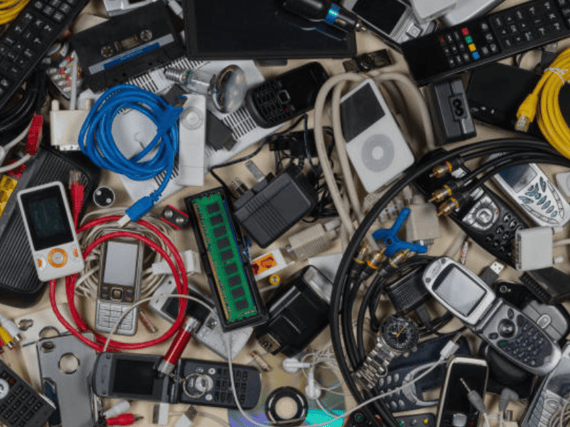
In 2024, over 14 million tonnes of electronic waste have been incorrectly disposed into general waste bins.
Waste from Electrical and Electronic Equipment (WEEE) Ireland have called on Laois people to 'rethink e-waste'.
“Careless disposal represents a missed opportunity for recycling, as many of these items contain recoverable materials that can be used to make new products and squanders critical resources that are increasingly in scarce supply,” said Leo Donovan, CEO of WEEE Ireland.
"Recycling e-waste should no longer be viewed as merely disposing of old electronics that can’t be repaired or reused.
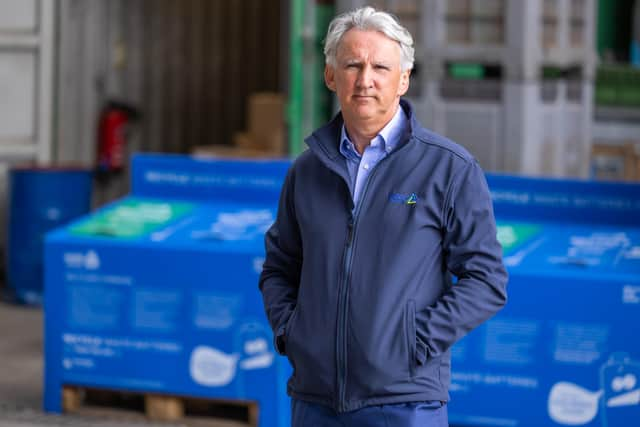
Pictured: Leo Donovan, CEO of WEEE Ireland is calling for a change in how people view e-waste items as new data shows that a total of 14 million tonnes of electronic waste are improperly thrown out with regular rubbish globally every year, equating to the weight of around 24,000 of the world’s heaviest passenger planes.
“The circular economy thrives when we stop thinking of these items as waste and start realising their value as resources.”
Household electronic and electrical waste amounted to 62 billion tonnes globally or 29kg per home, according to new data from WEEE. However, only 6.34kg of e-waste was recycled per person in Laois last year.
Ahead of International E-Waste Day on Monday October 14, the Global E-Waste Monitor 2024 reveals that nearly a quarter of e-waste ends up in household rubbish bins each year - electronics packed with precious metals, plastics and other essential materials going to waste.
The report was authored by the United Nations Institute for Training and Research (UNITAR) and the International Telecommunication Union (ITU).
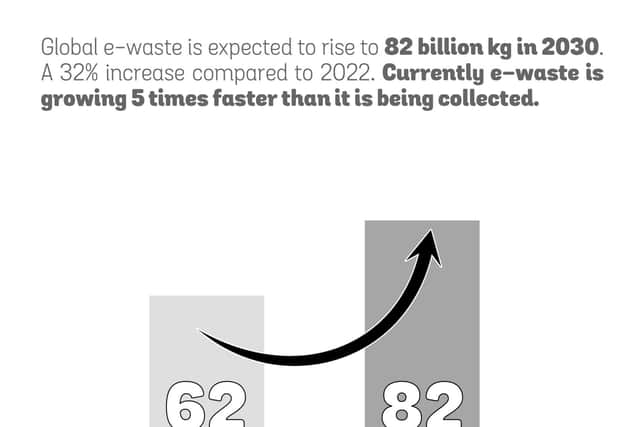
Source: WEEE Ireland.
The Global E-Waste Monitor reported that 29kg of e-waste is generated per household, amounting to 62 billion tonnes globally. This contained approximately 4 billion kg of metals, including 34 million kg of cobalt and 3.9 billion kg of aluminium, crucial for the electronics industry.
However, just 1% of critical raw material requirements is met by current e-waste recycling, which needs to increase to 25% under the new Critical Raw Materials Act for Ireland and EU member states.
Separate research conducted by Empathy Research for WEEE Ireland earlier this year showed that one in eight people in Ireland continues to dump small electrical items in household bins, rising to one in four among younger age groups.

“The benefits of e-waste recycling include reducing CO2 emissions, conserving raw materials, and preventing toxic substances from harming our environment. Now is the time for everyone to take responsibility and ensure that no e-waste ends up in household bins," the WEEE Ireland CEO finished.
WEEE Ireland is the national compliance scheme for the recycling of waste electrical and electronic equipment and batteries. Established to help Ireland meet its EU recycling targets, WEEE Ireland works with communities, businesses, and recycling centres to ensure that e-waste is responsibly collected and processed.
Last year, over 195 organisations from 55 countries supported the 4th International E-Waste Day observance.
This year, the WEEE Forum invited all organisations involved in effective and responsible e-waste management to plan awareness-raising activities for 14 October. These range from social media, TV and radio campaigns to city or school e-waste collections or even artistic performances.