
Laois people almost 'poorest' in Ireland after paying taxes


Laois at bottom of the disposable income league with €10,000 less to spend than Dubliners
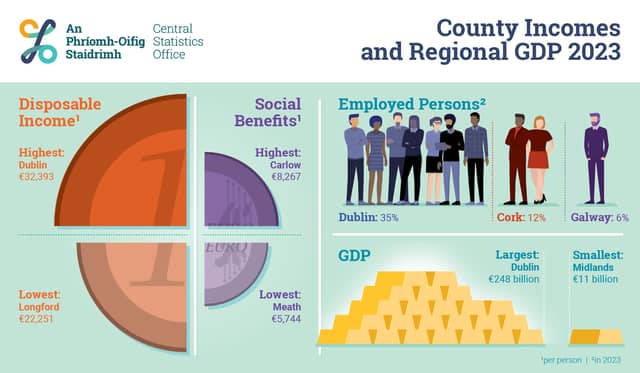
People in Laois have the second lowest level of money to spend after paying their income taxes to the Government according to new official figures.
The finding is contained in the newly published County Incomes and Regional GDP 2022 - 2023 report from the Central Statistics Office (CSO). The CSO defines disposable income as total income minus income and other current taxes minus social insurance contributions.
Nationally disposable income levels were highest in Dublin and Cork while the Midlands recorded the lowest in 2023.
People in Longford were the poorest when it came to disposable income where the average available was €22,251 per person after taxes.
Laois is virtually the same as there is just €6 between between Laois and Longford residents. Laois came in at just €22,257. Disposable incomes in both counties is 22% below the national average of €28,370.
The situation in Laois and the rest of the midlands is stark when compared to Dublin. The total value of GDP in Dublin is €248 billion but just €11 billion in the four counties of Laois, Offaly, Longford and Westmeath.
Dublin has the highest disposable income per person nationally at €32,393 in 2023, followed by Cork at €29,876 and Limerick at €29,491.
The CSO analysis also gives insights into employment. Over a third (35%) of all persons employed in the state work in Dublin City and County. Just 1.4% of Ireland's jobs are located in Laois. The CSO says Midland and Border regions have the lowest percentage of workers due to low populations and lack of industry in these regions.
The CSO says the Border and Midlands (counties) consistently remain significantly below the national average for household disposable income and are largely dependent on the Public Administration sector to generate wealth and employment in their respective regions.