
New book shows first shot in 1916 Easter Rising may have been in Laois
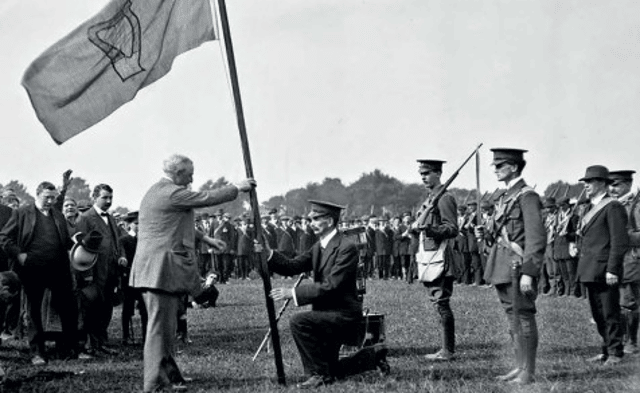

Research from Dr Cormac Moore has uncovered new evidence in Laois' role in the War of Independence
A Laois historian has written a book that uncovers new evidence of Laois' role in the War of Independence and Civil War.
Emo historian Cormac Moore is a historian-in-residence with Dublin City Council, and will launch his much anticipated book this April.
Dr Moore uncovered that Laois had one of the highest rates of violence against loyalists per capita, and that the first bullet fired in the Easter 1916 rising was arguably in Laois.
This research also found that Laois had a high rate of violence and fatalities during the Civil War, and the highest rate of donations towards the funding of the first Dáil.
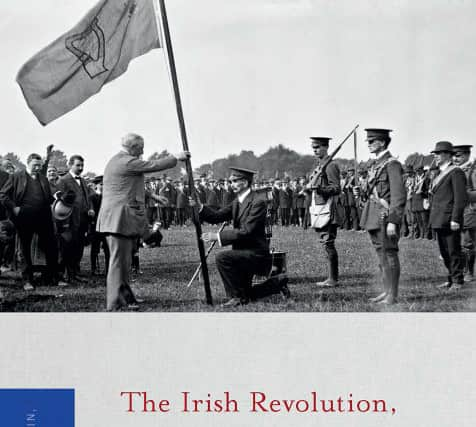
Pictured: 'The Irish Revolution, 1912-23: Laois' by Cormac Moore. Edited by Mary Ann Lyons & Daithi O Corrain. Published by Four Courts Press.
"This book is part of a county-by-county series on the revolutionary years, and how each county had their own unique experience," he said.
"One of my main resources was the applications from southern loyalists in Laois, who applied for a grant from the British Government following incidents of boycotting or violence. There were over 200 applications from Laois alone, it was the highest per capita across all counties," Dr Moore said.
"Loyalists in Laois were attacked, ostracised, their businesses were boycotted, their land and crops were attacked and trampled," he said.
Dr Moore found that there were many feuds over land in Laois, with many cases of national tensions used as excuses for locals to gain land.

Pictured: Dr Cormac Moore is a Laois native, has a PhD from De Montfort University, Leicester, and is an historian-in-residence with Dublin City Council. A columnist with the Irish News, he edits its ‘On This Day’ segment.
"Laois has the highest per capita response to the Dáil Loan, to allow this counter state to function. Laois had the best response in terms of contributions, and it raised the profile of Kevin O'Higgins greatly," he said.
The historian argued that Laois is an excellent example of the social impacts of conflict in early 1900s Ireland.
"This study shows that in revolutions, most people focus on the military violence and the ambushes, but the Laois example shows that though there wasn't as much political violence, but civil disobedience," Dr Moore said.
"It still played a full part in creating a counter state through revolutionary activity. Revolutions can't be soley looked at through warfare."
There were Laois figures who had instrumental roles in the War of Independence, including Paddy Fleming of The Swan.
Mr Fleming toured the United States with Eamon De Valera in the pursuit of funds for the Irish cause, and was on hunger strike.
The man ended up in nine prisons, escaped three times, and was given an important job in the 1916 Easter Rising: to dismantle the train tracks between Portlaoise and Abbeyleix.

Pictured: a train derailed by the damage sustained to train tracks between Portlaoise and Abbeyleix, reported in The Daily Mirror on Thursday May 4, 1916. Photo: The Irish At War
On the Saturday night before the Rising, the Laois Volunteers uprooted the railway lines between Portlaoise and Abbeyleix.
"Three railway workers came along and told them to stop, and the Laois Volunteers fired shots at them," Dr Moore explained.
"Patrick Ramsbottom was the head of the Laois Volunteers, and was the orchestrator of this expedition, under orders from Padraig Pearse. Though the shots were not the first directly ordered, Eamonn Fleming made these shots in a specific operation related to the Easter Rising, so it can be argued that the first bullets fired in the Rising were shot in Laois," Dr Moore said.
Another element uncovered by Mr Moore was that the violence in Laois was far greater during the Civil War than the War of Independence, with far more fatalities.
"Laois didn't see as much guerilla warfare as other counties. It can be argued that this was due to its flat terrain, it would be much harder for ambushes.
"It is also relatively close to the Curragh camp, which was the second biggest military camp in the UK at the time. Laois didn't have as huge an army presence patrolling the streets as other counties did," he said.
Mr Moore's book examines the impact of conflict on Laois from 1912 to 1923 from a political, economic and social lens. This book examines the third home rule crisis, the First World War, the 1916 Easter Rising, the War of Independence and the Civil War, and their effects that echoed years thereafter.
'The Irish Revolution, 1912-23: Laois' by Cormac Moore will launch in Portlaoise library on Thursday April 3 at 7pm.
Heritage Officer Thomas Carlton will MC the event, with guest speakers including former Fine Gael TD Charlie Flanagan, and Fianna Fáil TD Sean Fleming.