
Proposed cycle track at Laois border ‘out of touch’ with local needs

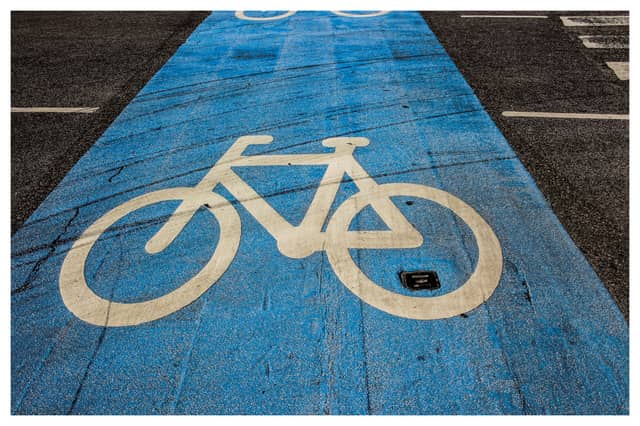

The cycle track from Graiguecullen to Carlow Town has angered some local residents
A 750 metre cycle track from Laois to Carlow has sparked frustration from the public as one local representative has argued that there is no evidence of demand for the route.
The proposed cycle track will connect Graigucullen to Carlow Town, starting at Barrowvale on the Laois side of Graiguecullen, past Aldi along Church Street and by the Croppy Graves and into Carlow Town park.
Construction on the track is due to begin later this year.
Graiguecullen native and Laois Sinn Féin Cathaoirleach, Aaron Kelly, has highlighted “serious concerns” surrounding the development which he said is not necessary.
“I fully understand and appreciate the principle behind investing in safer infrastructure for pedestrians and cyclists. Encouraging active travel where practical is a positive objective, and there is certainly a place for well-planned cycling infrastructure in growing communities,” Kelly said.
“However, I have serious concerns regarding the proposed cycle track between Graiguecullen and Carlow Town and believe legitimate questions remain unanswered about the necessity, impact and prioritisation of this particular scheme.”
He argued that there is little evidence being presented which demonstrates the local demand for a segregated cycle lane along that route and some residents and business owners have contacted him to see what research has been done locally to justify it seeing as though none of them were contacted.
“Cyclists are already legally entitled to use the road network, and many locals are questioning whether the current arrangements are genuinely inadequate or whether this project is being driven primarily by broader national and EU active travel targets rather than local realities on the ground,” he said.
The Laois Sinn Féin Cathaoirleach pointed out that such an extensive and potentially unwarranted development is happening at a time when people are faced with the rising cost of living, housing pressures, healthcare waiting lists and infrastructure deficits.
“Taxpayers have repeatedly seen examples of excessive expenditure on projects with questionable value for money, including widely publicised controversies surrounding extremely expensive bicycle shelter projects funded by the State. Have lessons not been learned from those spending decisions and whether proper cost-benefit analysis is being applied before further public money is committed?”
He also noted that there are concerns regarding the possible impact the track may have on local businesses, particularly during its construction with reduced access, traffic congestion and the potential loss of car parking spaces.
There has been an ongoing campaign in the Graiguecullen and Carlow area for quite some time now for improving footpaths for wheelchair users. A local wheelchair user, Eoin Harte, has been driving this campaign which is looking for improvements to be made to this route which is impossible for wheelchair users to navigate due to high kerbs as well as narrow and damaged pathways.
Kelly said that such Active Travel funding would be much better utilised for issues such as this which clearly show a local appetite.
He added that funding could also be better directed at the proposed Carlow Southern Relief Road to alleviate the serious traffic congestion in the town.
“The government is spending money because they have to, but are simply out of touch with the local people and businesses,” Kelly said.
He demanded that before this cycle track can proceed further, “there must be greater transparency regarding projected usage figures, safety data, economic impact, consultation outcomes and overall value for money for taxpayers.”
The public consultation process is due to open this month via Carlow County Council’s portal. Kelly has urged all residents, business owners and community groups in Graiguecullen and Carlow Town to engage with it.
Funded by the Local Democracy Reporting Scheme