A digital rendering from Laois County Council of the courthouse operating as a digital hub.
Laois county Council gives update on plan for Borris in Ossory
Laois County Council has given a projected start date for a €3.3 million renovation of the old courthouse in Borris-in-Ossory.
The project, which was driven by the local community with the backing of the Council, aims to repurpose the building to create a new digital hub.
A total of €3,352,492 was secured for the renovation of the building under the Rural Regeneration and Development Fund last year. Laois County Council's CEO Michael Rainey provided an update at the February Council meeting that tender documents are due to be published in April inviting companies to bid for the contract.
Mr Rainey added that the council is confident that a successful contractor will be on-site in July.
The plans for the renovation of the courthouse include a remote working hub for 15-17 people, a community facility and event space, and a local area office for the Council in the Municipal District
Cllr Conor Bergin, Fine Gael, welcomed the news and expected construction period of 12-18 months.
READ MORE: Survey underway following serious speeding in Laois village
"This is a huge announcement for Borris-In-Ossory, and the proposed renovation of the Courthouse has been a major local issue for over 20 years since it closed," Cllr Bergin said.
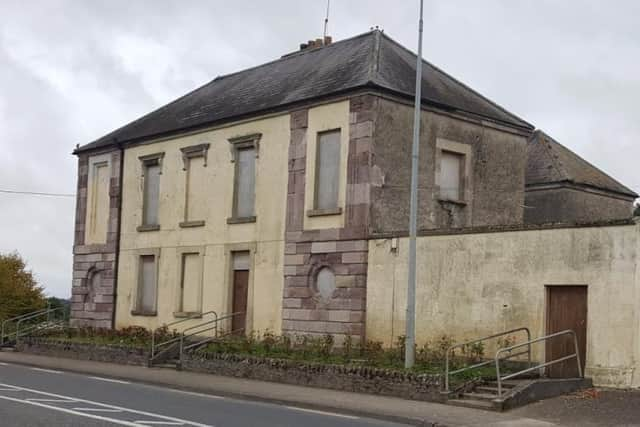
Pictured: Borris in Ossory Courthouse
"I have been working closely on this project since I was elected in 2019. A modern new wing will also be extended to the Courthouse which has the potential to be used as a community enterprise, such as a coffee shop or tea room which is needed in Borris-In-Ossory," Cllr Bergin said.
"This is perhaps the largest ever investment in Borris-In-Ossory as a joint project between Laois County Council and the Department of Rural and Community Development, working with the local community to develop a major hub for employment, community and heritage in the village," Cllr Bergin finished.
The courthouse was originally constructed between 1825 and 1830.