
Longford District Court dismisses case due to "fatal flaw" on checkpoint authorisation form
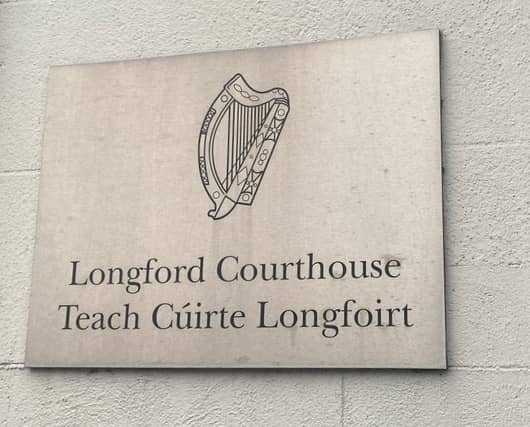

A defendant accused of drug driving had his cased dismissed due to a spelling mistake the judge described as a "fatal flaw"
A defendant accused of drug driving had his case dismissed last week due to a what a judge described as a 'fatal flaw' on the checkpoint authorisation form.
Owen Sweeney of Cloonfree, Strokestown, county Roscommon pleaded not guilty to the alleged offence at Longford District Court.
In her evidence, Garda Denise Dockery told Judge Bernadette Owens she was carrying out a mandatory intoxicant checkpoint at Mullolagher, Longford on December 2, 2022 when she stopped Mr Sweeney driving a Ford Focus just before 10.50am.
Garda Dockery said she directed Mr Sweeney to pull over and when she spoke to him she noticed his eyes were glassed over and his mouth was dry.
She said she formed the opinion he "had consumed intoxicants" and Mr Sweeney was arrested after a roadside oral fluid test for drugs.
Barrister John McNulty asked Garda Dockery about the updated Drager 5000 device only coming into use the day before Mr Sweeney was detected on December 1, 2022.
However, Garda Dockery said they wached a training video and learnt how to use the device effectively.
The court heard there was an error and a spelling mistake on the checkpoint authorisation document in relation to the checkpoint location.
However, Inspector Brian Boland referred to a High Court judgement following a 2011 legal challenge where just the townland Vicarstown was included.
He stated it was one of three in the country but the prosecution was successful.
"The High Court ruled in that case it is in the spirit rather than the letter of the law that matters and the prescribed obligation had been substantially and therefore adequately provided," he added.
Judge Owens considered the submissions and she said she believed there was a "fatal flaw" in relation to the authorisation of the checkpoint and she dismissed the case.
"In my view any issue that is raised with the authorisation for a mandatory checkpoint must be critically looked at.
"And that is a mandatory checkpoint that permits a guard to take from an individual a bodily sample which is a very significant matter and it will be for no other reason other than you have been stopped at that checkpoint.
"In my view there is a fatal flaw in the authorisation and I am dismissing it," she concluded.