
Longford Westmeath count continues
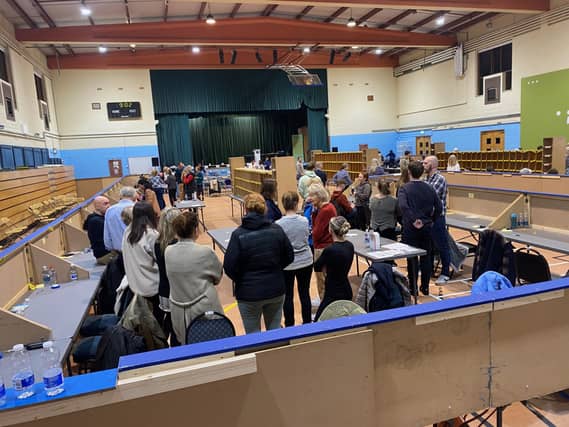

A second count is due around midday
How does distribution work:
A candidate's surplus is the number of votes he/she has over the quota. Generally surpluses are distributed before candidates are excluded.
The rule is that a surplus must be distributed in the next count if it meets one or more of the following conditions: Can elect the highest continuing candidate. Can bring the lowest continuing candidate level with or above the second lowest continuing candidate.
Can qualify the lowest continuing candidate for recoupment of their election expenses or deposit (if applicable). If there is more than one surplus and the largest surplus on its own does not meet any of the above conditions, the largest surplus must be distributed on its own in the next count if the sum of the surpluses meets one or more of the conditions.
The question of whether a surplus must be distributed is considered afresh after each count on the basis of the surplus(es) then available. After a surplus has been transferred, any candidate who reaches or exceeds the quota as a result is deemed elected.
Following the distribution of the surplus, the elected candidate is left with an exact quota of votes that he/she retains for the duration of the count.
An elected candidate's surplus is distributed based on the next available preferences for continuing candidates (i.e. candidates not elected or 6 excluded) contained in the last parcel of votes that brought the elected candidate over the quota.
Where the ballot papers of the elected candidate whose surplus is to be transferred consist ONLY of ballot papers with first preferences for that candidate, all of that candidate’s ballot papers are examined to ascertain the next available preferences.
This is always the case where a surplus is being transferred at the second count. Where, however, the ballot papers of the elected candidate whose surplus is to be transferred consist of ballot papers with first preferences votes AND transferred votes (second of subsequent preferences) for that candidate, OR they consist of transferred votes only, it is ONLY the ballot papers in the last parcel received by that candidate that are examined to ascertain the next available preferences.
Detailed surplus calculations All the votes in the last parcel of votes received by the elected candidate are sorted into sub-parcels according to the next available preferences, setting aside those that do not transfer to any candidate.
The total number of transferable papers is calculated.
The manner in which the surplus is then distributed depends on whether:
the number of transferable papers is greater than the surplus (this is usually the case in the early stages of a count);
the number of transferable papers is equal to the surplus (this happens infrequently)
and the number of transferable papers is less than the surplus (this is usually the case in the later stages of a count).