
Wet July impinges on Longford farmers

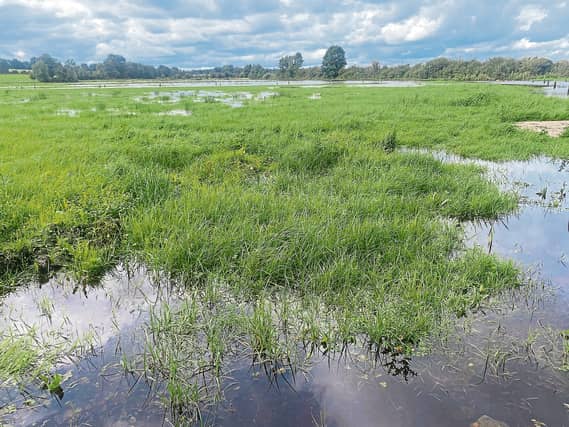

The inconvenience of the wettest July on record is an annoyance for most of us, but for farmers its long term implications are far more sinister.
For many Longford farmers the incessant rain is having a significant impact on their livelihood. Flooding is the main problem, and farmers on the banks of the Shannon are particularly affected.
Waterlogged fields are an unusual site in August when many farmers would be in the process of getting their second cut of silage.
Last Friday farmers held a rally in the Midlands as part of a campaign calling for government action to address flooding issues along the River Shannon. The protest took place on the Banagher Bridge, and was organised by the Save Our Shannon Organisation.
That group wants to see one group nominated to manage the river. Protestors carried signs calling for the removal of pinch points and to lower lake levels by one metre.
Longford farmer Aidan Cousins is feeling the effects of the wet weather, but says his situation “is not unique”. Aidan owns land on the banks of the Shannon, land visible from the N5 and drivers heading West can see land that would be meadow in a normal August is underwater at present.
“I'm not on my own, I know that much from talking to people. There are plenty in a similar situation,” Aidan told the Leader.
While stopping rain is beyond the powers of political representatives addressing the levels the Shannon is maintained at by the ESB is not: “All my life I'm talking about it and nothing has happened. I am almost at the point where I am tired of putting my case forward. It's highlighted, but nothing changes. The weather picks up and it is all forgotten about. It can be a bit off putting.”
Aidan believes that Spring level of the Shannon was maintained at a high level by ESB and they did not anticipate the volume of rain that fell in the last couple of months: “They weren't prepared for it,” he tells. The flooding affects fodder plans for the coming years: “We have cattle in sheds in July and August, which is very unusual. They are eating silage we made in May, silage earmarked for winter. “
The weather has other effects on future feed plans: “The ground is not good enough to go in with machinery to harvest it. We also have had to let cattle into some of the fields. When the low lying ground is gone you can't graze it, so you have to let the cattle somewhere.
“This is on drier ground that otherwise would have been left for meadows. It's not ideal, the cattle lie and walk on the long grass, so what could have lasted a month if made into silage will now only last a week when grazed. So as you can see there is more waste,” Aidan explained.
It is not all doom and gloom: “We haven't given up totally on it yet. We have fields closed off to see what happens.”