
An Colún: A mental tonic in a charming village

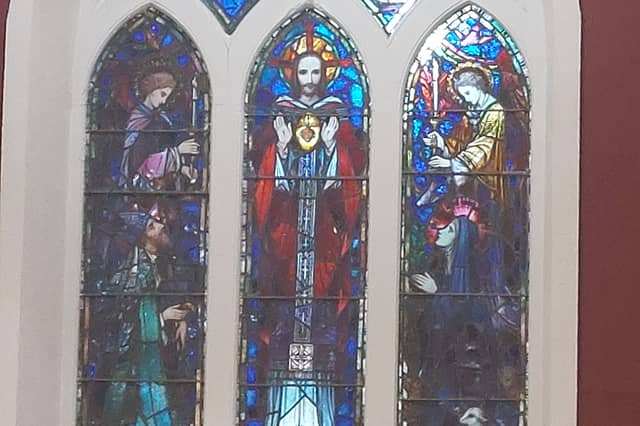

‘this lovely bicentenary mass was just the mental tonic that I needed.’
The Church of the Annunciation in Carrig celebrated its 200th anniversary on Friday evening last and it was a beautiful and very rewarding occasion to be part of.
After an exceptionally busy and sometimes demanding, sometimes stressful week, I was in two minds as to whether I should attend or not. Feeling mentally exhausted and emotionally wrung out, my very strong instinct was to go back to the sanctuary of my home and shut the door on the mad and bad world out there for a couple of days, to recharge my inner batteries before emerging back out into the fray once again. But thankfully I decided not to go with this instinct and I drove the short distance to this charming village near Birr.
I say ‘thankfully’ because as it turned out this lovely bicentenary mass was just the mental tonic that I needed. The light shone into my mind and my being was filled with hope.
The strong sense of positive community spirit in Carrig is a balm for the soul. There are obviously many decent people living in the village who are proud about the village and want to work towards improving it. At the end of July, Carrig Community Park was officially opened, a marvellous addition to the place. The Park is now a focal point for community life, a place where children can play and families can gather.
Many years ago a big problem for the village was the busy N52 running through it. It was the scene of a number of road accidents, including one accident where an SUV parted company with the road and ended up on its roof in the stream. Thankfully no one was seriously injured. The Midland Tribune ran a number of stories about the dangerous traffic problem at the time and the locals repeatedly voiced their worries about the issue. Finally, action was taken and substantial traffic calming measures were introduced, which made the village a much safer and pleasanter place.
The Church of the Annunciation is a simple, elegant building. It has a cruciform structure and its wooden ceiling rafters make an impression. The side aisles used to have galleries but these were removed during major renovation works in 1975 and 1976. Unfortunately, during these works the pinnacles and caps on the front façades were also removed. These were interesting features and it was a pity to remove them. This year it was decided to make them part of the Church façade once again. They are now placed either side of the main door of the church.
The gospel reading during Friday’s mass was the Beatitudes, which was exactly what my soul needed after a trying week. During the week I was involved in a conversation with another person where a number of very unpleasant (to put it euphemistically) insults were hurled at me. They struck raw wounds and caused me considerable hurt, which sat in my heart like a great darkness for many hours. Then in Carrig church I heard the words, “Blessed are you when people insult you, persecute you and falsely say all kinds of evil against you because of me.” What an extraordinary concept, I thought, from this extraordinary man who lived 2,000 years ago. That we are in fact blessed when people insult us! Logically, it sounds like an inversion of reality, but for those who are hurting it feels like a kind arm being placed around our shoulders. The words are a cure for other people’s lack of compassion and kindness.As I sat there in the church I thought about the words and their meaning. I knew that when Christ said "Blessed are you when people insult you" in Matthew 5:11-12, He meant that enduring insults, hardship, or mistreatment because of Him and for the sake of doing right brings God's deep favour and a great reward in heaven. I also knew that He was teaching that rejection by the world proves a person belongs to God's kingdom rather than worldly systems.I knew as well that suffering verbal abuse from cruel people who just want to cause pain is a common, painful part of living in a broken world, but it is not, strictly speaking, "persecution for righteousness' sake" or for Christ's name. And I knew that the specific "blessing" Christ spoke of is tied directly to bearing a cost for living out faith and moral truth. However, I realised as well that there is a kind spirit at work in the Beatitudes, a spirit wishing to endow suffering people with general grace and spiritual comfort; and therefore I knew that while I could not claim the specific reward promised for Christian, faith-based persecution (of whatever kind), God still cared deeply about my pain, because He wanted to offer comfort to my pained heart.
I then reflected that God also is, ultimately, calling upon us to respond to life’s difficulties and people’s harshness with grace, insight and transcending forgiveness.
The Beatitudes strongly demonstrate that Jesus possessed an extraordinary, deeply insightful, and highly countercultural mind. These teachings completely upended the social, religious, and political norms of the ancient Mediterranean world.
In the Greco-Roman and ancient Jewish worlds, wealth, power, health, and social status were viewed as direct signs of divine favour. In our own world, wealth and power are also highly valued. During the Sermon on the Mount Jesus flipped this dynamic entirely by declaring that the marginalised were the truly blessed. Instead of praising the elite, he elevated the "poor in spirit" and "those who mourn," promising them comfort and the kingdom of heaven.