
Offaly emergency accommodation refused due to over-crowding concerns

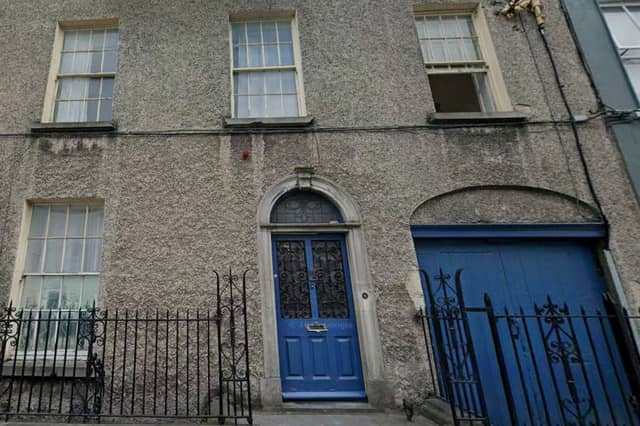

Concerns over the intensive occupation and overcrowding at a heritage residence in Tullamore is one of the reasons a planning application has been refused for an extension of emergency accommodation by Offaly County Council.
In particular, ground floor rooms which were previously in use as sitting rooms now being used as bedrooms was raised as a matter of concern.
A split decision was issued by the council, approving conservation works but refusing the extension of the emergency accommodation beyond 2027.
“While the proposed façade conservation works should proceed, it is recommended that the Planning Authority refuse the retention aspect of the application and require the earliest possible return of McGinn House to its original use as a single-family dwelling,” the inspector’s report states.
Late last month the local authority refused the temporary change of use from a house, namely McGinn House, which is a protected structure to accommodation for protected persons which is ancillary to a Direct Provision Centre.
The planning inspector’s report says: “While the proposed conservation works to the principal façade are welcomed and fully supported, significant concerns arise in respect of the continued retention and extension of the temporary change of use of McGinn House from a historic townhouse to accommodation for protected persons.
“The repair of the historic sash windows and the reinstatement of traditional lime render to the High Street elevation represent positive conservation measures which will enhance the architectural character and long-term preservation of the Protected Structure. These works accord with established conservation principles and are strongly supported,” the report states.
However, the report says the retention element of the application gives rise to serious concerns from both a heritage and planning perspective.
“McGinn House is widely recognised as one of the most complete and best-preserved surviving townhouses in Tullamore. The building retains an exceptional degree of historic authenticity, both internally and externally, including its original plan form, circulation patterns, joinery, fireplaces, staircase, outbuildings and historic garden setting. It is not only an important Protected Structure but also an increasingly rare example of an intact nineteenth-century urban residence within the town centre. Given its significance, every effort should be made to secure its long-term future as a dwelling house, which was its original and intended use,” the report says.
The inspector’s report notes that the planning proposal seeks to retain a use that has already been granted temporary permission until December 2027.
It adds: “The continued extension of this temporary use is considered undesirable and contrary to the long-term conservation interests of the Protected Structure. The intensive occupation of the building by a large number of residents places considerable pressure on the historic fabric and raises concerns regarding accelerated wear and deterioration of significant architectural features.
“Of particular concern is the apparent discrepancy between the previously approved drawings and the revised documentation now submitted.
“Furthermore, a review of the historic planning files indicates that the ground floor rooms shown on earlier layouts as sitting rooms are now being used as bedrooms. Occupancy numbers have been provided for six bedrooms located on the first and second floors; however, no occupancy figures have been provided for the two ground floor rooms currently in residential use. During a site inspection undertaken on 28 September 2026, access to these rooms was not possible as they were occupied. Consequently, it has not been possible to establish how many persons are being accommodated within these rooms or to accurately assess the total level of occupancy within the building. Despite arranging a planned site visit, access was not possible to most rooms.
“Concerns arise regarding potential overcrowding and the suitability of the facilities provided,” the report states.
It is noted in the report that the communal kitchen can only sit three people at a time.
The report concludes that the Planning Authority is “not satisfied that the proposed development provides good quality living environments for residents”.