
OPINION (AN COLÚN): The growing, ugly side of Halloween

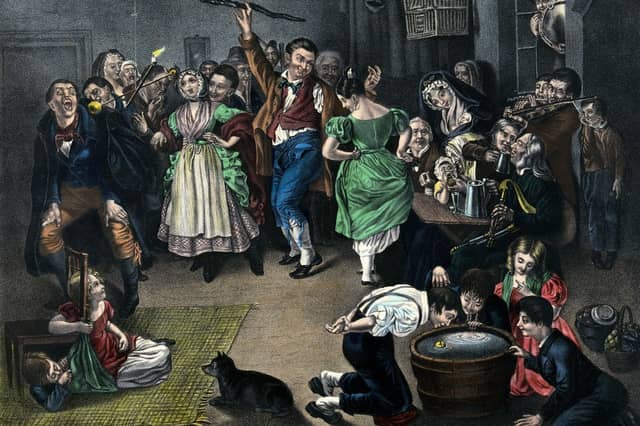

‘At the stroke of midnight, the face of her future spouse was supposedly meant to peer out from the darkness’
HALLOWEEN’S ugly and nasty side in Ireland is growing year on year. Statistics indicate that the severe, anti-social side of Halloween has seen a notable upward trend. Fireworks-related offences rose by 31% in the year leading up to June 2026; and Dublin Fire Brigade said this year was its busiest Halloween night in 15 years, when it received “a record-breaking wave of emergency calls.”
Emergency crews are facing increasingly hostile conditions. In Crumlin, Dublin five Gardaí were targeted at close range with a handheld firework launcher during a bonfire incident. In Clonbullogue, Offaly a Garda was hospitalised when he was struck in the face by a firework. The Clonbullogue News Facebook page pointed out: ““For several hours, a large group of approximately 20 young men and at least two young women engaged in sustained disorder throughout the locality, involving fireworks, burning hay/straw bales, intimidation and dangerous behaviour.” In Carlow and Dundalk, there were reports of groups of youths "terrorising" estates by launching mortar-style fireworks at passing vehicles and blocking roads with burning furniture.
Thankfully, the traditional, community-led spirit of Samhain is still extremely strong, but in urban areas the dark shadow of anti-social behaviour is growing year on year. In Birr the increased use of bangers has been very noticeable, with the unpleasant noise starting as early as the beginning of October. Bangers are illegal and can cause nasty injuries to their users, but this hasn’t affected their growth in popularity.
I sometimes wonder how much of the old Halloween customs have been swept aside and replaced by the trends of North American suburbia. In truth, Irish Halloween customs haven't been overshadowed, but have blended with American commercial and suburban influences (such as plastic decorations, elaborate front-yard displays, and heavy trick-or-treating). The best way to think of it is it’s more of a two-way cultural loop rather than a replacement. Irish and Scottish emigrants brought Samhain traditions (mumming, jack-o'-lanterns, and fortune-telling) to North America in the 19th century, where they evolved into modern trick-or-treating and commercial Halloween (Mumming is related to the older pagan practices of Samhain, where people wore disguises or animal skins to confuse or ward off wandering, malign spirits.) In the late 20th century, the heavily commercialized, Americanized version of Halloween looped back into Ireland via film, television, and retail. Thankfully, the traditional Irish heartbeat of the festival (barmbrack, folklore, local bonfire traditions, and a connection to Samhain) still remains a part of it.
When I was growing up in the 1970s and 1980s I used to enjoy playing apple games. Thankfully these games are still played by Irish children during Halloween, but less commonly than in the past. These games include Snap Apple (which is biting a suspended apple on a string) and bobbing or ducking for apples in a basin of water. Commercial trick-or-treating, parties, and spooky movies have taken over much of the festival, but these classic apple games still occur at home parties, school events, and community gatherings, sometimes adapted or scaled back due, unfortunately, to “modern hygiene awareness.”
The Floury Mountain is another old game which is still played by some. It would be nice to see games like this enjoy an increase in popularity in the coming years. They reflect a pre smartphone time when children bonded positively with their friends. Traditional Halloween games represent a time when entertainment required us to look at each other rather than at a screen. They turned the spooky atmosphere into a shared, physical, and often hilarious bonding experience. Dunking your entire face into a bucket of water alongside your friends, laughing through the splashes, and ending up with soaked hair completely removed any sense of self-consciousness. Trying to bite an apple swinging from a string tied to the ceiling (with your hands tied behind your back) guaranteed immediate, lighthearted failure that everyone celebrated together. Or the tradition of telling Ghost Stories where we gathered in a tight circle around a flashlight or a fireplace, and actively listened, feeding off each other's reactions, and collectively built a spooky atmosphere. These games succeeded because they required total presence, physical interaction, and a willingness to look a little foolish.
Some Halloween traditions died out a long time ago. One of these was Mirror Gazing. This tradition reached the peak of its popularity during the Victorian and Edwardian eras. The custom began rapidly fading and became less popular by the mid-20th century, when Halloween shifted from a night of eerie adult and adolescent matchmaking rituals into a child-centric commercial holiday focused on costumes and sweets. An individual (usually a young woman) would wait until midnight on Halloween Night when the household was completely asleep. Stepping into a completely pitch-black room with a single candle, she would sit or stand before a mirror. While keeping intense, unbroken eye contact with her reflection, and remaining silent, she would perform specific actions to summon the vision. Typically, she would brush her hair, eat an apple, or hold a lit candle. At the stroke of midnight, the face of her future spouse was supposedly meant to peer out from the darkness over her left shoulder. A skull signified death before marriage.