
Tullamore Lions Club supports aid agency with Clara links

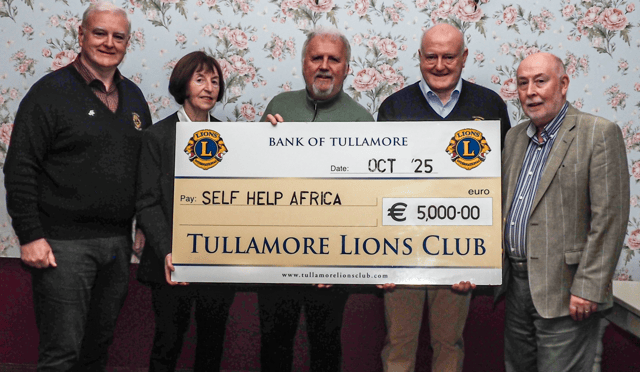

Self Help Africa's Ronan Scully, from Clara, accepts generous amount from group
TULLAMORE Lions Club, this week, donated a cheque for €5,000, to Self Help Africa, in support of Infant Malnutrition & Food Insecurity in Malawi, the fourth poorest country in the world.
Ronan Scully, Business Development Representative, Self Help Africa, explains that through their Sustainable Action Fund, Self Help Africa aim to build lasting resilience by empowering 160 civil society organisations across four districts. This community-led approach will drive long-term impact by increasing dietary diversity and ensuring sustainable access to biofortified seeds — an essential step in ending malnutrition.
Support for the Fund, he said, will bring life-changing, nutrient-rich foods to vulnerable communities, including:
-
Orange Fleshed Sweet Potato (OFSP) – rich in vitamin A
-
Vitamin A maize – vital for immune support
-
Iron-rich beans – essential for growth and development
In Malawi, 35.5% of children under 5 are affected by stunting (chronic malnutrition)
Micronutrient deficiencies are widespread:
-
Anaemia affects 30% of young children
-
○Zinc deficiency affects 60% of the population
-
○81% of nonpregnant women are folate-deficient
Causes include poor dietary diversity, limited access to nutritious foods, climate-related shocks (droughts, floods), unsafe water, poor sanitation, and inadequate health infrastructure.
Ronan explained that there are 39,209 target beneficiaries on this project including:
-
18,027 women of reproductive age
-
9,213 under-fives year olds,
-
9,000 smallholder farming households
-
40 schools
-
4 district hospitals
“We are changing behaviours in rural communities by highlighting the crucial importance of early interventions to prevent malnutrition, from breast-feeding for the first six months through to infant dietary diversity for the first 1000 days, and by increasing access to and demand for more nutritious staple foods.
“Our solution is commercially viable as it works with existing farmer networks, small businesses and local communities to tap into and build on links with local market systems.
By promoting homegrown nutritious produce from (initially donated) good quality, drought tolerant seed, with training and support, households will gain long term access to better quality nutritious food directly in their communities. We aim to build long-term community resilience, improve health outcomes, promote green economic growth, and increase food security,” he added.