
33-year-old given months to live after ‘long Covid’ turned out to be leukaemia says doctor asked her about Dignitas


An athletic 33-year-old given months to live after her leukaemia was initially mistaken for long Covid has said one doctor asked if she had considered Dignitas, amid a series of devastating relapses.
Olivia Knowles started experiencing headaches and tiredness in late 2023 and was told it was “very likely long Covid”, before extreme toothache days later prompted an emergency hospital visit and a diagnosis of acute myeloid leukaemia (AML).
After a series of relapses and months of attempted cures over the course of 2024, including gruelling chemotherapy, Olivia said at one stage a doctor asked if she would consider “taking a flight” to the assisted dying centre Dignitas in Switzerland.
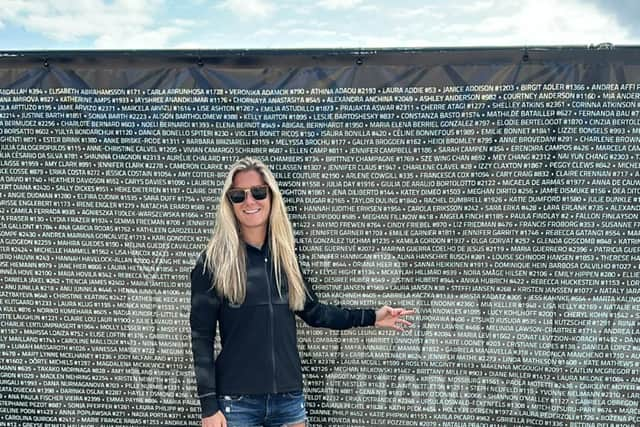
The hair salon owner from Blackpool, whose “typical weekend” before her diagnosis involved 100-mile bike rides and 15-mile runs, walked 20 miles around Fairhaven Lake on March 16 to raise funds for clinical research at King’s College Hospital.
She said she hopes any donations will improve research on AML, a particularly aggressive cancer which, she said, has not seen any “solid advancements” in treatment for 50 years.
“All I really miss now is going to work and training. That’s all I want – just my normal day and my normal routine.
“If you could have one day, it might sound odd to some people, but I would just love to take the dog for a run and go to work, more than anything.”
Olivia started noticing something “wasn’t quite correct” in August 2023 while competing in the Half Ironman World Championship in Lahti, Finland.
“I just wasn’t able to push as hard as I normally would have been able to,” she said.
“But I didn’t feel unwell day to day, so I was just pushing it to the back of my mind.”
Olivia went to a private doctor in November 2023 but was told it was “very likely to be long Covid” and she should “expect to feel like this for some time”.

“It was a total shock,” she said.
“I’m not saying I was the healthiest person in the world, but I was quite healthy – I didn’t have a lifestyle that was indicative of cancer.”
Olivia began a regime of chemotherapy designed to “completely empty” her bone marrow to see whether the cancerous cells grew back.
This procedure stripped away her immune system, leaving her extremely vulnerable to infection and unable to leave hospital.
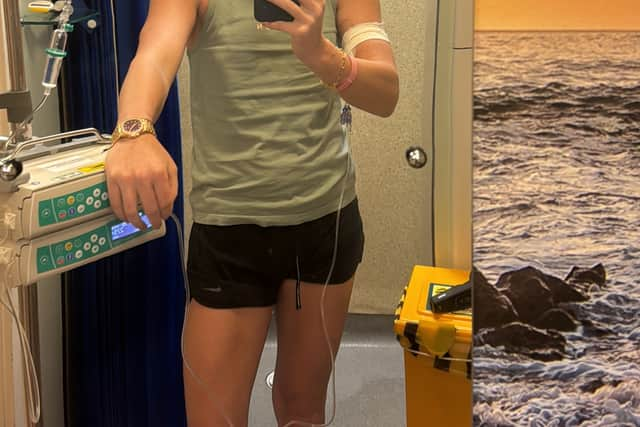
Following two rounds of chemo with varying degrees of success, Olivia’s third treatment in April 2024 largely succeeded in eradicating her leukaemia.
But just before she was due to have a stem cell transplant to replace her bone marrow, a pre-surgery appointment was moved unexpectedly.
“I thought that seemed strange, so I went down to the hospital and asked to speak to my consultant,” she said.
“It became a very weird scenario in which he wouldn’t come on the phone to speak to my nurse specialist, or me.
With AML, Olivia explained: “Even if there’s a speck of it left, it just regrows.
“And what regrows is basically the resistant cells, the ones that have evaded and resisted the previous chemo.”

Olivia said a consultant offering a second opinion at another hospital asked her: “Have you ever thought about taking a flight?”
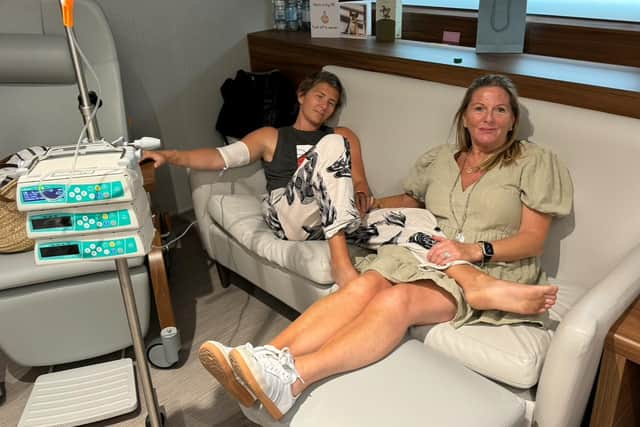
In November 2024, after various unsuccessful trials, Olivia was given a novel Car-T treatment – immunotherapy which genetically modifies a patient’s T-cells to attack cancer.
The treatment at King’s College Hospital in London was followed by a stem cell transplant.
“The initial bone marrow findings were excellent,” she said.
“There were no signs of disease. It was a really positive result at first.
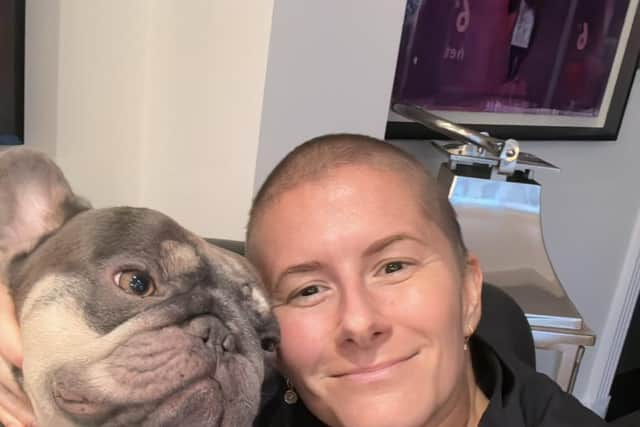
In March 2025, Olivia was readmitted with gut issues, a common side effect of stem cell transplants.
She said: “I’d been in for blood literally one week before. The blood work had been very good, no reason for concern.
“One week later, I showed active disease. My counts were off.”

“When I got the news, I wanted to go home,” she said.
“It was a bitter pill to swallow after being told there’s no disease.”
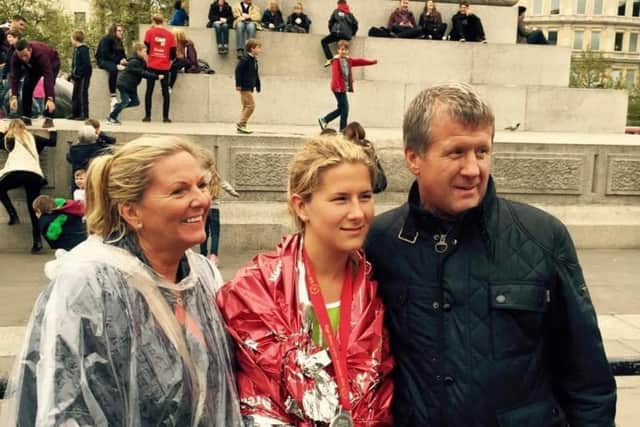
While home with her mum Susan and dad Stephen, Olivia decided “on a little bit of a whim” to walk a marathon around Fairhaven Lake to raise funds for the clinical research team at King’s.

She said: “It went exactly how I expected it to go, because my legs have atrophied so much.”
She hopes the money will contribute to “solid advancements”, saying the team at King’s “are on the cusp of something excellent with their development of Car-T treatment for AML”.

Olivia began a new chemo regime in late March, with the intention of joining another clinical trial.
Reflecting on her treatment, she said: “We did almost do it, but ‘almost’ doesn’t matter.
“I did this (walk) so one day the next 33-year-old, the next one-year-old, the next one-month-old, isn’t an ‘almost’.”
Olivia’s fundraiser remains open, and can be found at: gofundme.com/f/kings-college-hospital-clinical-research-department.