
Adventurers describe 1,500km kayak from Canada to Alaska, encountering whales, bears, whirlpools and rapids
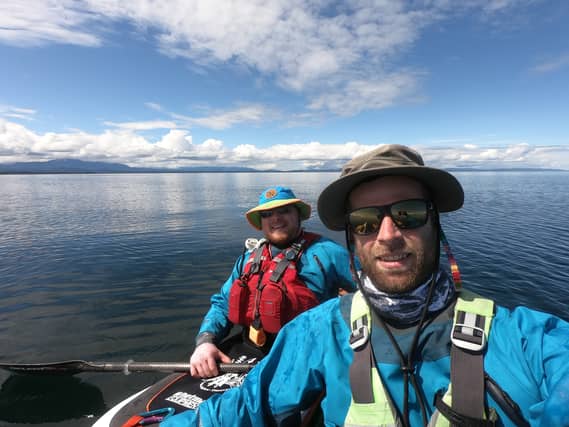

Two adventurers who embarked on a self-supported kayak trip over 1,500km between Canada and Alaska have described coming face-to-face with orcas, humpback whales and grizzly bears, while battling through freezing temperatures and navigating “whirlpools and rapids”.
Chris Whittaker, 29, who grew up in Milton Keynes, Buckinghamshire, but now travels all over the world, described the 72-day adventure as “incredible”.
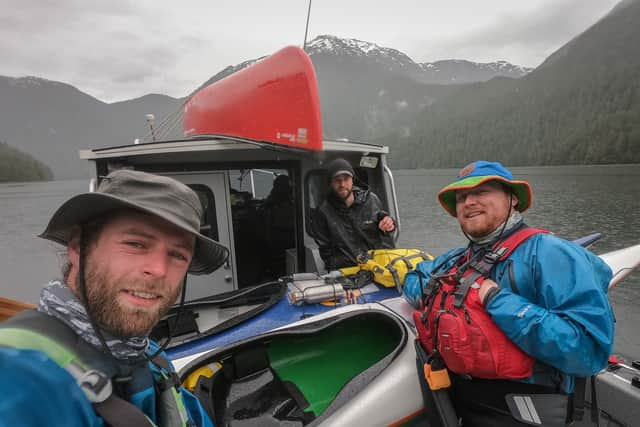
Chris said: “I’d only been in Canada for a couple of weeks and thought this sounds crazy, that someone is kayaking to Alaska.
“I kept thinking about it and thinking about it and, by the end of the summer, I was like, alright, I think I’m going to do this.”
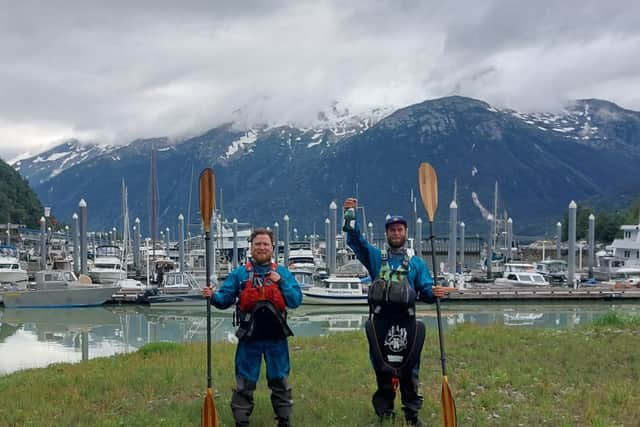
After pitching the idea to Nuka, who works as the director of active communities for NWT Recreation and Parks Association in Canada, the pair started planning their adventure, which began in Lund, British Columbia, and ended in Skagway in south-eastern Alaska.
But, due to the coronavirus pandemic, they did not embark on the trip until four years later on May 20 2022 – and even then, things did not start well.
“Funnily enough, the only day of the entire expedition that we didn’t go on the water because of the weather was the first day,” Chris said.
“There was a huge storm that was coming in, and people that we had met locally were warning us that it’s maybe not a good idea.
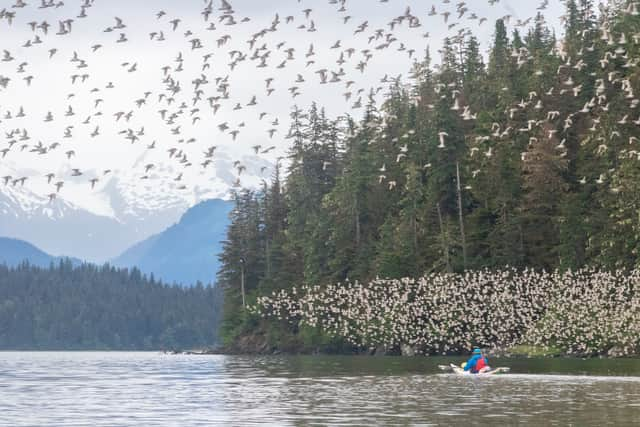
The 1,588km (968-mile) trip required extensive planning, including mapping where to camp, rationing food, obtaining equipment, and organising stop-off points to restock.
Securing sponsorship in the form of equipment from several companies – including NRS, Bending Branches, and Blue Dog Kayaking – was also a major factor in order to keep costs down.
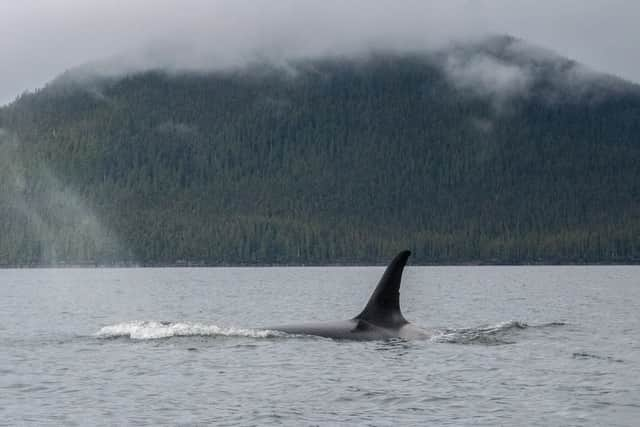
Chris said: “When I first saw them, we were paddling across a bay.
“I see some dorsal fins come out of the water to our left-hand side and, after spending two years guiding in Canada, I know exactly what they are.
“So, I shout: ‘Orca, orca’, and it’s such a calm day, we have time to get our cameras out.”
While waiting for the pod of orcas to pass, one of the whales “snuck up” on them and gave Nuka “a little nudge”.
“Whilst we were watching them – we were just filming them, having this incredible experience – my friend Nuka, in the corner of my eye, I see him wobble,” Chris continued.
“It’s a completely flat day, completely calm, so there’s no reason he should be wobbling.
“And he shouts: ‘There’s one under my boat, there’s one under my boat’.
“And as I turn, I see an orca surface about two metres in front of him.”
Chris explained that the whale’s actions were “completely intentional”, adding: “These are such powerful animals. If it wanted to flip us in the water, it could have done.”
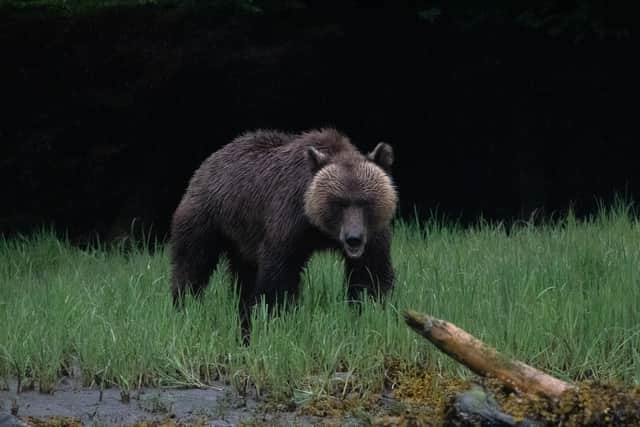
The paddlers also saw grizzly bears during their trip – the animal Chris feared the most.
Chris and Nuka were lucky enough to meet “Chief Doug”, the chief of the Kitasoo/Xai’xais nation in Klemtu, who offered them accommodation and took them to see the furry creatures.
Chris said: “We anchor up at this inlet, unload our packs, they go in a canoe, and we just paddle up.
“It’s this flat meadow, with really long grass and a stream that comes down the middle of it, with really high, steep, mountainous cliffs around it.
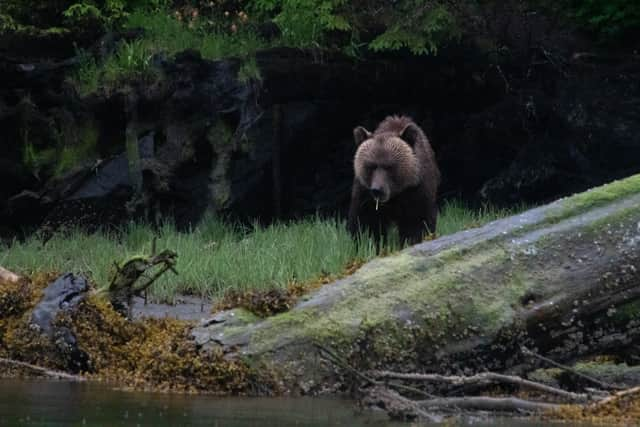
He continued: “You know, being around grizzly bears, it’s probably the number one thing I was afraid of during this expedition.
“The number one risk to us was grizzly bears because there’s really not a whole lot you can do if one of them decides to go for you.”
Growing up, Chris said he was always sporty, but his love for kayaking did not start until later on in life when he took a gap year.
He did not know what he wanted to do at university, and so he researched how to travel while getting paid and came across kayak instructing.
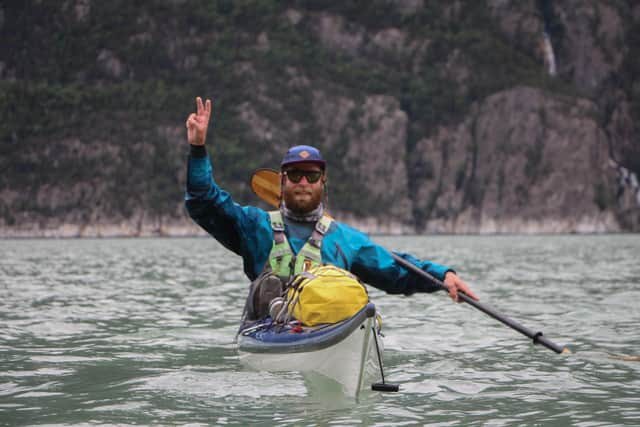
But kayaking does not come without its challenges.
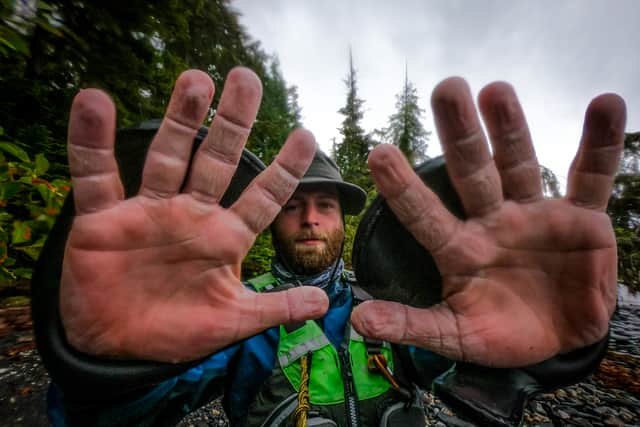
Chris said one of the main difficulties throughout the expedition was the mundanity of “having to keep going”, day in, day out.
And as they kayaked further north, temperatures began to drop, reaching single digits.
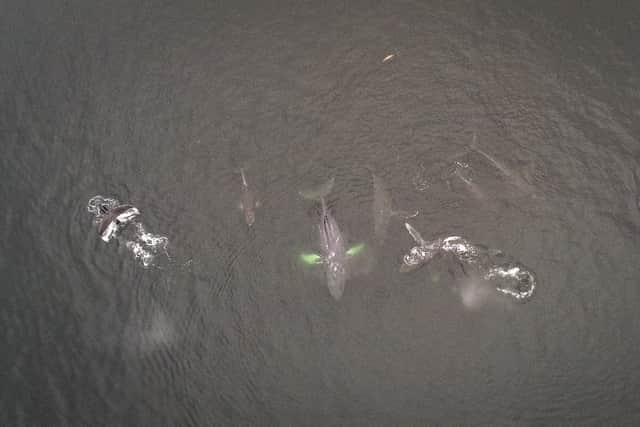
Yet seeing the wildlife was “incredible”, and another highlight of the trip involved seeing humpback whales bubble-net feeding.
This technique involves one of the whales diving deep under water and releasing air bubbles in a circle, which act as a “net” for fish, allowing the group to feed.
“It was unbelievable,” Chris said. “It was just wild to see this behaviour and see it in such a remote place as well.
Chris said reaching their final destination in Alaska on July 29 was “bittersweet”, but he and Nuka loved the whole experience.
The pair are planning to release a YouTube series later this year called “For Fun’s Sake Expedition”, which will show “raw” footage of the expedition.
To find out more, visit ffs-expedition.com.