
Air pollution ‘everybody’s problem but solvable’, Sir Chris Whitty tells summit


Air pollution is “everybody’s problem and a problem at all times” but can be solved, Professor Sir Chris Whitty has told a summit on the issue.
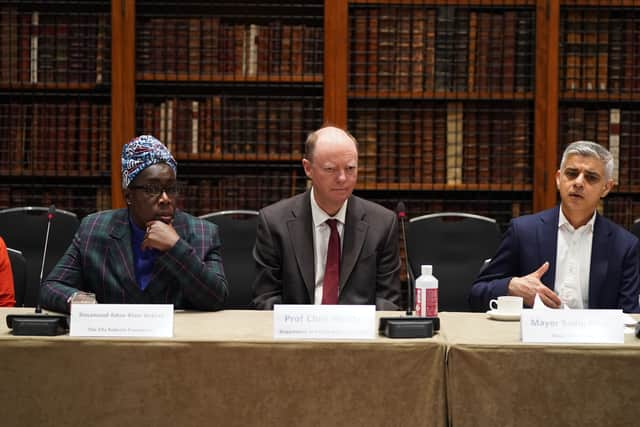
The Government’s chief medical officer was at the meeting convened by London mayor Sadiq Khan, which also heard from environment minister Jo Churchill.
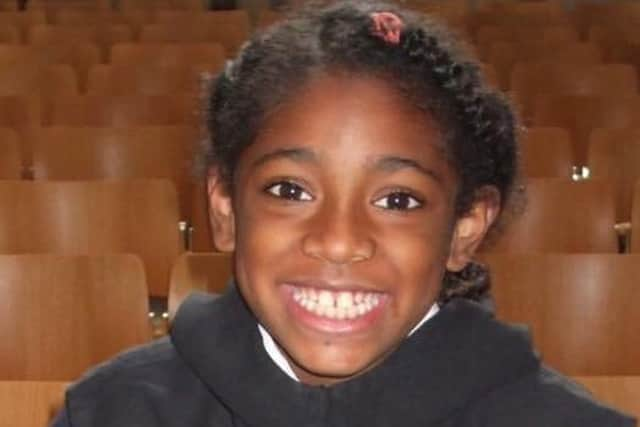
Ella’s death was later linked by a coroner to her exposure to severe air pollution from living 25 metres from the congested South Circular in Lewisham, London.
The coroner’s report, published last year, set out the need for government, the NHS and health and care professionals to do more to raise awareness of the serious health effects of air pollution.
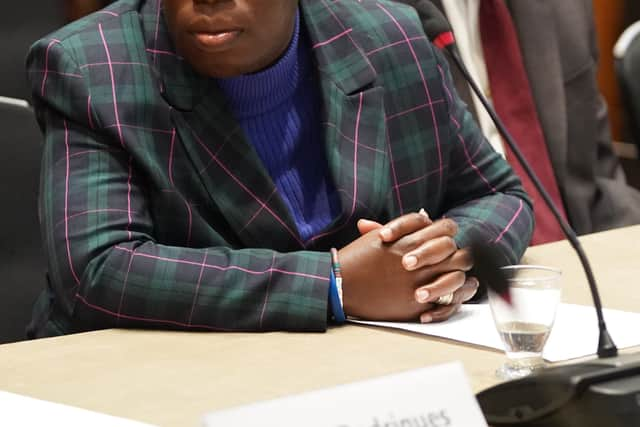
Ms Adoo-Kissi-Debrah is calling for a public health campaign to raise awareness of the detrimental impacts of air pollution, which she described as “the poor relation to cancer”.
And she said: “The number of children who die every year from asthma has not changed since my daughter’s death.
“A quarter-of-a-million children in London have asthma, so something is going on.
“We have better doctors, we also have better medicine, so the fact that children continue to die – in 2022 no child should have to go through a similar state to what my daughter went through – I see this as a public health emergency.”
She said she thought that if all doctors had knowledge about air pollution, they would be able to impart it to parents.
And she suggested that large signs, similar to “no entry” and other road signs, that call for “no idling” could be installed so they were prominent everywhere.
Addressing the meeting, Sir Chris said air pollution increased the risks of strokes, heart attacks, cancers and a variety of other diseases in older people and was even a problem before birth, as well as for children with asthma.
“So this is everybody’s problem and it’s a problem at all times,” he said.
“This is a solvable problem. The real place we need to tackle air pollution is where people live, work, study, play.
“Many of the things that drive pollution where people live and work and study are entirely amenable to us engineering out of the problem, for example on transport, or regulating out the problem as we’ve very successfully achieved over many decades,” he said, pointing to the Clean Air Act in 1956 cutting pollution.
He said there were a variety of things that could be done to encourage the engineering and building professions and road planners to design society to reduce air pollution, and once that happened, things would not go backwards.
“However, that doesn’t deal with the here and now, and many of these problems are going to take some years to work through,” he said.
“What we need to do is get the information from people who can say where and when air pollution is going to be most high-risk.
“And then we say to people who are most vulnerable – as Rosamund’s daughter was – this is a time, this is a place and this is a route you should be trying to avoid.
“That’s something people can then do to lower their risk.”
But he added: “We should not see this as a long-term solution.”
Mr Khan said health workers had a crucial role to play in raising awareness about air pollution.
“We simply don’t have time to waste – deadly air pollution is permanently damaging the lungs of young Londoners and affecting older people who are more vulnerable to the impacts of poor air quality.
“This is also about social justice. We know pollution hits the poorest Londoners, who are least likely to own a car, the hardest, which is why I’m doing everything I can to improve air quality and protect the health of all Londoners.”
He added: “This can’t be a talking shop, it’s got to be a coming together of people all on the same side to take urgent action to improve things across our city and across our country.”
City Hall is also publishing updated air quality guides for local officials, with specific information on air pollution levels in each borough, including around priority sites such as schools, hospitals and care homes, and data on health impacts.