
‘Amazement’ after woman, 42, had robotic surgery on cervical cancer and flew abroad for friend’s wedding just days later
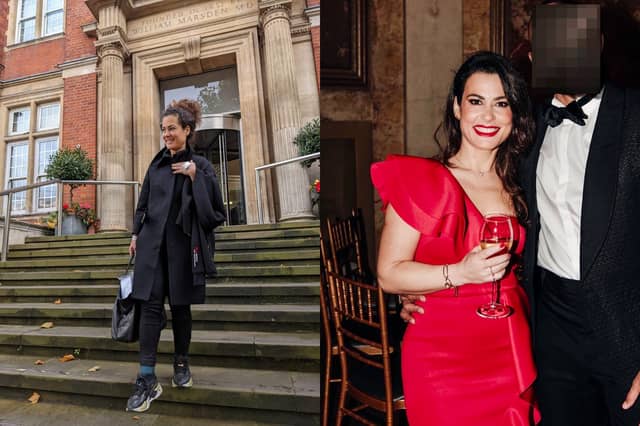

A cervical cancer survivor, who was able to fly abroad for her best friend’s wedding just days after undergoing robotic surgery to remove her womb, has said that “no one could believe” she recovered so quickly and she wants to stress the importance of never missing a smear test.
Klodjana Aliaj, 42, who works in finance and lives in London, said her symptoms were “so mild” that she almost dismissed them as hormonal changes, however, during a smear test – which checks the health of the cervix – she decided to raise her concerns.
It was during this check-up in October 2020 that doctors discovered blood in her cervix, which was not related to her period, and Klodjana was then referred to Chelsea and Westminster Hospital, in London, for further tests, scans, and a biopsy.
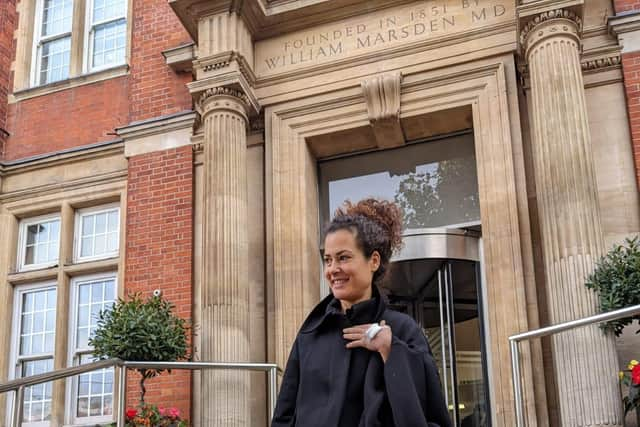
After being diagnosed with stage 2B cervical cancer, she was then referred to The Royal Marsden where she had radiotherapy, chemotherapy, and brachytherapy, before undergoing robotic surgery to have a radical hysterectomy – a surgical procedure to remove the womb.
Just 10 days after the hysterectomy, Klodjana was well enough to fly out to Serbia for her best friend’s wedding, which was “beautiful”, and she later took part in the Royal Parks Half Marathon, raising more than £3,000 for The Royal Marsden Cancer Charity.
“It was incredible because I booked the wedding of my best friend and I really wanted to go,” she said.

“I showed up (to the wedding) and I sat at my table, and when I would feel tired, I would go and rest, and it was beautiful.
“I felt so blessed to have had that opportunity (to have the robotic surgery), honestly, because the recovery was very, very, very quick.”
Cervical cancer is a cancer found anywhere in the cervix – the opening between the vagina and the womb – and symptoms include unusual vaginal bleeding, changes to vaginal discharge, pain during sex, or pain in the lower back.

She said the bleeding was “so minor” she almost ignored it, but because she is very health-conscious, she decided to seek medical advice during a smear test and was referred to Chelsea and Westminster Hospital for further check-ups and a vaginal biopsy.
Klodjana was then diagnosed with cervical cancer in November and she remembers the day vividly.
“The world crushes on you. It’s just like a blur and you think, is this true?” she said.
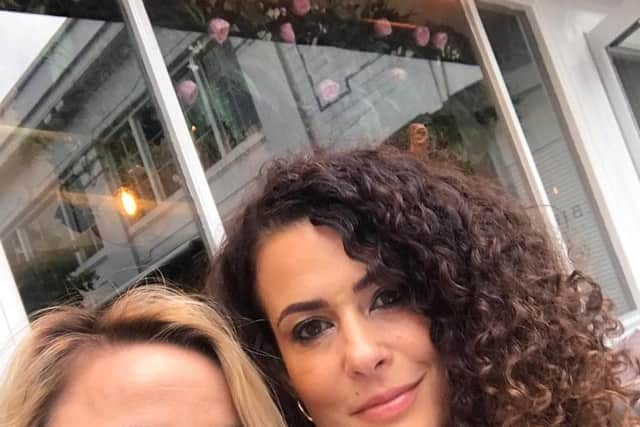
Despite the initial shock, Klodjana said she wanted to learn “everything possible” about her diagnosis and the required treatments.
She did not want to “hide (her) head in the sand” or view herself as “the victim of the cancer”, so she started reading and asking her doctors questions.
“It gave me that boost that whatever you’re going to do to me, or whatever you’re going to say to me, I want to know the facts myself,” she said.
“I felt so empowered and I shifted from being the victim of the cancer to being in charge of my healing.”

Klodjana said she did not have any major side effects from her treatments, other than fatigue, but going into early menopause “hit (her) psychologically extremely hard” and made her feel “very sad” – adding that her “lack of hormones” reduced her energy levels significantly.
“If I can use a metaphor, for me, day to night, it was like someone had switched off the light inside me, psychologically and physically,” she said.
“I couldn’t even stand up to prepare a decent meal, I couldn’t connect; it was like I blacked out completely.”
Klodjana said going into early menopause “provoked an earthquake within (her) whole body”, however, she was later prescribed hormone replacement therapy (HRT), which made her feel like a “flower blooming” and she began to feel more energised again.
After completing her treatments, Klodjana said she was given the “all clear”, however, some of the cancer cells turned out to be quite resistant to treatment and, in August 2021, she underwent robotic surgery under Ms Marielle Nobbenhuis to have a radical hysterectomy.
The Royal Marsden Cancer Charity has funded two da Vinci Xi robots at The Royal Marsden, meaning surgeons are able to conduct complex operations with greater accuracy, and for patients, this means less pain, smaller scars, a shorter stay in hospital, and quicker recovery time.

Just 10 days post-surgery, Klodjana flew to Serbia to visit her best friend Milan for his wedding, and she said seeing him was “so emotional”.
“I thought I wouldn’t be able to make it… no one could believe it,” she said.
“It was amazing, we were all amazed.”
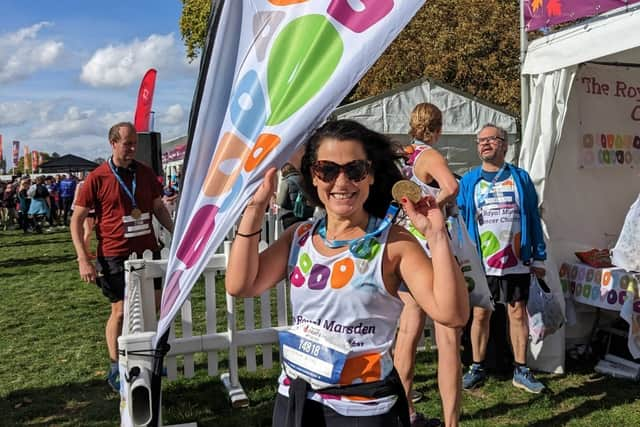
She said it was “physically challenging, but very rewarding”, and it was a way for her to express her immense gratitude to The Royal Marsden team.
Klodjana believes completing her own research and maintaining a positive mindset helped her through the most challenging aspects of her treatments, and she would advise women to “never miss a smear test” and to listen to their bodies.
She also said people should not be afraid to ask questions or push for a diagnosis or further check-ups, as she almost ignored her own symptoms.
“No one can do it for you, it’s just you,” she said.
“You need to have that personal talk with yourself, but in a positive and compassionate way; always validate your feelings.”
She added: “I’m pretty sure, in my case, if I had dismissed it because it was so minor and I had no pain, nothing else could have raised that flag.”
To find out more about The Royal Marsden Cancer Charity, visit: www.royalmarsden.org