
Ancient bronze archer figurine installed for Mediterranean islands exhibition
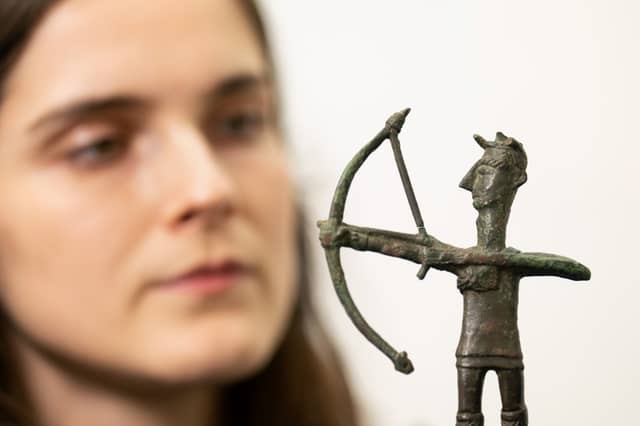

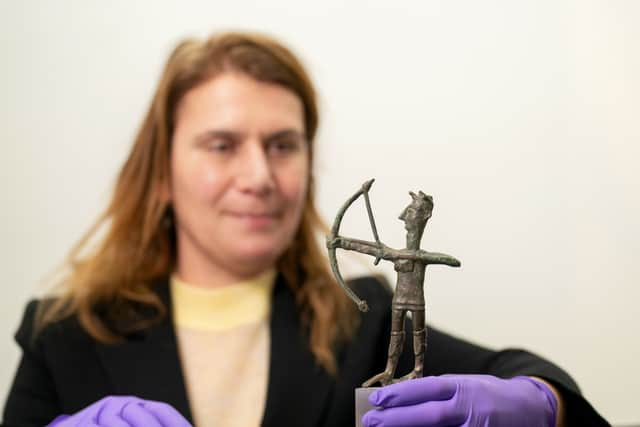
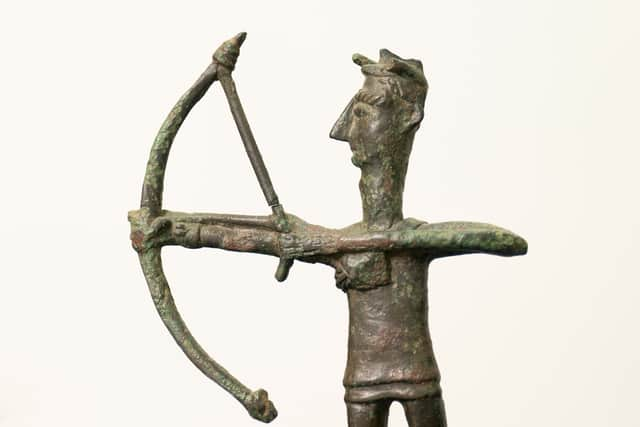
A bronze figurine of an archer is among more than 200 artefacts from Sardinia, Cyprus and Crete that are being installed at Cambridge’s Fitzwilliam Museum ahead of a new exhibition.
The items, most of which are in the UK for the first time, have been loaned to the museum for the exhibition Islanders: The Making Of The Mediterranean.
The sanctuary is associated with Sardinia’s lost 4,000-year-old Nuragic civilisation, and a large number of bronzes have been found there
No written records of this civilisation have been discovered, but its ancient burial grounds have yielded bronze figurines that shed some light on their mythological and religious identity.
At the peak of its power, the Nuragic culture was defined by megalithic stone towers called nuraghi.
Archaeologists estimate that more than 10,000 nuraghi once existed across Sardinia, although now only a few thousand survive.
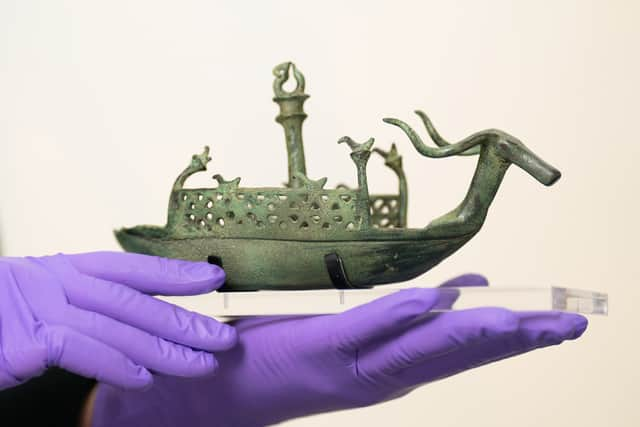
Also installed at the Fitzwilliam Museum as part of the exhibition is a bronze “navicella” boat figurine from Orroli, Sardinia, thought to date from 1,000 to 700 BCE.
Its central mast represents the Nuragic towers, and is a symbol of control over sea routes at a time when Nuragic Sardinia was well connected to southern Italy and other islands such as Cyprus for maritime trade.
The exhibition’s curator, Dr Anastasia Christophilopoulou, said: “This exhibition brings together three years of research, community engagement, and active archaeological and anthropological practice in the Mediterranean islands.
“We must picture ourselves in one of these islands, to better understand how these unique objects reveal self-perceptions, community identity and the islands’ long histories.”
The bronze figurines from Sardinia are being loaned from the National Archaeological Museum in Sardinia’s capital, Cagliari.
“The inclusion of Cagliari Museum antiquities, most of which has never travelled to the UK or abroad, gives a substantial contribution in creating comparisons with similar objects belonging to coeval insular civilisations, thus vividly showing the links among some of the main Mediterranean islands.”
Other items in the exhibition will include figurines commonly referred to as being from the Cypriot Terracotta Army and a rare 3,500-year-old ox-hide-shaped ingot from the Heraklion Museum in Crete.
– Islanders: The Making Of The Mediterranean, will run at Cambridge’s Fitzwilliam Museum from February 24 to June 4.