
Athlete with anorexia whose weight dropped to 31kg calls on public to help her ‘beat’ disorder and achieve dream job


An athlete who “completely lost interest in food” and shut herself away from the world after suffering a severe ankle injury, leading to her developing anorexia and dropping weight to just 31kg (4st 9lbs), has said she wants to beat the disorder which is trying to “kill (her)” as she studies to become a clinical psychologist to help others.
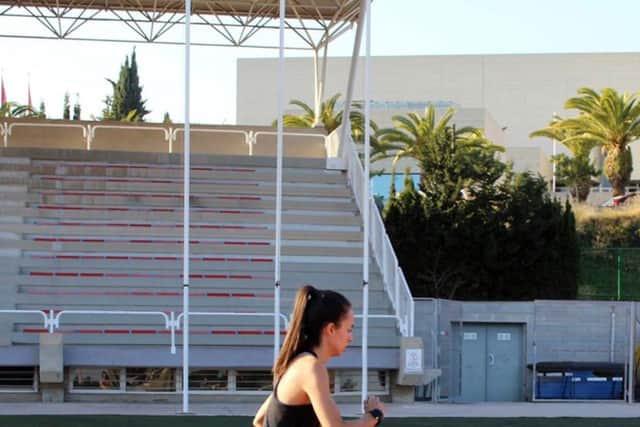
Jemima Hobbs, 25, said running was her “identity” in her late teenage years – she would “eat, breathe, sleep, and train” day in, day out, and regularly compete as a track athlete.
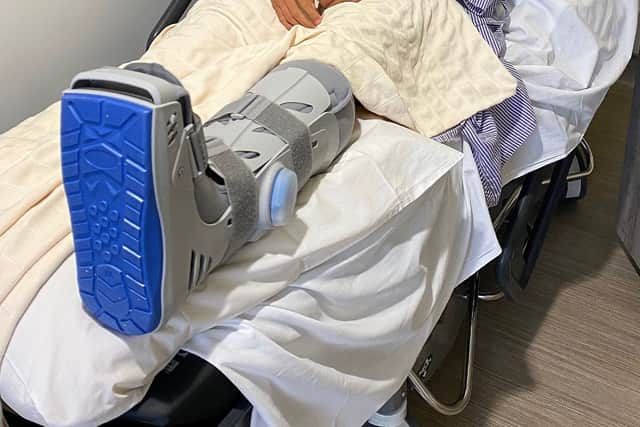
“That made me take a step back from sport and work, and I was really struggling because I thought, ‘Without running, who am I?’” Jemima told PA Real Life.
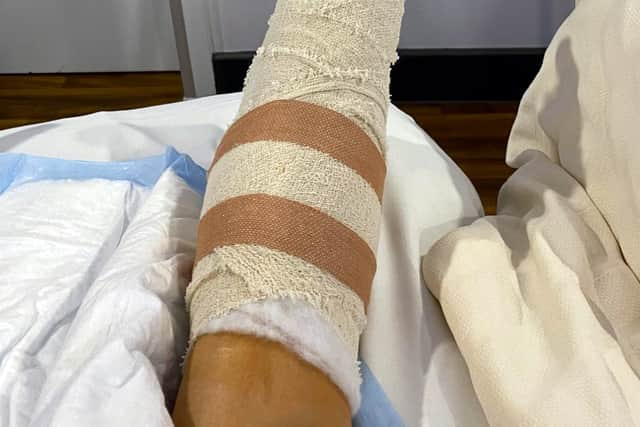
The Surbiton resident started studying psychology at St Mary’s University that year, as she wants to obtain a doctorate in clinical psychology, but she had complications with her ankle, leading to further “painful” surgery just before Christmas – and over the following months, she was bedbound, “completely lost interest in food”, and rapidly lost weight.
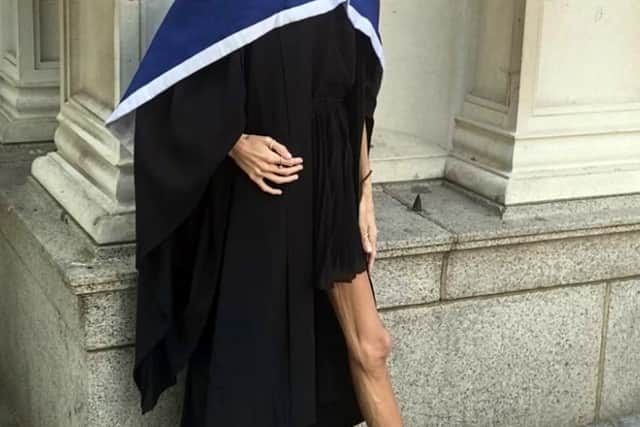
At 5ft 7in tall, she weighed 34kg (5st 4lbs), later dropping to 31kg (4st 9lbs), and said her bones were “visible” and she was “diminishing”.
Since then, her “hair has been coming out in handfuls”, she has not had a period, and lying in bed or sitting on chairs is “uncomfortable” as “there’s nothing on (her) bum now other than bones”.
Jemima has now taken the brave decision to ask for help publicly, launching a fundraiser to help her pay for private treatment, as she wants to “return to the ‘Jem’ that (she) was” and beat anorexia.
“I know that this is what I need, I know that I need more intense treatment because it’s just not working, but I’m not prepared to give up anymore,” she said.
“When I’m determined in terms of goals, because I’m an athlete, I don’t stop until I get there, and now I’ve got that academic goal of becoming a clinical psychologist and helping others, I know that a fundamental step in that is to recover myself, so I’m determined not to let this beat me anymore because it’s caused so much friction.

“I want my parents to be proud of me, and I want my friends to be able to have fun with me; I just want to be the Jem that I was, not what I am now.”
Sport has played an important role in Jemima’s life from an early age, and she specialises in the 3km steeplechase events – an obstacle race in athletics.
Jemima ruptured her ATFL and CFL in 2020 and underwent reconstruction surgery, but doctors then discovered she had osteochondral lesions, leading to further surgery – and that is when “it really hit (her)”.
She said she became depressed, stopped watching athletics and seeing friends, and went from preparing and cooking all of her meals, to just having coffee, water, or porridge with a “handful of blueberries”.
“I completely lost interest in food because I wasn’t moving,” she said.
“It just spiralled because I’ve always been underweight as an endurance athlete, I’ve always been at 50kg anyway, but I lost weight that I didn’t necessarily have to lose.”
Seven months later, Jemima weighed herself and she said she was “shocked” by the number – 34kg (5st 4lbs) – on the scales, as she had “no idea” she had lost so much weight.

After her family expressed their concerns, Jemima saw her GP in April 2022 and ended up on the waiting list for 10 months before being referred for further treatment, but she said “this didn’t work” for her.
She feels “the system failed (her)”, but she knows she “can’t do this on (her) own” – and that is why she has taken the decision to set up a fundraising page to help her pay for private treatment.

“It’s such a taboo subject in society, particularly in the context of an athlete, and since I am very much aware of nutrition and macros, on paper, I shouldn’t have this disorder, yet I do.
“I know that I can’t do this on my own, I know I need help, but I don’t know it all; I really do want to get better and I’m determined to do my Masters in September.”

She said she hopes to raise £2,000 and later obtain a doctorate and become a clinical psychologist, as she feels “so passionate about helping others, particularly with eating disorders”.
While she understands there is “no overnight fix”, she said people’s donations “mean the world”, and even if she does not hit her fundraising target, she hopes her story will help to raise more awareness.
“I really do think you have to believe you can get better, not just want to, and I’m only recently starting to believe that I can do this,” she said.

“Also, with sport, I’ve learned that if I can’t get back to that level, it’s not who I am anymore, it’s just part of me.”
She added: “There are so many people out there that are in need and feel like they’re on their own, but there’s a saying that I love – ‘It’s okay to be a glowstick, sometimes we need to break before we shine’.”
To find out more or to donate, visit Jemima’s fundraising page here: gofundme.com/f/beating-anorexia-nervosa
For support and more information about how to beat eating disorders, visit: beateatingdisorders.org.uk