
Australia set to go to the polls in expected close election


Australians will go to the polls on Saturday following a six-week campaign that has focused on pandemic-fuelled inflation, climate change and fears of a Chinese military outpost being established less than 1,200 miles off Australia’s shore.
Prime Minister Scott Morrison’s conservative coalition is seeking a rare fourth three-year term.
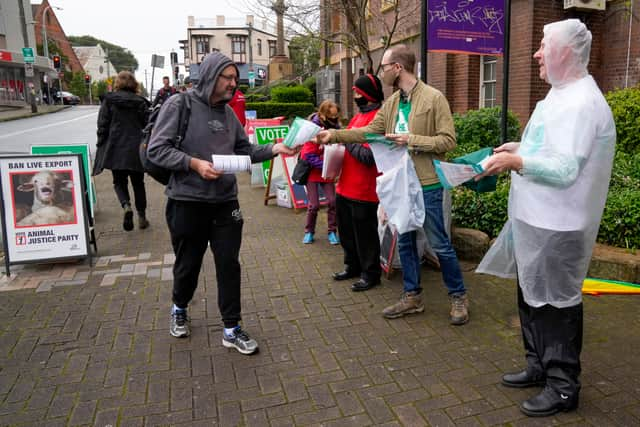
An early election late last year had been widely anticipated with Mr Morrison expected to reap the political capital from his government’s success in containing the spread of Covid-19 in the first year of the pandemic.
But his nickname “ScoMo” was changed by critics to “SloMo” a year ago when Australia’s vaccine rollout fell months behind schedule.
Australia has recorded more than double the number of Covid-19 deaths so far this year than it did during the first two years of the pandemic.
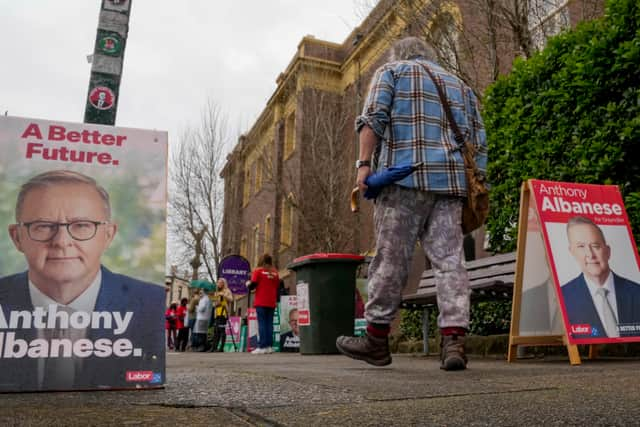
The government changed voting regulations on Friday to enable thousands of people who have recently been infected with Covid-19 to vote by phone.
“Making this change this late in the process is not without risk, but we think it’s worthwhile, particularly given the community sentiment, and that is why we’ve asked government to make that change and government have agreed,” Australian electoral commissioner Tom Rogers said.
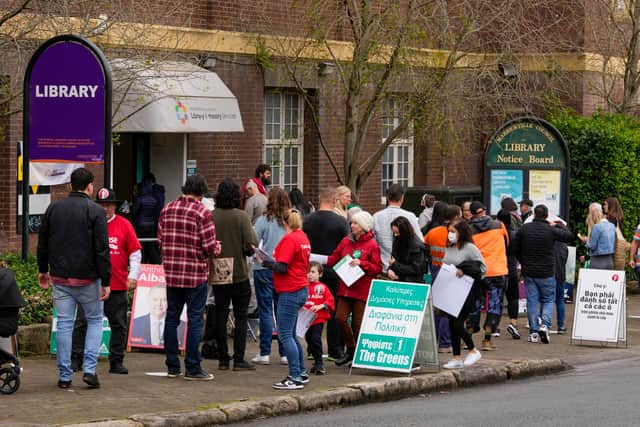
Mr Rogers said some polling booths would be closed on Saturday because many of the 105,000 election workers were sick with the virus or flu. Army reservists have been asked to fill in.
After the annual inflation rate soared to 5.1% in the March quarter, the central bank lifted its benchmark interest rate for the first time in more than 11 years from 0.1% to 0.35%.
Two weeks after cash rose by a quarter of a percentage point to 6.75% in November 2007, Prime Minister John Howard’s conservative government was voted out of office, ending more than 11 years in power.
Opposition treasury spokesperson Jim Chalmers described the rate hike this month as a “full-blown cost of living crisis on Scott Morrison’s watch”.
The party described it as Australia’s worst foreign policy failure in the Pacific since the Second World War.
Australia already has a security pact with the Solomons and is the impoverished South Pacific island nation’s most generous provider of foreign aid.
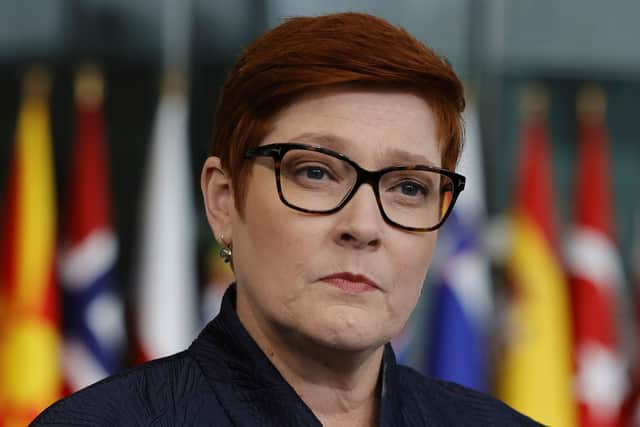
Foreign minister Marise Payne had proposed in November doubling Australian aid to the Pacific to 2.88 billion Australian dollars (£1.6 billion) a year to counter China’s rising influence, The Australian newspaper reported on Friday, citing unnamed sources.
But she was refused by her cabinet’s national security committee colleagues.
Mr Morrison declined to confirm or deny the newspaper report because of the secrecy surrounding the committee’s deliberations.
The Prime Minister rejected the premise of a question when a reporter asked if he would consider doubling Pacific aid to counter Beijing’s moves.
“You’re suggesting that if you just double funding in the Pacific then somehow the Chinese government doesn’t have any influence or won’t be successful in seeking to coerce or exert its influence in the southwest Pacific,” he said. “That’s your assumption and that assumption doesn’t hold.”
Senior government officials have said the timing of the China-Solomons agreement during an election campaign is evidence that Beijing was attempting to undermine the ruling coalition’s prospects for reelection.
The government maintains that Beijing wants a change of leadership because a Labour administration would be less likely to stand up against Chinese economic coercion.
As well as campaigning against Labour, Mr Morrison’s conservative Liberal Party is fighting off a new challenge from so-called teal independent candidates to key government lawmakers’ re-election in party strongholds.
The teal independents are marketed as a greener shade than the Liberal Party’s traditional blue colour and want stronger government action on reducing Australia’s greenhouse gas emissions than either the government or Labour are proposing.
The government aims to reduce Australia’s emissions by 26% to 28% below 2005 levels by 2030. Labour has promised a 43% reduction.
Recent opinion polls have put Labour narrowly ahead of the coalition. But the pollsters’ credibility has yet to recover since their spectacular failure in the 2019 election.
The split of votes between the government and Labour in 2019 was 51.5% to 48.5% – the mirror opposite of the result that Australia’s five most prominent polls predicted.