
Broadcaster who lost vision at 17 could ‘see’ husband’s face for first time in over 10 years thanks to new technology
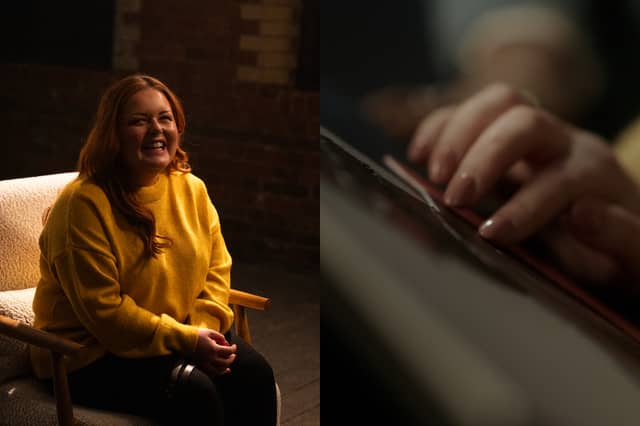

A content creator and broadcaster who lost all her vision aged 17 just two months after meeting her now-husband has been brought to tears by “life-changing” technology which may allow her to “see” her partner’s face again with her hands.
Lucy Edwards, 28, who lives in Birmingham with her husband, Olly, 27, has a rare genetic condition that led to her losing sight in one eye at age 11, and in the other eye at age 17.
After “learning how to navigate again” she went on to train as a journalist at the BBC, and used social media in the pandemic to promote her portfolio, but has since gone on to become a full-time content creator and broadcaster raising awareness about what it is like to be blind, and now has a whopping 1.8 million TikTok followers.
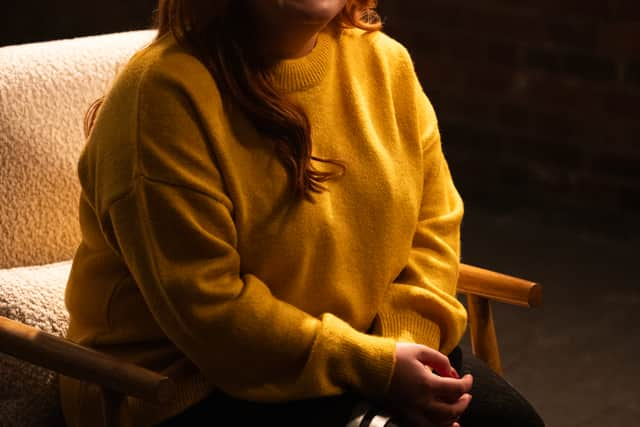
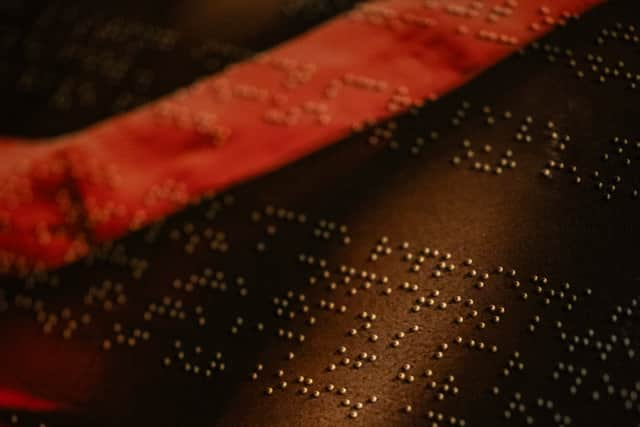
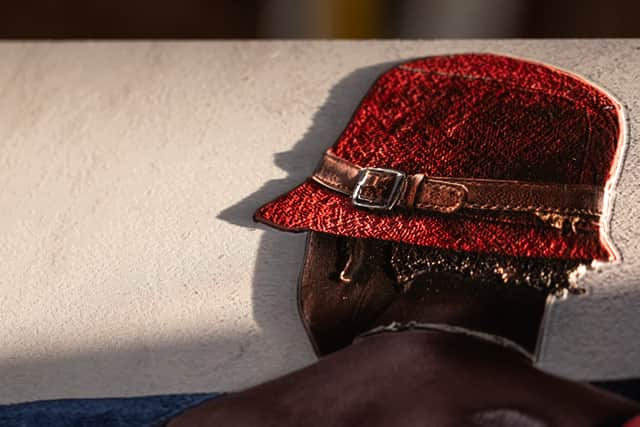
However, Canon has invented a way to apply printing technology where images can be printed on raised paper, known as elevated print, to especially help those with visual impairments visualise photographs, and Lucy is hopeful she may be able to “see” her husband and future children one day.
She has experienced the technology, by feeling an artist’s photographs, including an image of a woman with a scar on her back, which brought her to tears thinking about the possibilities for the future.
Lucy told PA Real Life: “It makes my heart flutter and gets me really choked thinking that I can’t remember the images of my husband or, I won’t ever see, with my own eyes, my children’s faces.
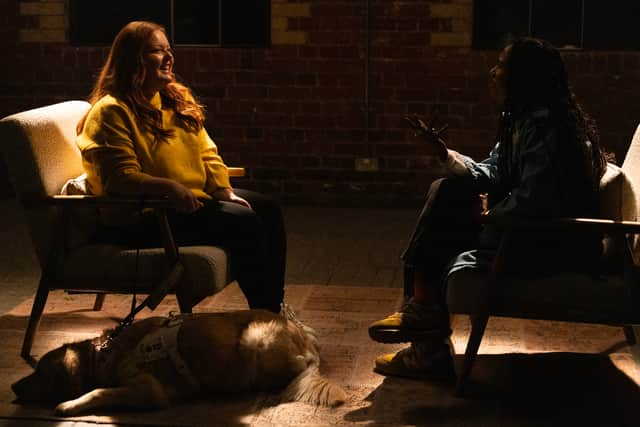
“I love being blind now … I’ve worked really hard to be able to say that. It’s given me true vision to be able to see the world in a different way.
“I think there’s beauty in not seeing the world as well, and just feeling it, and I now have a different version of what beauty means to me.
“It’s not only by touch, but also how we feel inside.”
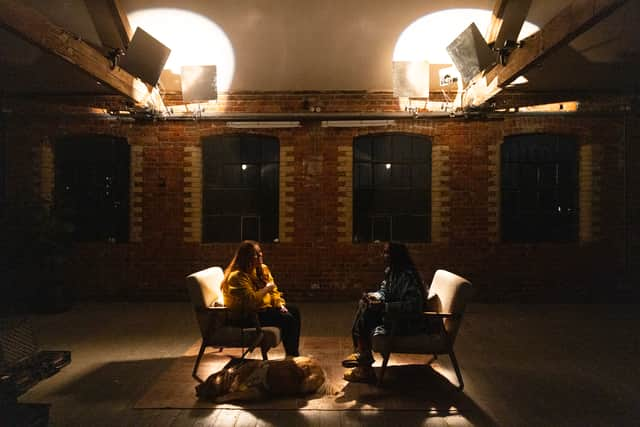
At age 17, she was booked in for sight-saving surgery at Moorfields Eye Hospital, which did not go to plan.
Lucy had to lie on her front for three months as doctors put a silicone oil bubble in her eye, hoping it would bring back her eyesight, but in the process, they had to cut off half of her retina.
Sadly, after she had the surgery, she woke up with next to no vision in her other eye.
“I had to kind of learn how to live again.
“I’ve had to learn how to do things again for the very first time – when everyone else was thriving I was kind of surviving, learning how to navigate again.”
Just two months before losing her vision in both eyes, Lucy began dating her now-husband, Olly.
“We have raw and honest conversations, I just love that my blindness has been able to give me that.”
“It’s like you took a photo of my husband 11 years ago, put it in a drawer, and you’ve lost the key, but you still have this amazing image,” Lucy explained.
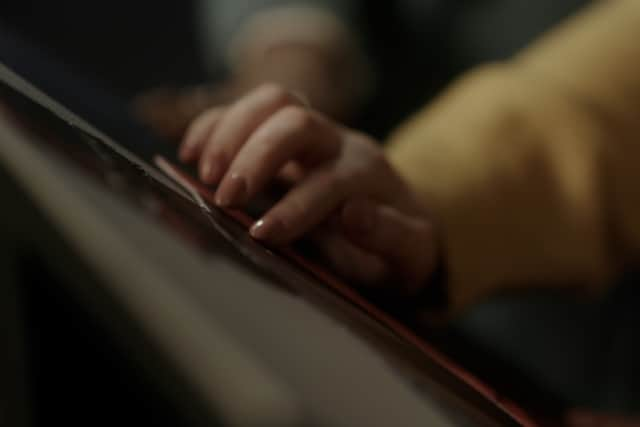
However, now Canon has released a way to apply printing technology, she thinks it may be possible for her to re-establish what her husband looks like.
In March 2024, she had the opportunity to go to a photographer’s exhibition, and was able to visualise the artwork for the first time due to the images being raised.
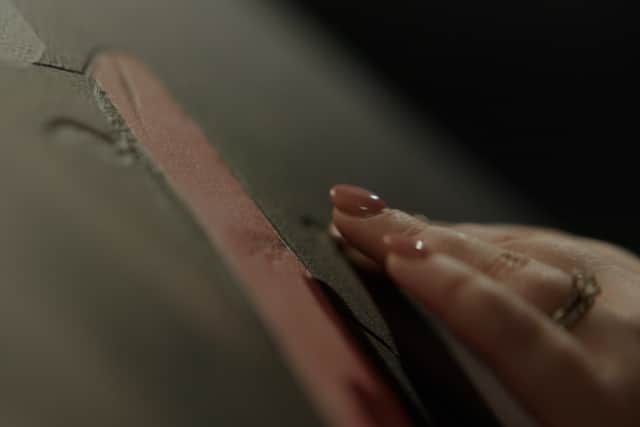
“With this new technology, it looks like a gorgeous photo, and it’s something that a sighted person would want on their wall.
“That’s so important – I care about the visual world so much – I love fashion, make-up, and my house looking nice.

The images at the exhibition were also described in Braille, and she was able to “see” an image of a woman with a scar on her back.
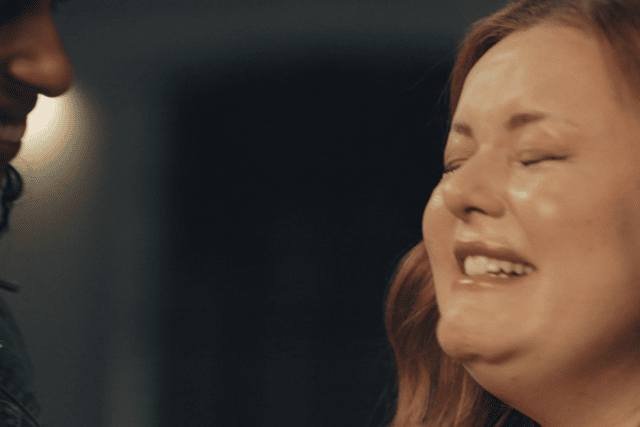
“I think for me, like up to this point, tactile models and sculptures haven’t been as good.

On what this technology may mean for the future, Lucy said: “We’re in a world now where blind people can have photo albums of their wedding and actually feel or see them.
“It could even mean there could be tactile maps in train stations or in toilets instead of feeling around the room … it would be life-changing.
“It’s about how we now design from the ground up and incorporate universal design principles into everything that we do.
“Because, again, we’re all people – I’m not just a disabled person, I’m also a wife, I’m also a broadcaster, I’ve got so many strings to my bow and blindness is just one of them.”
Lucy’s book, Blind Not Broken, is out now, and can be found at Amazon.co.uk/Blind-Not-Broken-turning-happiness/dp/0600637654.
World Unseen, the accessible photography exhibition produced by Canon in conjunction with the Royal National Institute of Blind People, is also going on display at Somerset House in London from April 5-7.
Tickets are available here: Somersethouse.org.uk/whats-on/canon-world-unseen.