
Caribbean leaders call emergency meeting over ‘dire’ Haiti violence

Caribbean leaders have called for an emergency meeting in Jamaica with the United States, Canada and France on Monday to seek a way out of spiralling gang violence in Haiti.
Members of the Caricom regional trade bloc have been trying for months to get political actors in Haiti to agree to form an umbrella transitional unity government.

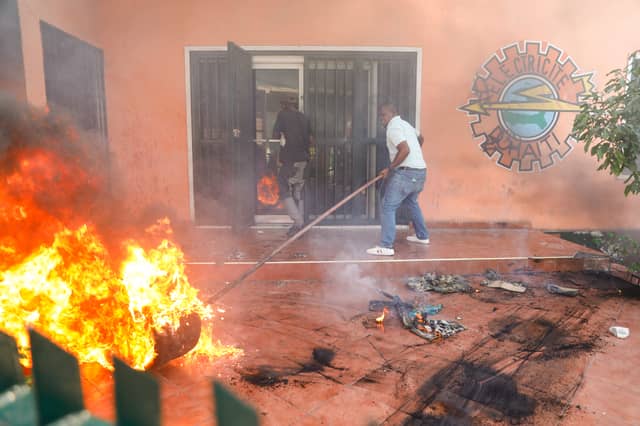
On Saturday, police and palace guards worked to retake some streets in Haiti’s capital Port-au-Prince after gangs launched massive attacks on at least three police stations.
Guards from the National Palace accompanied by an armoured truck tried to set up a security perimeter around one of the three central stations after police fought off an attack by gangs late on Friday.
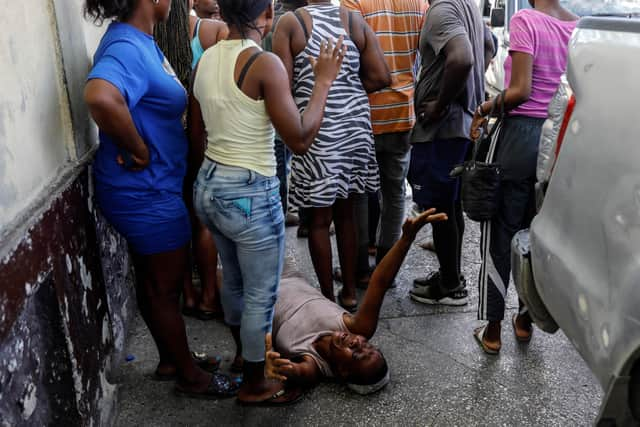
Sporadic gunfire continued pm Saturday, and one woman writhed in pain on the pavement in Port-au-Prince with a gunshot wound after a stray bullet hit her in the leg.
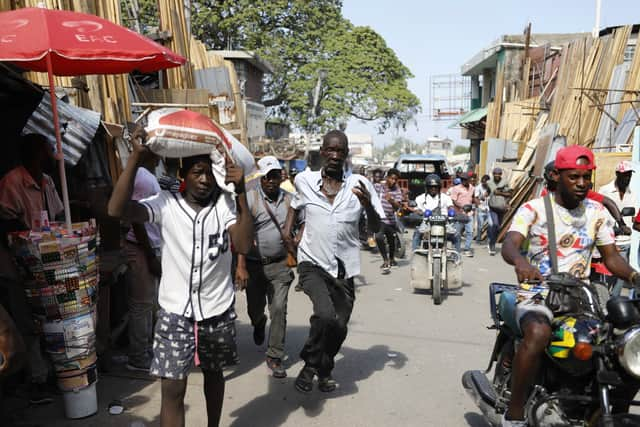
The unrelenting gang attacks have paralysed the country for more than a week and left it with dwindling supplies of basic goods.
Haitian officials extended a state of emergency and nightly curfew on Thursday as gangs continued to attack key state institutions.
The statement added: “We are acutely aware of the urgent need for consensus to be reached.
“We have impressed on the respective parties that time is not on their side in agreeing to the way forward. From our reports, the situation on the ground remains dire and is of serious concern to us.”
“It is vital that this engagement be at as high a level as possible to send a clear message of unity between Caricom and the international community as we work together to provide the critical support to the Haitian people at this time of crisis for them,” said the statement.
Caricom has also pushed Mr Henry to announce a powersharing, consensus government in the meantime, but he is yet to do so even as Haitian opposition parties and civil society groups are demanding his resignation.
Mr Henry, a neurosurgeon, was appointed Prime Minister after the early July 2021 assassination of President Jovenel Moise.
It is unclear whether Mr Henry will be in Jamaica. He had travelled to Kenya to push for the UN-backed deployment of a police force from the East African country to fight gangs in Haiti. A Kenyan court, however, ruled in January that such a deployment would be unconstitutional.
Mr Henry, who is facing calls to resign or form a transitional council, remains unable to return home.
He arrived in Puerto Rico on Tuesday after he was unable to land in the Dominican Republic, which borders Haiti.
The Dominican government said he lacked a required flight plan as they closed their country’s airspace with Haiti.