
Case for further changes to devolved borrowing powers, MSPs told
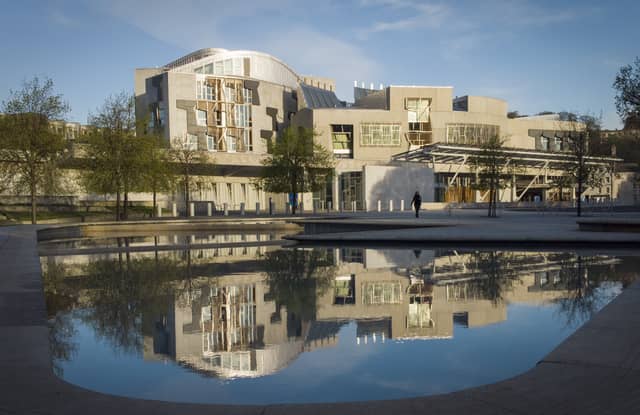

The new deal around devolved finances will benefit the Scottish budget but there is a case for further changes to be made, experts have told MSPs.
Holyrood’s Finance Committee was told there is an argument for the Scottish Government to have more borrowing flexibility.
In August, the UK and Scottish governments agreed a new fiscal framework to govern the structure of devolved finances.
It doubled the Scottish Government’s resource borrowing annual limit to £600 million, which can mitigate against errors in forecasting.
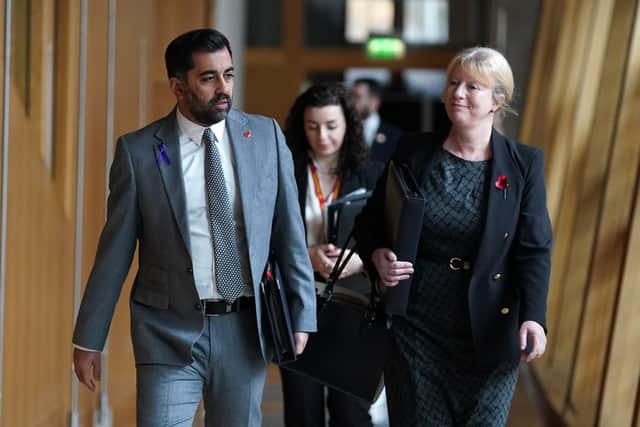
On Wednesday, the Finance Committee heard from David Phillips, of the Institute of Fiscal Studies, and Professor Mairi Spowage, of the Fraser of Allander Institute, as it considered the new framework.
Mr Phillips said both sides would broadly be pleased with how the deal ended up, though ministers in Edinburgh would have preferred a bigger increase in capital borrowing.
He said both governments compromised on issue of Crown Estate revenues, something which will be important due to offshore windfarm licence income.
Mr Phillips said the system of block grant adjustment was closer to the “no detriment” principle of the Smith Commission – which said there should be no detriment to the Scottish budget due to the transfer of tax powers – rather than the opposing “taxpayer fairness” principle.
He told the committee: “The agreement prioritises the no-detriment principle and that benefits Scotland financially compared to the alternative.”
In written evidence, Mr Phillips said he believed the Treasury is especially concerned about “the Scottish Government borrowing significant amounts to invest and improve services (on top of the relatively high levels of resource and capital funding it receives from the UK government) and use this in its arguments for Scottish independence”.
However, he said the Scottish Government is different from Whitehall departments as it is its own political operation, meaning there is “a strong case for some limited additional borrowing flexibility, subject to caps and perhaps short repayment durations”.
Prof Spowage said there is now more borrowing available to the Scottish Government, which will help with the “large reconciliation” due to be made this year.
With inflation remaining high, she said the Scottish Government had already used a great deal of its borrowing limit, something which may constrain future administrations.
However, she said the borrowing powers could be made more flexible, saying: “I do think there’s an argument – given that this borrowing is only for forecast error – for the limit to be increased further.”
Committee member Labour MSP Michael Marra said the deal appeared to address short-term issues such as the “£1 billion black hole of the Scottish Government’s own making”.
Prof Spowage said it is likely the deal will be revisited in future years.
Following the committee’s session, the Scotland Office said the renewed fiscal framework maintained the Barnett formula, leading to the Scottish Government receiving over £8 billion more funding each year than if it received equivalent per capita spending from elsewhere in the UK.
A UK Government spokeswoman said: “We listened to the Scottish Government’s calls for greater certainty and flexibility to deliver for Scotland through the renewed fiscal framework.
“By raising Holyrood’s capital borrowing powers in line with inflation, the Scottish Government is able to invest further in schools, hospitals, roads and other key infrastructure.
“The deal will be worth billions of pounds to Scotland over the coming years and that will help build on work to support economic growth and provide more high-skill jobs, investment and future opportunities for local people, such as the establishment of investment zones and freeports.
“The UK Government’s direct investment to level up communities right across Scotland now totals £2.5 billion.”