
Cave art dating back 24,000 years discovered in Spain
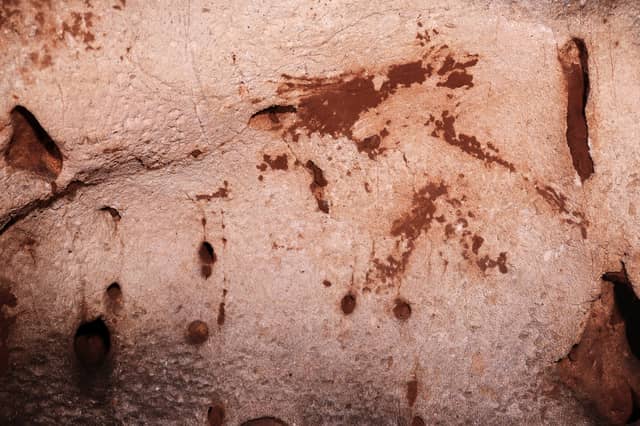

Archaeologists from a UK university have discovered a major palaeolithic cave art site on the east coast of Spain, featuring depictions of horses, deer and wild bulls.
More than 100 ancient paintings and engravings thought to be at least 24,000 years old were found in the 1,600ft (500m) deep cave Cova Dones, or Cueva Dones, in Millares, near Valencia.
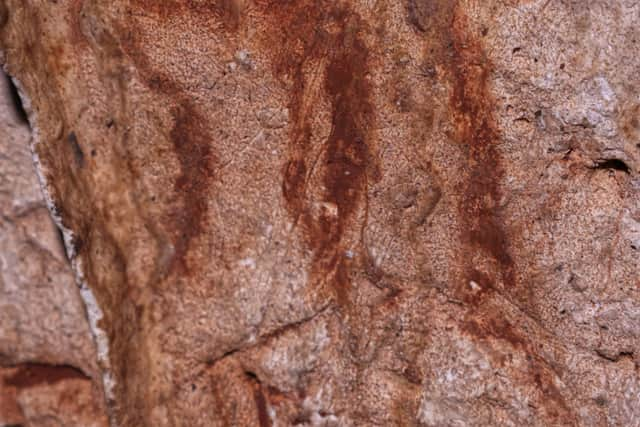
Dr Aitor Ruiz-Redondo, senior lecturer of prehistory at Zaragoza and Southampton, said: “When we saw the first painted auroch (extinct wild bull), we immediately acknowledged it was important.
“Although Spain is the country with largest number of palaeolithic cave art sites, most of them are concentrated in northern Spain. Eastern Iberia is an area where few of these sites have been documented so far.
“However, the actual shock of realising its significance came long after the first discovery.
“Once we began the proper systematic survey, we realised we were facing a major cave art site, like the ones that can be found elsewhere in Cantabrian Spain, southern France or Andalusia, but that totally lack in this territory.”
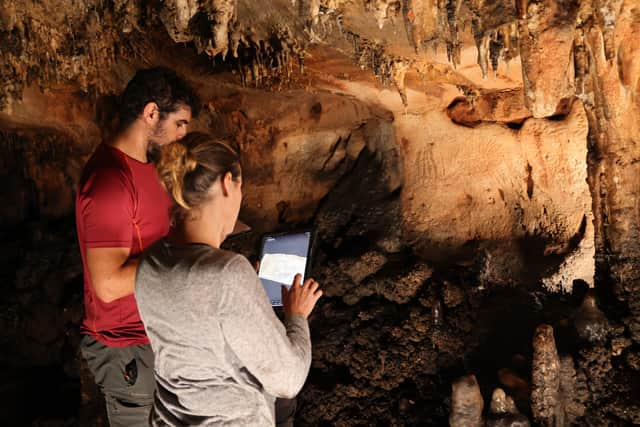
They believe the discovery, first made in June 2021, is the most important palaeolithic cave art site to have been found in the region with the greatest number of motifs discovered in Europe since Atxurra (Bizkaia) in 2015.
Dr Ruiz-Redondo said: “Animals and signs were depicted simply by dragging the fingers and palms covered with clay on the walls.
“The humid environment of the cave did the rest: the ‘paintings’ dried quite slowly, preventing parts of the clay from falling down rapidly, while other parts were covered by calcite layers, which preserved them until today.”
The researchers believe that more art will be found in the caves as their investigations continue.