
Charity demands next government provides right to palliative care
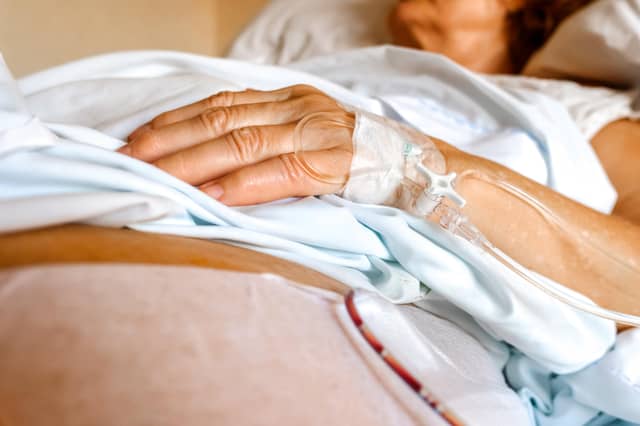

An end of life charity is demanding the next Scottish government legislates to give people a right to palliative care.
Campaigners at Marie Curie believe establishing a legal right to palliative care would help ensure everyone who needs it in their final days can access it.
The charity has urged political parties “not to forget those who are dying” when they make pledges to Scots in the run-up to next year’s Holyrood election.
Between now and the May 7 election, 37,225 people will die in Scotland, Marie Curie said, adding 33,862 of them will require palliative care at the end of their lives.
Amy Dalrymple, Marie Curie’s associate director for policy and public affairs in Scotland, said access to palliative care “shouldn’t depend on your age, where you live, your income, your housing situation, or your diagnosis”.
Ms Dalrymple said: “People have a right to care and support at the end of life, and all political parties need to recognise this.”
Those who are dying should have access to round-the-clock care and support, she added, saying there needs to be “sustainable funding for all forms of palliative care and a co-ordination across health, social care and the other services that people need to ensure the best possible end of life experience”.
Her comments came as official figures showed most Scots who died in 2024-25 spent an average of 20 days in hospital in the six months prior.
The Public Health Scotland data covered 58,471 deaths in 2024-25 – with this taking in deaths from falls but excluding people who died as a result of other external causes, such as accidents.
Of this group it said people spent an average 89.2% of their last six months of life either at home or in a community setting, with the remaining 10.8% spent in hospital.
“This is equivalent to an average of 20 days spent in hospital in the six months prior to death,” the report noted, adding this was “similar” to the previous year.
Ms Dalrymple stressed: “Marie Curie believes that everyone should have the best possible end of life.
“Crucially, end of life care should reflect what’s most important to the individual.
“As a society, the care we provide to people reaching the end of life should be as important as the care we provide to people at the start, and throughout, their life.
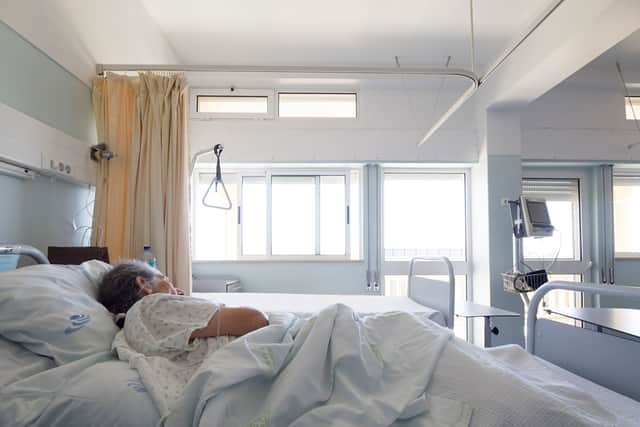
Stefanie Tyre from Glasgow told how her mother Amanda was in a Marie Curie hospice for just 24 hours before she died at the age of 47.
Ms Tyre said her mother was diagnosed with advanced lung cancer, saying she got “got really, really sick”.
Speaking about her mother, she added: “She couldn’t keep food down at all and she had to be admitted into hospital.
“She slowly declined from there and they basically told us that there was nothing more they could do.
“In my opinion, I don’t think she got adequate or proper care in hospital – I feel like the doctors knew that she was going to die and that it was just a waiting game for them.
“It was not an end of life or palliative care ward. So in my opinion, I don’t think she was in the right place and I don’t think she was getting the right care.”
Ms Tyre said as her mother died in the hospice, “they made it possible for us to hold our mum’s hand when she passed”, adding this was “the only thing we all wanted throughout the whole process”.
She continued: “Even after she passed, we were allowed to spend time in her company, so we could start to come terms with what had happened.
“I don’t think we’d have been given that chance to be there at the end with the hospital.”
Public health minister Jenni Minto said: “The Scottish Government is committed to ensuring that everyone who needs it can access high-quality, timely, and well co-ordinated palliative care and are working with local healthcare partners to achieve this.
“We published a new strategy this summer, Palliative Care Matters For All, which outlines our continued commitment towards improving palliative care and the steps we are taking to improving services across Scotland.
“We are also taking action to support independent hospices to provide compassionate care by providing an additional £5 million towards staff pay parity with NHS levels.”
“Every health board currently has a local palliative care network in place, which include working with the Scottish Ambulance Service and community pharmacies.
“These local arrangements are designed to ensure that the needs of the local populations are met, taking account of the geography of the area and the local services in place.
“We will continue to engage closely with the wider palliative care community to understand what more can be done to support palliative care services in Scotland.”