
China vows crackdown on ‘hostile forces’ as public tests Xi on restrictions
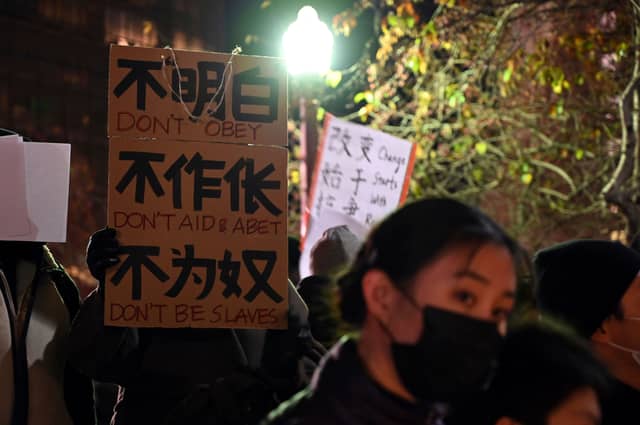

China’s ruling Communist Party has vowed to “crack down on infiltration and sabotage activities by hostile forces” following the country’s largest street demonstrations in decades over coronavirus restrictions.
The statement from party chiefs comes amid a massive show of force by security services to deter a recurrence of the protests that broke out over the weekend in Beijing, Shanghai, Guangzhou and several other cities.

Hundreds of SUVs, vans and armoured vehicles were parked along city streets while police and paramilitary forces conducted random ID checks and searched people’s mobile phones for photos, banned apps or other potential evidence that they had taken part in the demonstrations.
The number of people who have been detained at the demonstrations and in follow-up police actions is not known.
At that event, President Xi Jinping granted himself a third five-year term as secretary general, potentially making him China’s leader for life, while appointing loyalists to key bodies and eliminating opposing voices.
The statement said: “The meeting emphasised that political and legal organs must take effective measures to … resolutely safeguard national security and social stability.
However, less than a month after seemingly ensuring his political future and unrivalled dominance, Mr Xi, who has signalled he favours regime stability above all, is facing his biggest public challenge yet.
He and the party have yet to directly address the unrest, which spread to college campuses and the semi-autonomous southern city of Hong Kong, as well as sparking sympathy protests abroad.
Most protesters focused their ire on the “zero-Covid” policy that has placed millions under lockdown and quarantine, limiting their access to food and medicine while ravaging the economy and severely restricting travel.
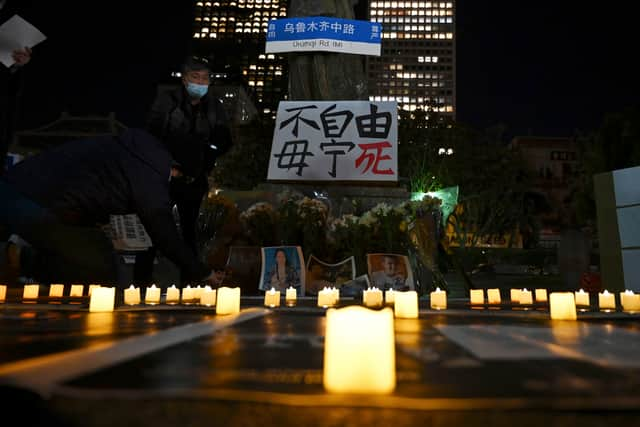
Bolder voices called for greater freedom and democracy, and urged Mr Xi, China’s most powerful leader in decades, as well as the party he leads, to step down – speech considered subversive and punishable with lengthy prison terms.
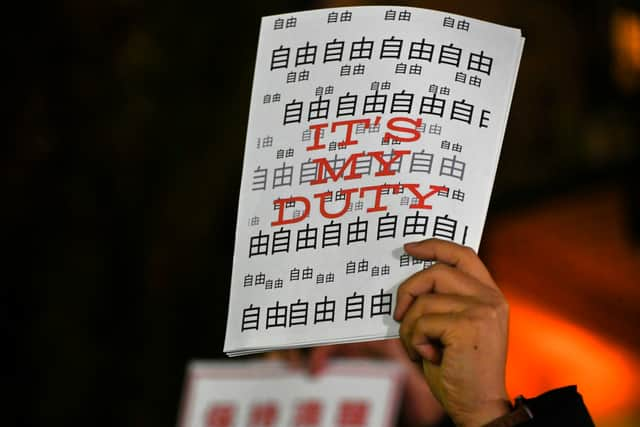
Some held up blank pieces of white paper to demonstrate their lack of free speech rights.
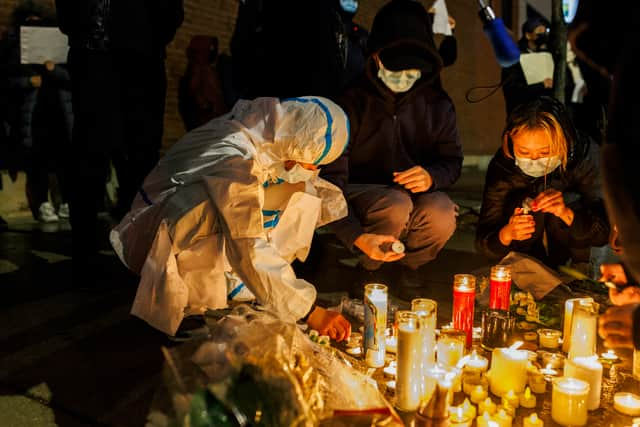
The weekend protests were sparked by anger over the deaths of at least 10 people in a fire on November 24 in China’s far west that prompted angry questions online about whether firefighters or victims trying to escape were blocked by anti-virus controls.
Authorities eased some measures and announced a new push to vaccinate vulnerable groups after the demonstrations, but maintained they would stick to the “zero-Covid” strategy.
Economists and health experts have warned that Beijing cannot relax controls that keep most travellers out of China until tens of millions of older people are vaccinated. They say that means “zero-Covid” might not end for as much as another year.