
Collision during night-time drill caused deadly Japanese helicopter crash
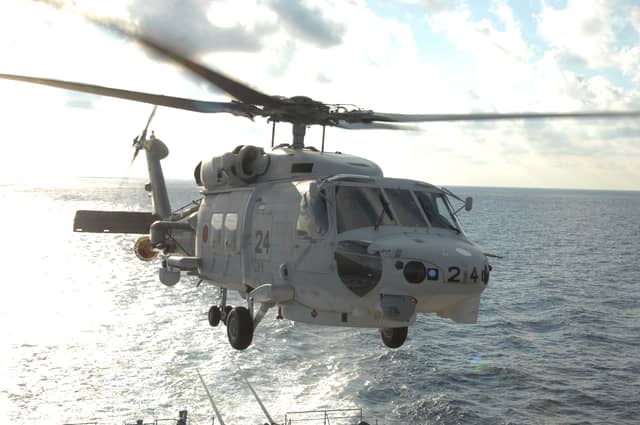

Japanese investigators have concluded that a collision during a night-time drill caused a deadly crash involving two Japanese navy SH-60K Seahawk helicopters last month, the country’s defence minister said.
Minoru Kihara said this is according to preliminary flight data analysis, adding that what exactly led to the collision is still being investigated.
Mr Kihara ruled out mechanical failure of the SH-60K Seahawks from the Maritime Self Defence Force and announced that the exercises, which were halted following the crash, would resume on Friday.
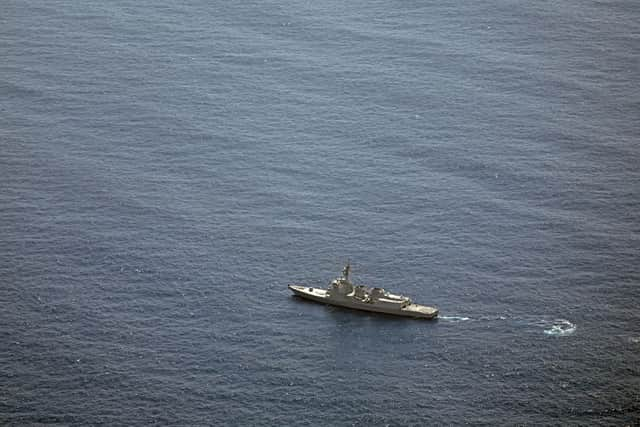
One of the total of eight crew on the two helicopters was found in the water and later pronounced dead, and the search for the seven missing, as well as the aircrafts’ fuselages, has continued since then.
The seabed at the crash site is about 3.4 miles deep and the recovery is considered a challenge. A navy oceanographic ship JS Syounan has been deployed since late April in the search.
Mr Kihara said that a preliminary examination of the flight data recorders determined a collision caused the crash.
The helicopters’ flight data showed a “rapid and huge impact” simultaneously at the same location, evidence of the collision, he said.
There was no indication of any malfunction in the aircrafts’ mechanics.
The two helicopters were believed to have come too close during what was a drill on anti-submarine warfare, involving multiple helicopters hovering and lowering sonars into the water. Some media reports have said an anti-collision alarm system was not used, possibly due to training for harsh environment conditions.
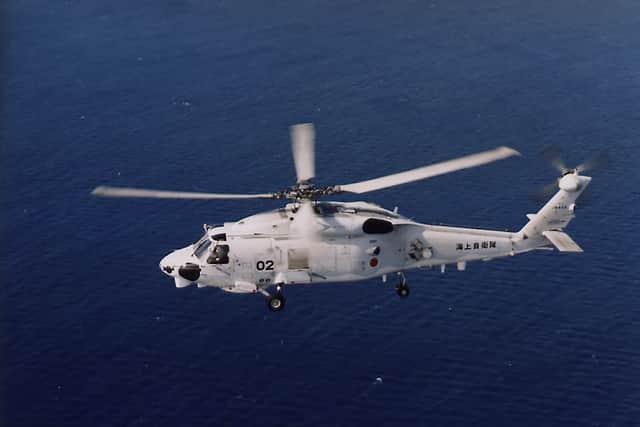
Japan is accelerating its military build-up under a new security strategy adopted in 2022, fortifying its defences on south-western Japanese islands in the Pacific and East China Sea to counter threats from China’s increasingly assertive military.
In recent years, the country has also rapidly expanded its own naval exercises and joint drills with the United States and other partners.
“We cannot let our guard down even for a moment,” Mr Kihara said, adding that a resumption of the exercises was necessary to keep up the skills of the crews.
This type of helicopter has been involved in a number of accidents during night-time training flights, including a fatal crash in 2017 and a collision off the southern island of Amami Oshima in 2021, when no injuries were reported.