
Dad turns lockdown hobby into ‘lucrative’ side hustle and earns thousands making miniature houses, sheds and chateaux
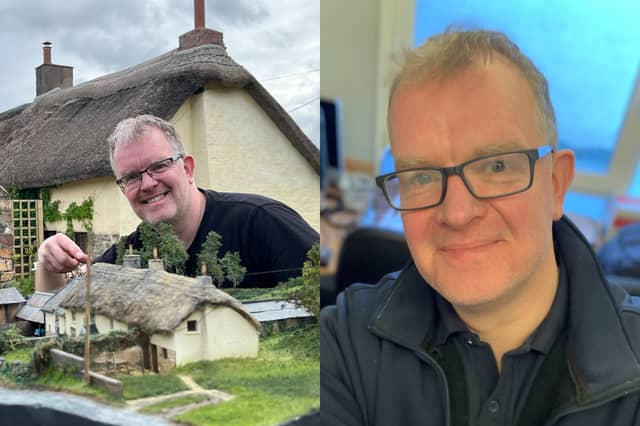

A father-of-two has turned his lockdown hobby into a “lucrative” side hustle and now earns thousands making miniature homes, sheds and chateaux.
Lee Robinson, 51, from Huddersfield, West Yorkshire, started building model houses in 2020 while on furlough from his day job in graphic design.
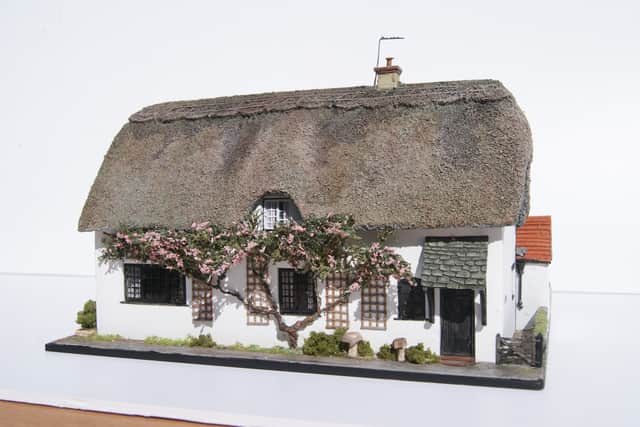
He began taking on commissions to craft all manner of buildings, including terraced homes, thatched farmhouses and French chateaux.
His passion has transformed into “a fairly lucrative side business”, with a model of a home typically costing more than £1,000 and taking between “80 and 150 hours over six to eight weeks”.
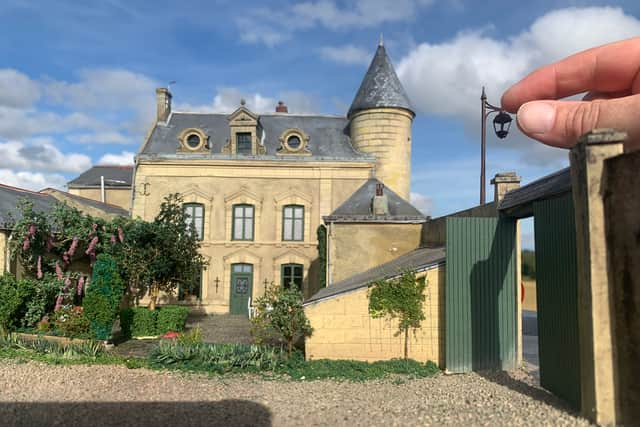
Lee also works on natural scenes, including a model of the Sycamore Gap and an upcoming golf course project, which will be his most expensive commission at £8,000.
“My ultimate aim is to trick someone’s eye into thinking it’s real,” Lee told PA Real Life.
“A lot of people say they’d love me to make a model of their house but it’s not very pretty.
Lee used to build model aeroplanes as a child but his interest in the hobby “faded away” when he went to university.
However, 15 years ago, his then six-year-old daughter was given a model train set for Christmas.
“I started to think I could have a go at making some little bits of scenery for it, and I got hooked into it,” he said.
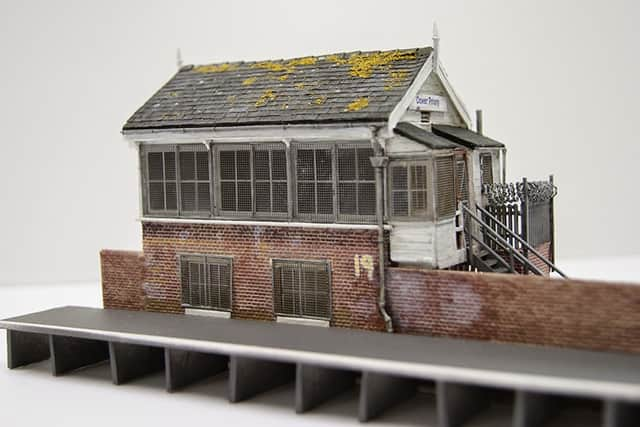
Model-making quickly became “something for (him)” rather than for his kids, and he started taking on commissions for tiny hand-crafted stations and signal boxes.
In 2020, while on furlough from his graphic design job, he felt “a little bit bored” and decided to build a model house, challenging himself to see how detailed he could make it.
“Had Covid not come around, I probably wouldn’t have ventured into this,” he said.

“It was a typical West Yorkshire stone house, based on the ones on a nearby street – but the house doesn’t really exist,” he explained.
He posted his creation on Twitter in 2020, amassing 85,000 views and multiple enquiries from people asking him to make miniature versions of their houses as well.
He added: “I was a victim of my own success in a way early on because I had no idea what to charge.”
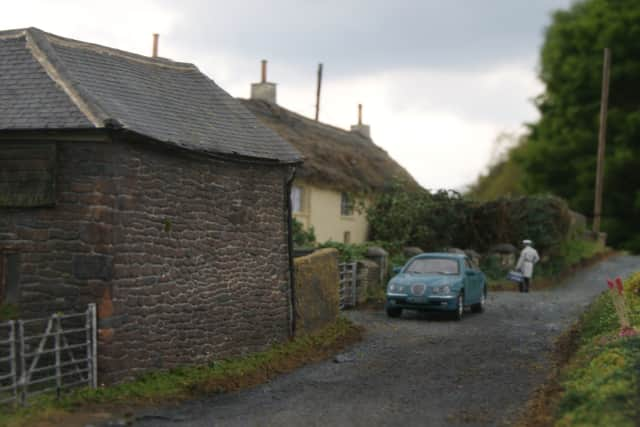
“Depending on how big the model is, it can take anything between 80 and 150 hours over six to eight weeks,” he said.
“Some people want to have a keepsake – for instance of their grandparents’ family home that they remember growing up in.
“Their grandparents pass away, and they’re having to sell the house, so they want me to make a model of it because it has special memories.”
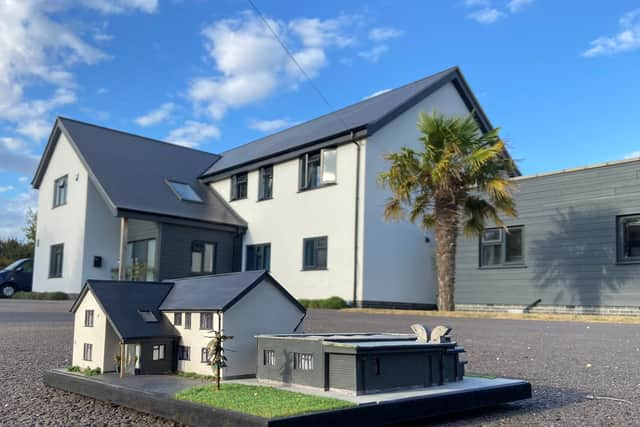
“I literally haven’t stopped for five years,” he said.
Lee added that when he was at school, he briefly flirted with “the idea of going into architecture but I was put off by the long study time”.
He went on: “Now, I can’t go anywhere without studying buildings and wondering how I’d make them in miniature form.
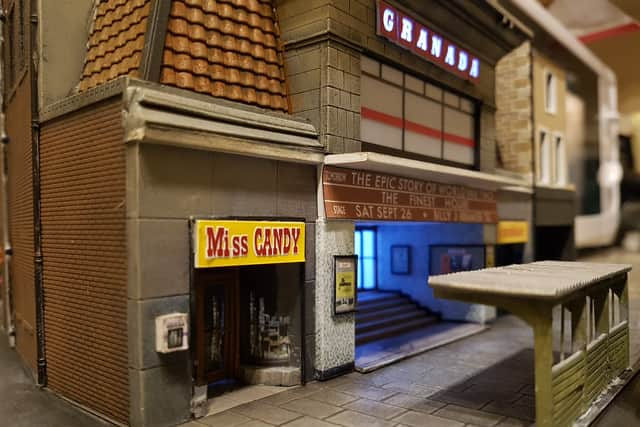
Lee now shares his work on his TikTok page, under the handle @lnr_models, where he has gained 40,000 followers by showing off his process and the finished products.
One video appears to show a two-storey brick house, complete with sash windows, dirty guttering and overgrown ivy – until Lee appears behind it, shattering the illusion.
In another clip, he uses tweezers to place microscopic plastic ferns around a rusted cart that leans against an aged, moss-covered wooden shed.
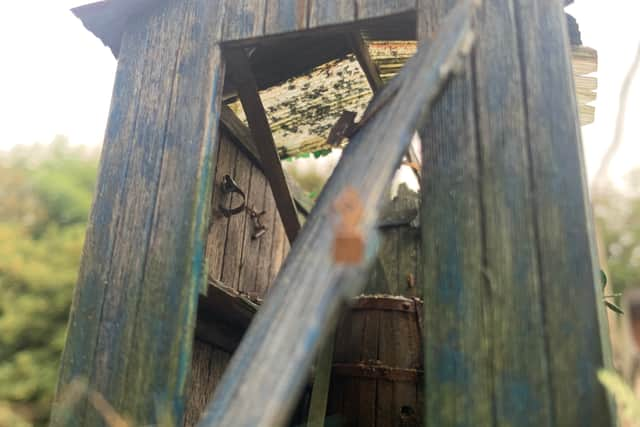
Lee’s goal is to “trick” people into thinking his miniatures are “something real that has been shrunk down”.
He does this by trying to reproduce inconsistencies in brickwork, rusted metal and overgrown curbs.
He explained: “I use a lot of weathering techniques like adding rust to make something look like it’s aged – like it belongs.
“There are model makers who spend an awful lot of time applying things like rust, whereas my techniques tend to be a little bit quicker.
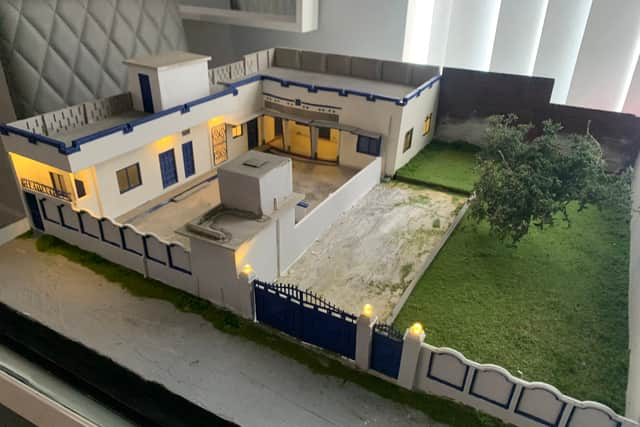
He said the first thing he assesses about a commission is the roof, because certain styles are far more challenging to pull off.
“Concrete tiles that look corrugated are quite difficult,” he explained.
“But I’ve recently developed a technique for making them, so I don’t whinge as much when I see them.
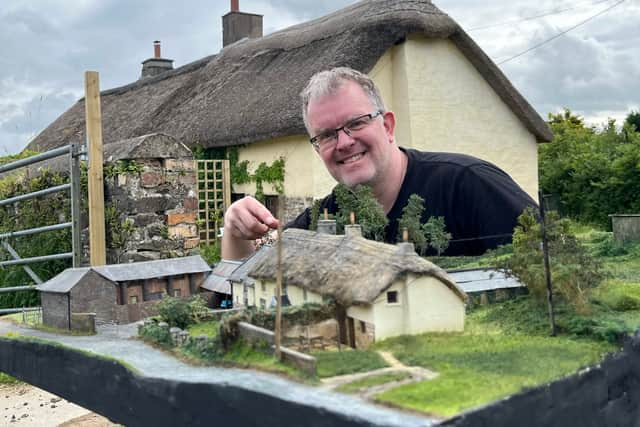
Using Google Earth, photos from clients and his graphic design background, Lee draws up detailed plans of the house, before assembling the structure out of craft foam and MDF.
“A lot of it is self-taught and figuring things out, but definitely the graphic design background has helped,” he said.
Lee hopes to one day recreate a castle in miniature form, but said the cost of such a complex commission has so far turned people away.

“Get your head around the techniques of putting something together,” he said.
“Once you have the confidence that you know how these things work, you can move on to other things.
“Don’t let other people’s work overawe you.”
Lee’s children, now 17 and 21, have long since outgrown the railway dioramas he built for them, but are still “quietly impressed” with their father’s hobby.
“When they’re home for Christmas, we’ll sit together and craft,” he said.
“They’re both really proud of what I’ve done.”