
Dad who was the closest person to the Manchester Arena bomb to survive climbs Kilimanjaro and says ‘don’t write me off because I’m in a wheelchair’
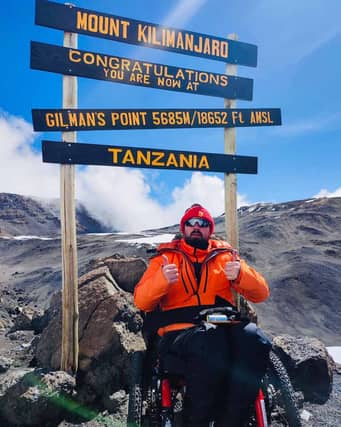

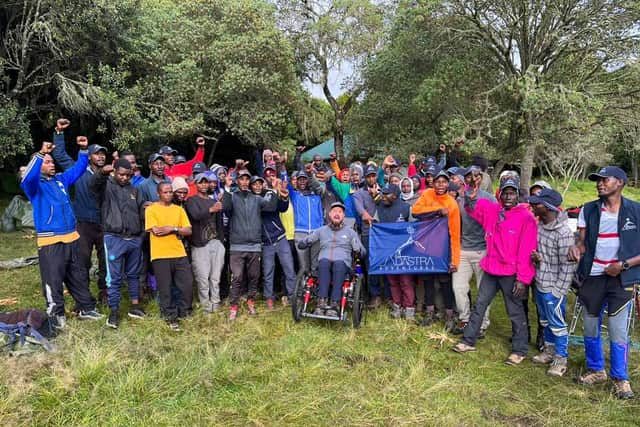
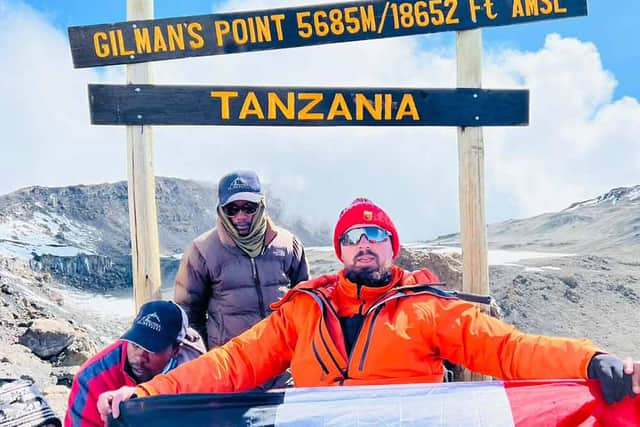
A dad who was the closest person to the Manchester Arena bomb blast to survive and was left paralysed by the atrocity has trekked Kilimanjaro in a wheelchair in a bid to combat stigma surrounding disability.
Martin Hibbert, 46, a football agent, who lives in Chorley, Lancashire, with his wife, Gabby, 49, an HR worker with the NHS, was at the Ariana Grande concert with his daughter, Eve, then 14, from a previous relationship on the night the suicide bomber struck.
Now fighting for more accessibility for disabled people in the UK, Martin said: “Becoming disabled at 40, I’ve seen what life is like from both points of view and there is so much that needs to be done in terms of accessibility.
“Since the attack, I’ve become an activist and I’m hoping to change laws.”
He said: “It was a Christmas present. Normal tickets were sold out but I have good contacts through my work, so I was able to get a VIP box for the two of us for the evening.
“I gave them to her on Christmas Day 2016 and she was just so excited. We’ve always bonded over music. It was something my mum and I had loved together and I was keen to carry that on with Eve.
“She was a big Ariana Grande fan so she couldn’t wait for the gig.”
Martin recalls the evening leading up to the concert on May 22, 2017.
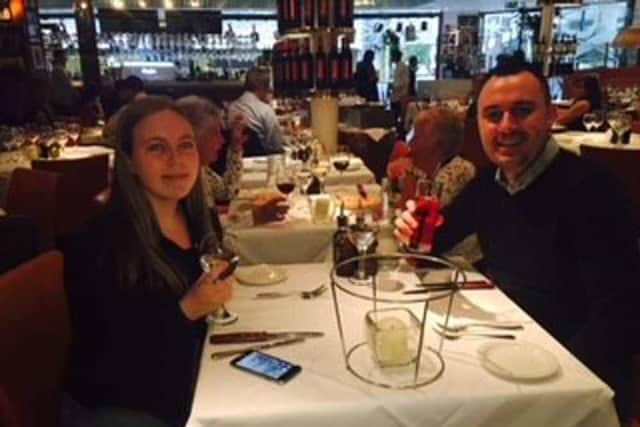
He said: “We went for a meal at San Carlo beforehand and took a selfie together. I often struggle with memory loss now but my memory of that night is crystal clear.
He added: “I remember feeling excited about her future, she had dreams of becoming a vet. I was bursting with pride.”
Heading into the Manchester Arena, Martin says there were no warning signs of what was to come.
He added: “It really made me laugh and I had to keep reminding her that she didn’t need to ask, she could have any of the food and drink in the box.”
The pair had agreed to leave the concert during the encore.
Martin said: “I wanted to beat the rush at the end of the night so we could get back to the car quickly.”
He added: “So, during the encore, we made our way to the exit. There were a few people around doing the same.”
Martin and Eve made their way into the lobby of the arena which led to Victoria Train Station at 10.30pm.
He added: “It all happened so quickly, there was a sudden blast and I was on the ground.”
The bomb detonated at 10.31pm and, while Eve was knocked unconscious, Martin remained awake.
He said: “I’d had 22 pieces of shrapnel hit me across my body but I couldn’t feel any pain. I don’t know if it was the shock or the adrenaline. All I could think about was Eve.”
He added: “There were people dying around me. I remember calling out for help and a security guard ran over.
“A piece of shrapnel had torn through my neck and I was losing a lot of blood. The security held onto my neck to try to stop the bleeding.
“I remember desperately trying to get him to leave me and see to Eve. She was still unconscious.”
Martin recalls how he thought he was not going to make it.
He said: “I was so sure that I was dying, and I was really calm. I was thinking, ‘I just need to get Eve help and then I’ve done my job, then I can go to sleep.’
Martin was rushed to Salford Royal Hospital while Eve was taken to Royal Manchester Children’s Hospital.
He said: “It was three weeks before I regained consciousness but another one to two weeks before I could really think properly.
Five weeks after the terrorist attack, Martin was transferred to a spinal unit in Southport.
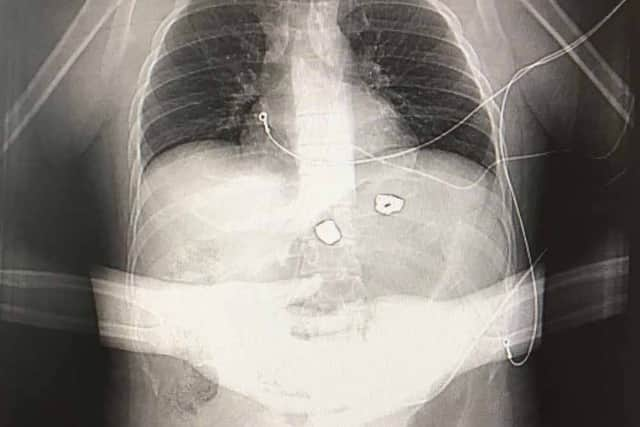
He said: “Before I was transferred, doctors broke the news. A piece of shrapnel from the bomb had torn through my spine, severing my spinal cord.
“It was damaged beyond repair and I was paralysed from the waist down.”
But while it came as a shock to Martin, he says he was not devastated by the news.
He said: “There were people at that concert who died and there were people who lost loved ones. To be so close to the bomb and leave with my life felt like a miracle.
He added: “My life would never be the same but I was okay with that. That terrorist wanted me to give up on life, he wanted me to sit in a corner and cry. I refuse.”
Martin was discharged from hospital in a wheelchair in September 2017, four months after the bomb, but Eve would not return home until February 2018.
He added: “She only had one shrapnel wound but it had gone through her temple and out the other side, leaving her with brain damage.
“She was in a wheelchair too and, while it was really touch and go if she was going to make it, she came home nine months after the attack.”
And, while Martin came to terms with his new life, he started looking for a challenge.
He said: “Becoming disabled at 40, I was getting used to what I could and couldn’t do and certain issues around inaccessibility really bothered me.
“To this day, there are restaurants I can’t go to and hotels I can’t stay at because they’re not wheelchair accessible.
Martin began working closely with the Spinal Injuries Association and wanted to raise money for them.
He said: “I told them I wanted to trek to Mount Everest base camp and they looked into it but discovered that I couldn’t do it – I would have to be carried for most of it.
Martin says the prospect gave him something to work towards as he began training for the trek.
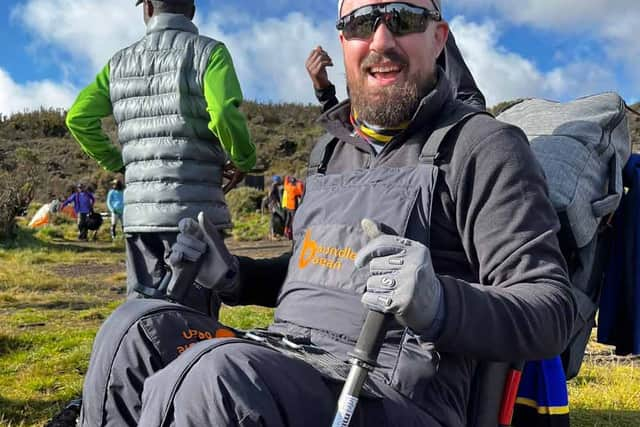
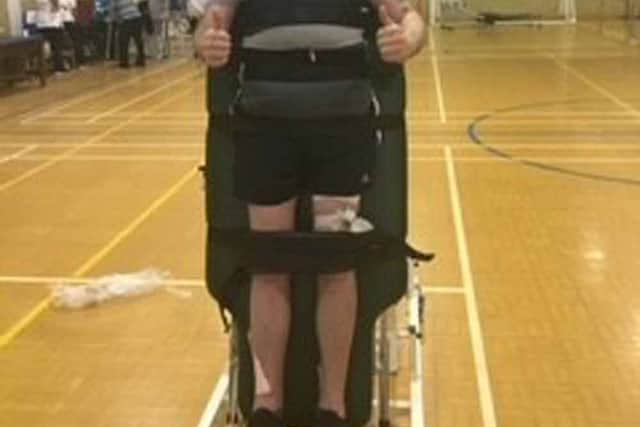
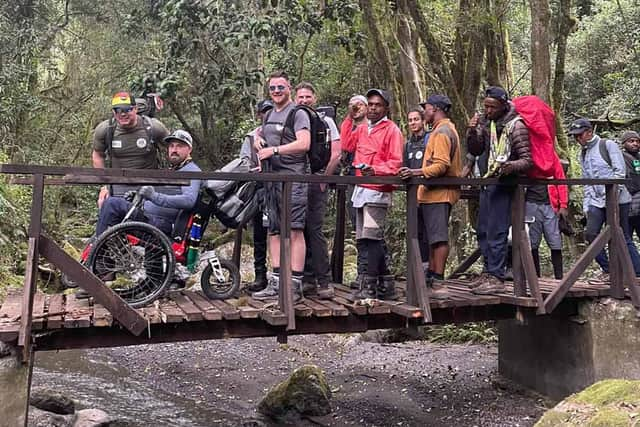
He said: “I bought a mountain trike which was a special wheelchair that I could push myself up the mountain with and I started going out on hikes with it.
“We planned to embark on the trip in 2021 but then Covid hit.”
The pandemic pushed the plans back by a year and it was June 2022 that the team were finally able to set off for Tanzania.
Martin said: “I climbed Snowdon in the March to prepare for it.
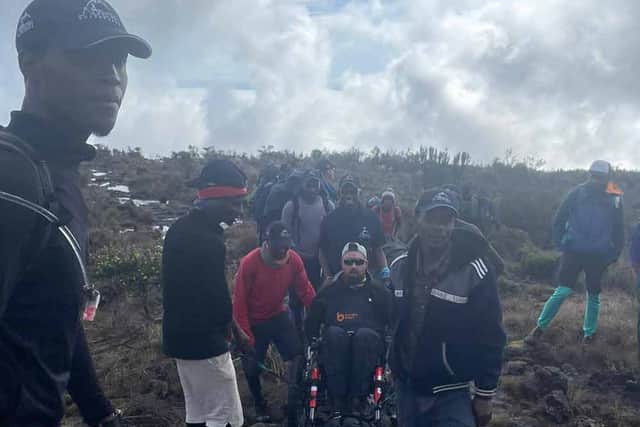
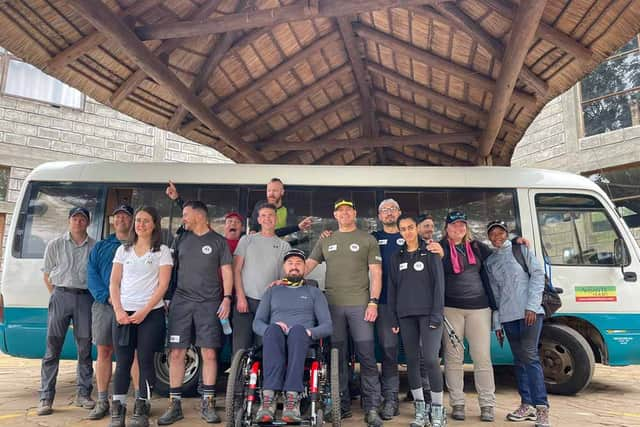
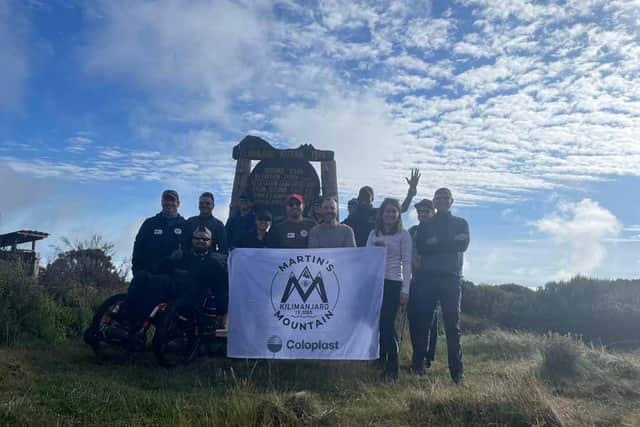
Martin embarked on the trek with friends and other members of the Spinal Injuries Association, setting off on June 2, 2022.
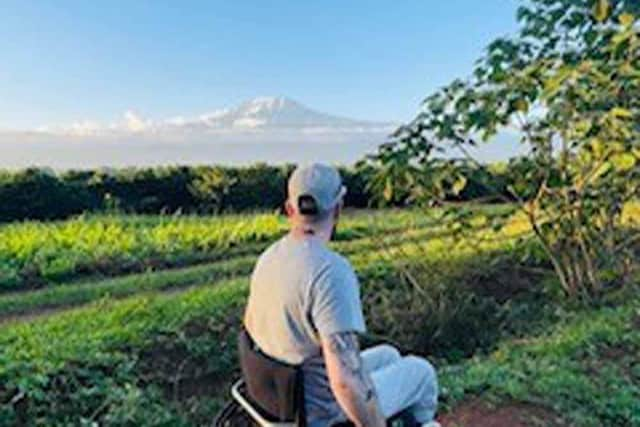
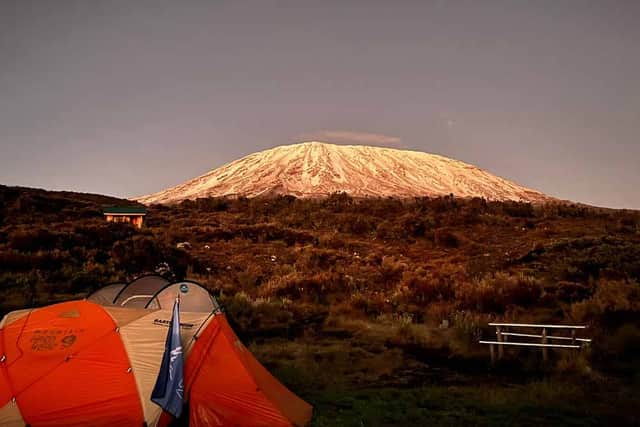
He said: “I was so in the zone that I don’t think I quite took in my surroundings as much as I should have but it really was spectacular.
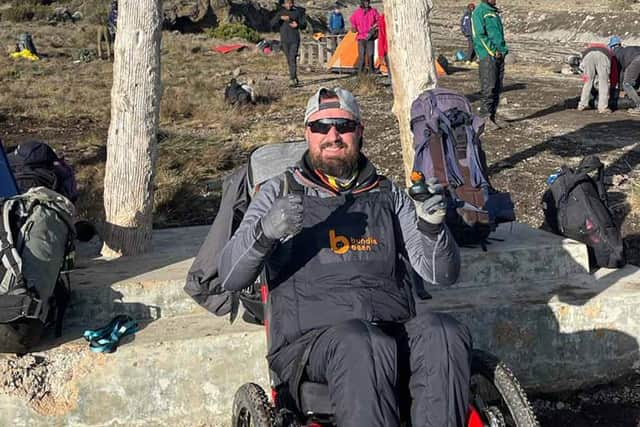
He added: “We would wake before the sun to beat the heat as we climbed and, as we neared the top, we were above the clouds and the sunrise from there was magical.”
And Martin says his mountain trike made climbing the mountain possible.
He said: “People were saying that my arms must have been killing me but I was fine. I just put mind over matter and had my head focussed on the end goal.”
He added: “I wanted to raise £1m for the Spinal Injuries Association and so far, I’ve raised £600K. We’re planning a black tie dinner in September where we hope to raise more.”
And now, Martin has his sights set on the future.
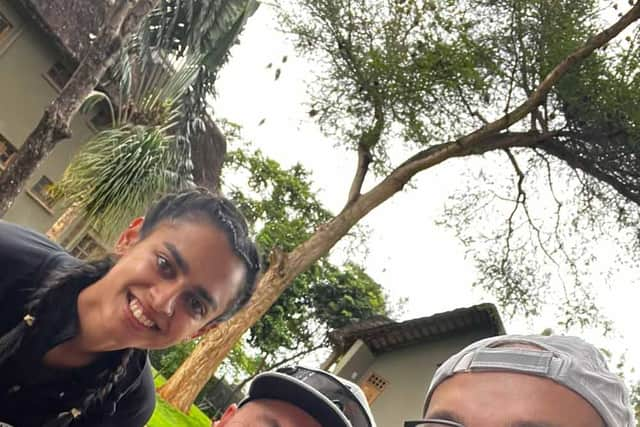
He added: “We’ll both be wheelchair users for life but in a way, I’m glad I’m going through this with her, she’s not on her own with this.”
And Martin says he is now focused on lobbying government to make law changes on inaccessibility.
He said: “I want new legislation brought in that says places like restaurants and hotels need to be wheelchair friendly.”
He added: “It’s not the wheelchair or the spinal injury that makes me feel disabled, it’s other people. I’m often underestimated now or told what people think I can’t do.
“It’s got to change and that’s what Kilimanjaro was all about. Look at what a disabled man can do when he’s got the right help and support – he can do the impossible.
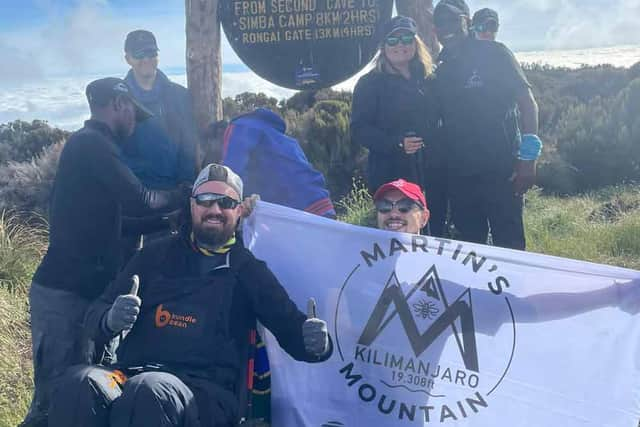
He added: “I’m not sure what challenge I’ll do next but I’m sure it’ll be crazy. Don’t write me off just because I’m in a wheelchair. There’s so much I can do.”
To donate to Martin’s fundraiser, visit: www.martins-mountain.justgiving-sites.com