
Danish warship sunk by Nelson’s fleet discovered after 225 years
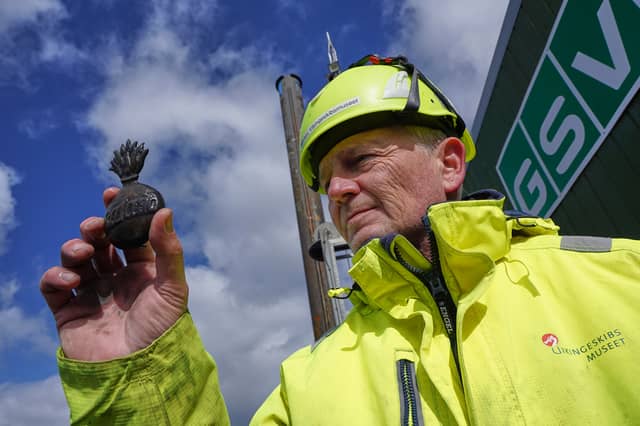

More than 200 years after being sunk by Admiral Horatio Nelson and the British fleet, a Danish warship has been discovered on the seabed of Copenhagen Harbour by marine archaeologists.
Working in thick sediment and almost zero visibility around 50ft beneath the waves, divers are working against the clock to unearth the 19th-century wreck of the Dannebroge before it becomes a construction site in a new housing district being built off the Danish coast.
Morten Johansen, the museum’s head of maritime archaeology, said: “It’s a big part of the Danish national feeling.”
A great deal has been written about the battle “by very enthusiastic spectators, but we actually don’t know how it was to be on board a ship being shot to pieces by English warships and some of that story we can probably learn from seeing the wreck”, Mr Johansen said.
In the Battle of Copenhagen, Nelson and the British fleet attacked and defeated Denmark’s navy as it formed a protective blockade outside the harbour.
At the centre of the fighting was the Danish flagship, the Dannebroge, commanded by Commodore Olfert Fischer.
The 157ft Dannebroge was Nelson’s main target. Cannon fire tore through its upper deck before incendiary shells sparked a fire aboard.
“(It was) a nightmare to be on board one of these ships,” Mr Johansen said.
“When a cannonball hits a ship, it’s not the cannonball that does the most damage to the crew, it’s wooden splinters flying everywhere, very much like grenade debris.”

Nelson eventually offered a truce and a ceasefire was later agreed with Denmark’s Crown Prince Frederik.
The stricken Dannebroge slowly drifted northward and exploded. Records say the sound created a deafening roar across Copenhagen.
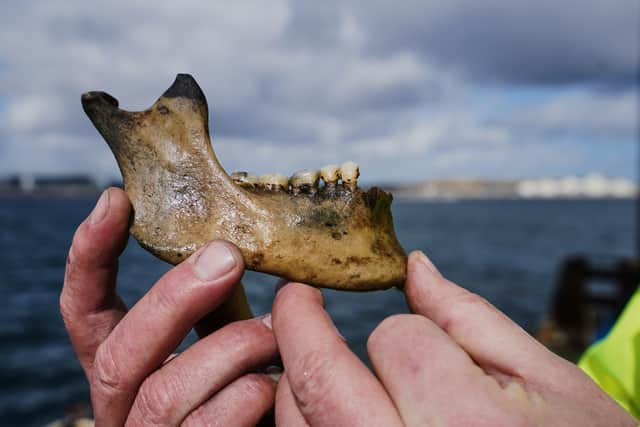
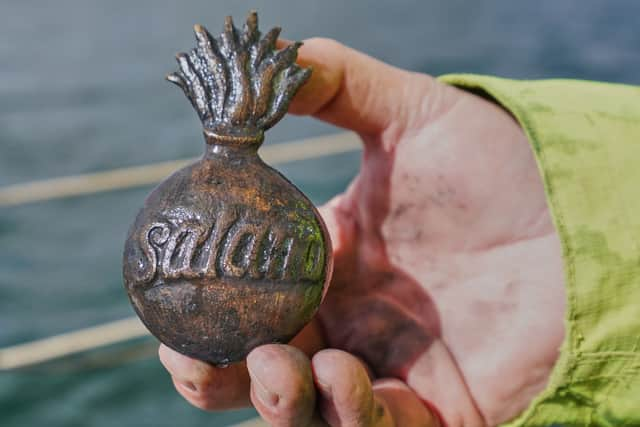
Marine archaeologists have discovered two cannons, uniforms, insignia, shoes, bottles and even part of a sailor’s lower jaw, perhaps one of the 19 unaccounted-for crew members who likely lost their lives that day.
The dig site will soon be enveloped by construction work for Lynetteholm, a megaproject to build a new housing district in the middle of Copenhagen Harbour that is expected to be completed by 2070.
Experts say the sizes of the wooden parts found match old drawings.
Dendrochronological dating – the method of using tree rings to establish the age of wood – match the year the ship was built. They also say the darkened dig site is full of cannonballs, a hazard for divers navigating waters darkened by clouds of silt stirred up from the seabed.
Chronicled in books and painted on canvases, the 1801 battle is deeply embedded in Denmark’s national story.
Archaeologists hope their discoveries may help re-examine the event that shaped the Scandinavian country and perhaps uncover personal stories of those who went into battle on that day 225 years ago.
“There are bottles, there are ceramics, and even pieces of basketry,” Mr Jonsson said. “You get closer to the people on board.”