
Delayed discharges push up average number of occupied beds by 3%
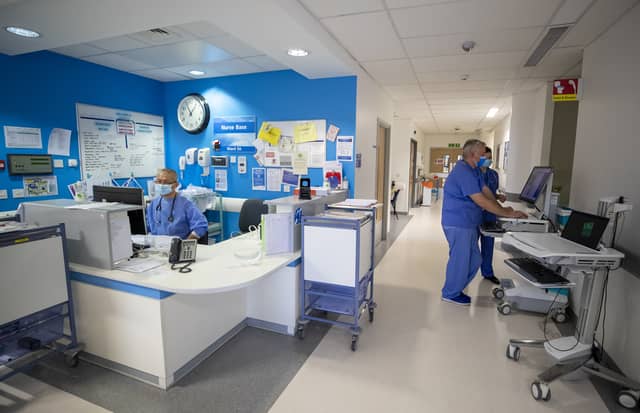

The average number of hospital beds occupied per day due to delayed discharges in Scotland rose slightly in April, figures show.
A report by Public Health Scotland, released on Tuesday, showed last month saw 1,787 beds occupied each day by people who were clinically well enough to leave hospital.
This was a 3% increase compared with March, when the figure was 1,729.
But the number of patients delayed – 1,780 – was 3% down compared with March.
There were 53,604 days spent in hospital by people whose discharge was delayed – up 64% compared with April 2021.
Of patients delayed in April, the average length of delay was 22 days, an increase of 5% from March.
Scottish Conservative health spokesman Dr Sandesh Gulhane said it is “clear” that Health Secretary Humza Yousaf is “completely failing to deal” with the problem.
Dr Gulhane said: “Delayed discharge is both a symptom and a cause of the crisis in Scotland’s NHS and social care system – and it’s clear from these figures that Humza Yousaf is completely failing to deal with it.
“Having patients stuck in hospital because there is no place for them in a care home is not only soul-destroying for the individuals concerned, it has a huge knock-on effect elsewhere in our health service.
“The shortage of hospital beds adds to delays in A&E and leads to cancelled operations and procedures, worsening the already unacceptable treatment backlogs and waiting times.
“I have no confidence that the SNP’s plans to centralise social care will do anything to improve the flow of patients out of hospitals.”
Scottish Labour’s health spokesperson Jackie Baillie said: “The crisis in our NHS is persisting and it is clear that the Health Secretary remains asleep at the wheel.
“We are at a critical moment for our NHS, but the SNP is failing to get the basics right and to provide the resources needed to get our NHS back on track.
“Delayed discharge is spiralling upwards and upwards, with the number of bed days lost soaring.

“Our heroic staff are facing burnout and exhaustion with vacancies at unacceptable and worrying levels.
“The Health Secretary must face up to the fact that his plan isn’t working. As ever, Humza Yousaf is more interested in cover-up than NHS catch-up.”
Alex Cole-Hamilton, leader of the Scottish Liberal Democrats, said: “The pressure and gaps in community care are causing more and more people to be stuck in hospital unnecessarily. The situation is as bad as ever.
“People should never have to wait weeks or months on a care home place or help to return home.
“The SNP/Green Government should be using its time and resources to address this situation because it’s getting out of control and harming people.
“Instead they are devoting their focus, the work of top officials, and millions of pounds on planning another referendum.”
A Scottish Government spokesperson said: “It is crucial people are cared for in the right setting and that hospital beds are there for those who need them. Being at home or in a community setting is in the best interests of anyone who no longer has any clinical need to be in hospital.
“Throughout the pandemic we have continued to work with health and social care partnerships to reduce delays in people leaving hospital. The whole health and social care system is under severe pressure and staff continue to work tirelessly to provide safe care.
“Our Discharge without Delay improvement programme outlines key actions to improve discharge planning arrangements, building on the close collaboration between acute hospitals and community-based staff and the Centre for Sustainable Delivery will help drive improvement.
“We are seeing record numbers of patients delayed under the adults with incapacity legislation.
“These are patients who, although clinically ready for discharge, cannot be legally discharged without a court-appointed guardian being in place.
“We employed a mental health officer to work with partnerships to identify the barriers within this legal process at local levels and will be turning this into an action plan to drive improvement.”