
Detectorist hails ‘lottery’ payout five years after finding ancient coins
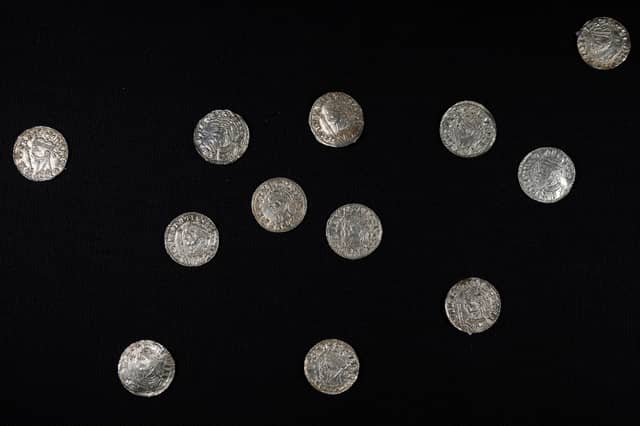

A metal detectorist who found £4.3 million worth of ancient coins has spoken of his frustration that it took five years to receive a penny.
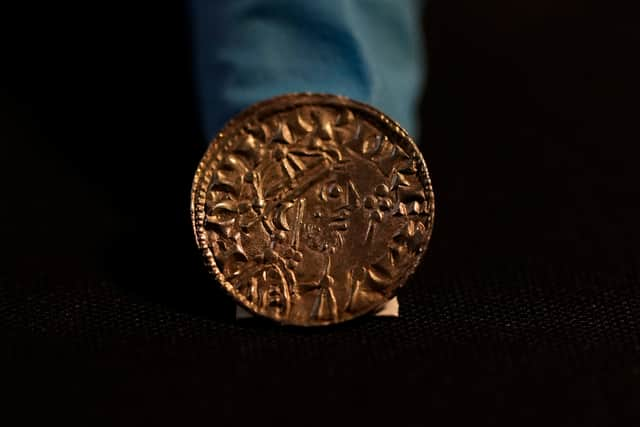
Adam Staples, 48, discovered 2,584 coins depicting William the Conqueror and Harold II in Somerset in 2019 with his girlfriend at the time, Lisa Grace, and five friends.
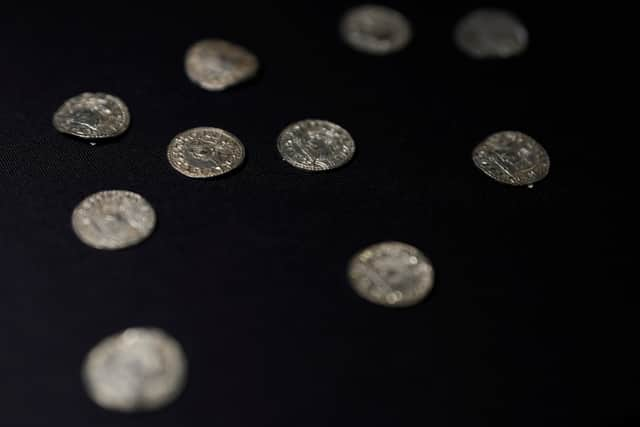
The Chew Valley Hoard, which is the highest valued treasure find on record, shines fresh light on the aftermath of the Norman invasion, covering the transition from Saxon to Norman rule marked by 1066.
Mr Staples, an auctioneer from Derby, said: “It’s like winning the lottery but then you can’t cash the ticket for five years.
“Coming to the British Museum a few days after we found the hoard, when they opened the front gates and we drove through crowds with a few million pounds worth of coins in the back of the car, was a surreal experience.
“And then it was Covid and five years of silence until we got to this point.
“It’s frustrating, but it’s still winning the lottery, so you feel like you can’t complain.
“We received the money a few weeks ago – I’ve bought a house and can now live mortgage-free.”
Despite hitting the jackpot, Mr Staples is continuing to hunt for treasure, having last gone detecting on Sunday.
Next month, the hoard will go on display at the British Museum in London and will later be exhibited in museums across the UK, before finding a permanent home at the Museum of Somerset.
The payout took five years because the hoard was reported under the Treasure Act 1996, involving a lengthy process.
It was found in January 2019 and declared as treasure in 2020. The valuation process for the hoard involved five separate assessments, beginning in early 2022 and ending in late 2023.
Coins in the 1,000-year-old hoard show signs of being illicitly tampered with, having mixed designs on either side.
Experts said this is evidence that the person striking the coins was avoiding paying a fee to obtain an up-to-date design.
Gareth Williams, a curator at the British Museum, previously said that making false coinage risked a severe penalty – having a hand cut off – at the time.
“We can see from these coins that that wasn’t a deterrent,” he said.
Evidence showed that whoever buried the hoard was “involved in some way in the Battle of Hastings”, he added.
The hoard would have bought a flock of more than 500 sheep and so it must have belonged to “someone relatively wealthy”.
That person “may or not” have come to an unpleasant end, Mr Williams added.