
Don’t die of ignorance: Dad who initially ignored breast cancer says disease has returned in spine and is incurable


A father who was diagnosed with breast cancer before the disease returned in his spine and “riddled” his body nearly two decades later is urging other men not to “die of ignorance”.
Brian Place, a 60-year-old operations manager who lives in Newcastle, was diagnosed with breast cancer in 2005 after discovering a pea-sized lump in his left breast and he underwent a mastectomy – but he initially delayed seeing his GP, as he did not think men could get the disease.
In 2007, he opted to have his right breast removed as well, as he felt “asymmetrical” and the cells exhibited cancer-capable tendencies, and in 2010, he was discharged as a cancer patient.
Brian said he was then cancer-free and able to “get on with life”, but in August 2023 he started experiencing agonising back pain, which worsened to the point where he was “crawling along the floor”.
This led to the discovery that the cancer had returned in February this year in his spine, collapsing one of his vertebrae, as well as in his pelvis and liver.
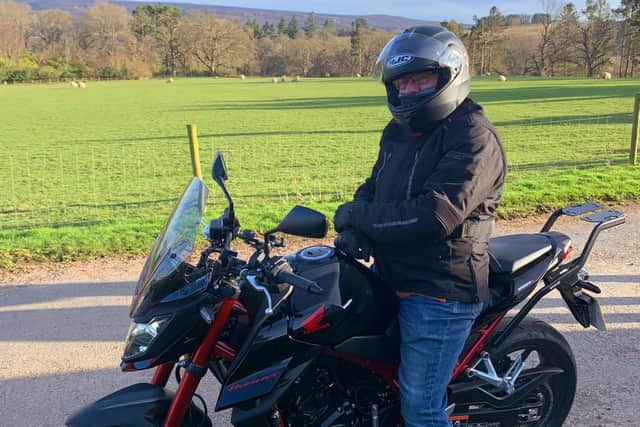
Speaking about his advice to other men, he told PA Real Life: “Don’t die of ignorance. This is a genderless disease, check yourself and if you find anything suspicious – get it checked out straight away.
“Men must not be an ostrich and stick their head in the sand… because they really need to get the help when it’s the right time to get the help.”
Before Brian’s first diagnosis, he said he had “no idea that men could get breast cancer”.
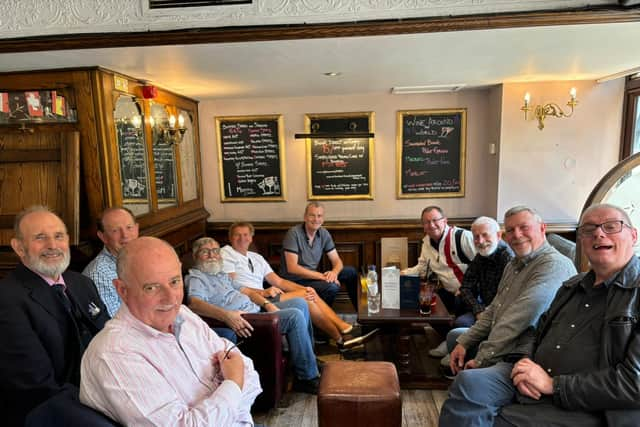
So, when he discovered a lump in his left breast while showering in 2005 – which he described as “small, round and mobile, like a frozen pea” – he assumed this was a cyst.
“I was playing rugby at the time, a high-impact sport, and I thought I’d taken a bump in the chest and a cyst had grown as a result,” he explained.
“I didn’t really consider it could have been cancer at all.”

He said he felt like “a duck out of water” at the clinic, as he was the only man there, and he underwent a mammogram, fine needle aspiration and an ultrasound scan.
He later had a biopsy, which confirmed he had breast cancer in 2005 – and he said the surgeon explained that he had most likely had the tumour for about five or six years.
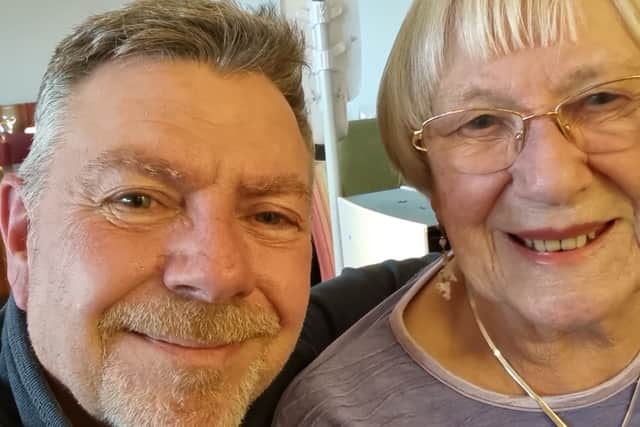
Professor Valerie Speirs, leading expert in breast cancer, said about 400 men receive a breast cancer diagnosis in the UK each year.
She said: “This type of cancer is frequently oestrogen receptor positive, which means that men can receive endocrine therapy, typically a drug called Tamoxifen, as part of their treatment.
“Initially, this treatment was given for five years but can now be extended to 10 years if it is well tolerated by patients.”

However, with side effects which made him feel like he “should be in a wheelchair” – hot sweats, aching joints and weight gain – he spoke with his consultant and stopped taking this after seven months.
Feeling “completely asymmetrical” after the first mastectomy and with the possibility that cells in his right breast could become cancerous, he opted for another mastectomy to remove his right breast in 2007.
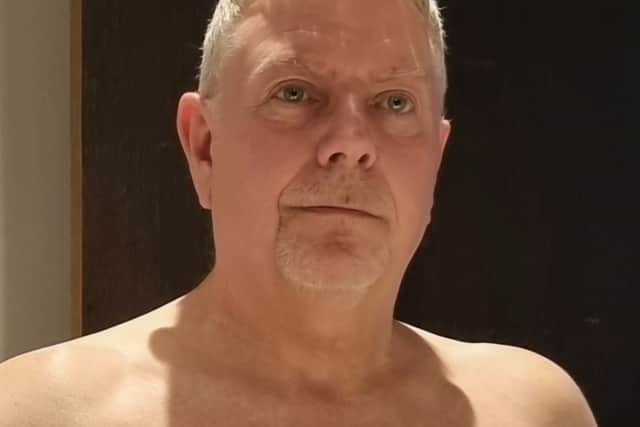
“Once you’ve taken that step to actually go bare-chested on holiday or around the pool or even the back garden, nobody takes a second glance,” he said.
“I had that little bit of trepidation that I was not going to be accepted, but quite frankly, it was never a problem.”

However, it was in August 2023, while playing golf, that he noticed pain in his back – and by Christmas that year, he said he could barely stand or get dressed, as he was in “constant, excruciating pain”.
“I was crawling along the floor. I could hardly get out of bed,” he explained.

“That’s when we discovered that not only was it all up and down my spine, but it was also in my pelvis and in my liver,” he said.
“I said (to the oncologist), ‘Would it be fair to say that I’m riddled?’ And he said, ‘We don’t like to use that word but yes, pretty much’.”
Although Brian is in pain every day and may require palliative radiotherapy in future, he is taking medication to manage his diagnosis and said he has been able to regain some mobility and “quality of life”.
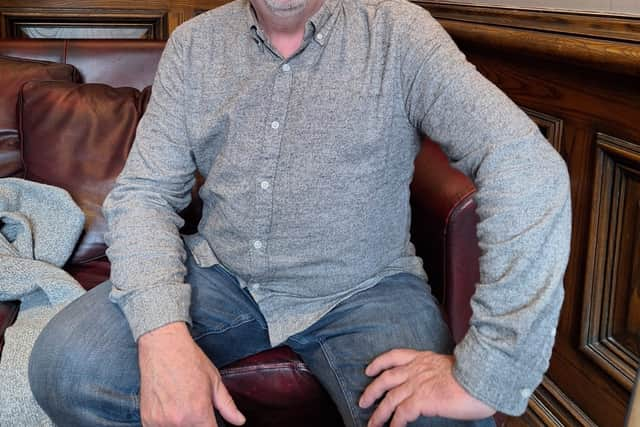
He said the Men’s VMU has been “fantastic”, and he wants to encourage others to get any unusual symptoms checked as soon as possible.
“Men are not immune to this type of cancer,” Brian said.
“Blokes, particularly, every single one that you talk to, even on the Men’s VMU, will tell you that they had no idea that men could get breast cancer.
“Get the message out there, people are less ignorant, and the sooner they catch it, the better quality of life they’re going to have, maybe even a cure.”
To find out more about The Men’s VMU, visit: themensvmu.org.