
Ex-footballer who played in FA Cup final and was famous for scoring headers now battling dementia in a care home
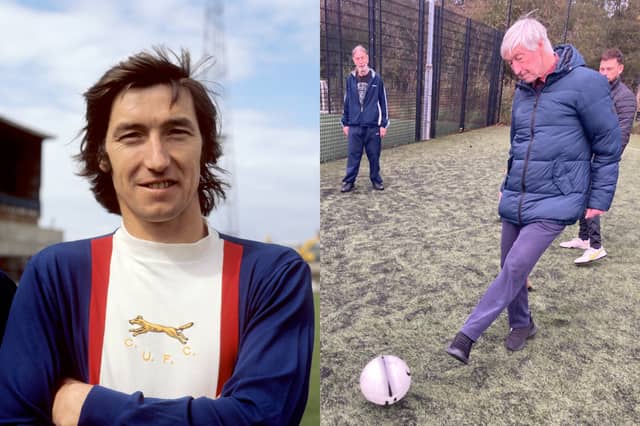

An 84-year-old ex-professional footballer, who went from working in a shipyard to playing in the 1961 FA Cup Final before going on to score 250 career goals, still enjoys a kickabout despite having Alzheimer’s which research suggests may have been caused by his career.
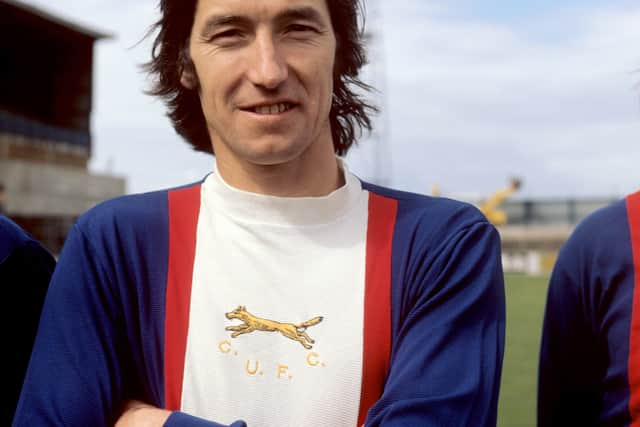
Hugh McIlmoyle, from Port Glasgow, played during the 1960s and 70s for a number of teams including Leicester City, Rotherham United, Carlisle United, Wolverhampton Wanderers, Bristol City, Middlesbrough, and Preston North End.
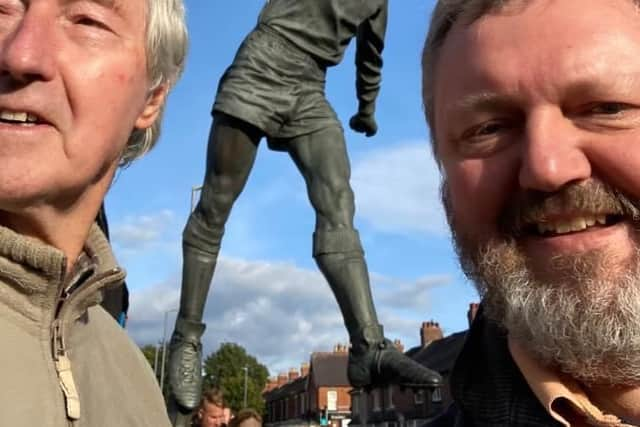
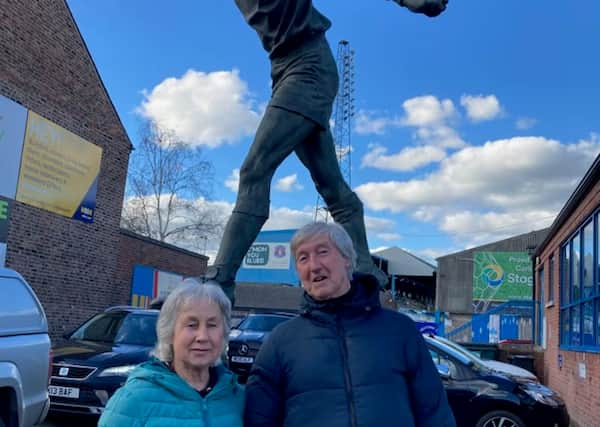
“Known for heading the ball” and “loved by wingers”, Hugh still holds the Carlisle club record for scoring 44 goals in a single season and there is now a statue of him scoring a header outside the stadium.
Ex-professional players were found to be three-and-a-half times more likely to be diagnosed with Alzheimer’s than the general population, according to a 2023 study conducted by the University of Nottingham, commissioned by the Football Association (FA) and Professional Footballers’ Association (PFA).
“That’s what he was famous for, heading the ball and that’s why there probably is a link to his Alzheimer’s, truth be told,” his son Alan, 61, a retired construction plant fitter, told PA Real Life.
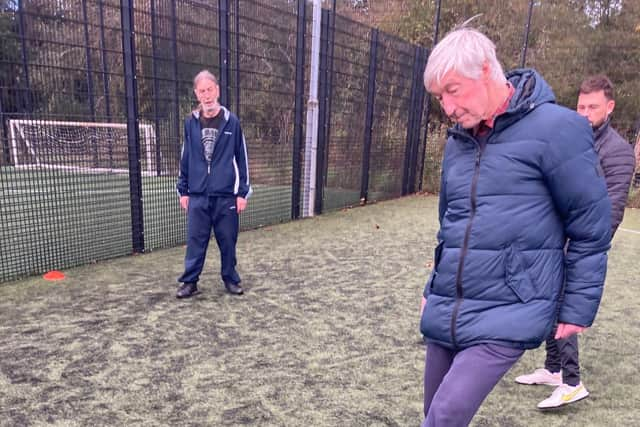
The sessions involve gentle warm-up exercises followed by football-related games at walking pace, and while Hugh has lost his skills, he still manages to have a crack at scoring.
“We’re doing our best to keep him going,” Rosalyne said.
“Obviously it’s still heart-breaking.”
“There’s a danger with this disease that people can just end up not doing anything but that’ll just speed up the progression,” Alan added.
Growing up in Port Glasgow, Scotland, Hugh did not foresee a successful career as a professional football player.
After finishing school, he spent three years working a “regular job” in the shipyards, which he expected would “be his life”.
But in 1959, Hugh, who played for the local amateur football team Port Glasgow at the time, was scouted by Leicester City.
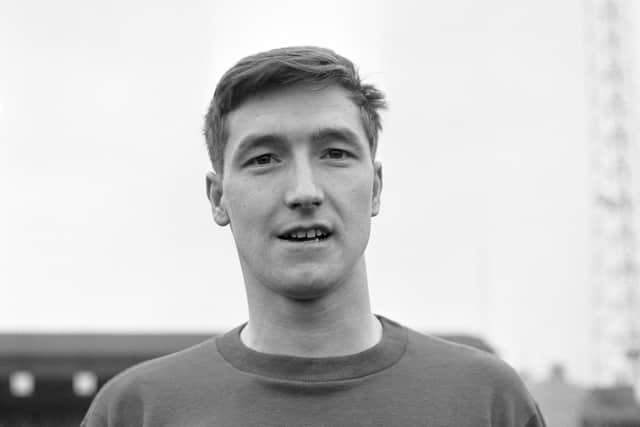
“Dad was a popular player with wingers because they knew that if they got it in the box, dad would knock it in,” said Alan.
In 1962, he joined Carlisle United and scored 44 goals in one season, a club record which stands to this day.
To honour this achievement, the club erected a statue of Hugh outside the stadium, which his son said bears a “close resemblance”.
The club eventually sold Hugh to Middlesbrough for £55,000 in 1969, equivalent to £909,200 today, which was the second highest transfer fee that season.
Hugh went back to play for his local childhood team, Greenock Morton, before retiring in 1976, having made a total of 582 club domestic league appearances and scored 250 goals.
Alan recalled how his father often commented that football was much rougher in his day and that players now fall over too easily.

“He broke it at some stage almost every season.”
He is also astonished by the quality of today’s pitches.
“In my dad’s day, they would train in the car park sometimes if the pitch was waterlogged,” said Alan.
“A good pitch only lasted a few weeks into the season before it became a mud bath.”
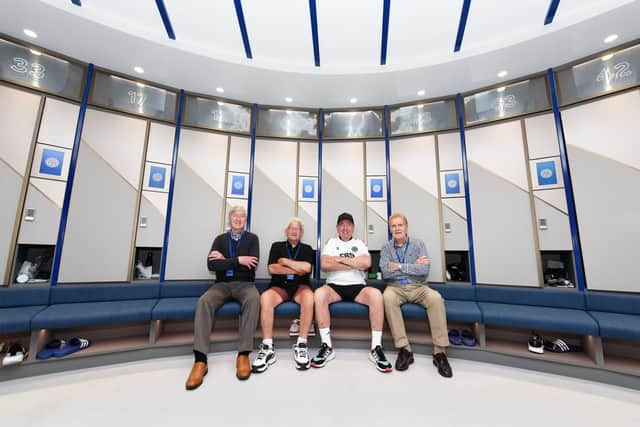
In the summer of 2022, Hugh visited Leicester City’s new training ground with his former teammates Howard Riley and Richie Norman, and accompanied by club ambassador Alan Birchenall.
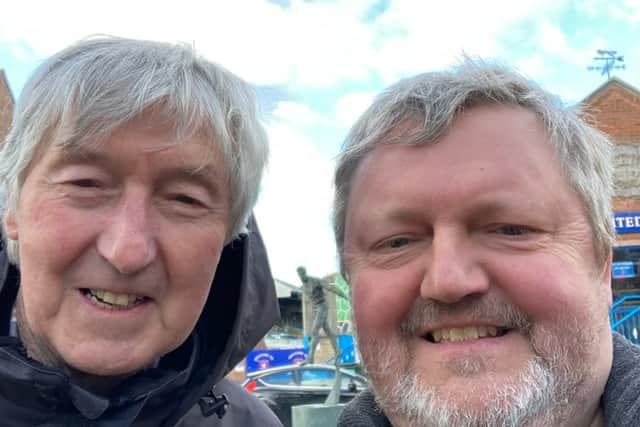
Hugh was diagnosed with Alzheimer’s in 2018 and moved to Leicestershire in the summer of 2021 so he could be closer to his family.
The disease could be linked to Hugh’s years of heading footballs into the back of the net, although the causes are not yet fully understood.
Earlier research, investigating fears that heading the ball could be linked to brain injuries, conducted by Glasgow University in 2019, found former professional footballers were three-and-a-half times more likely to die of dementia.
“Now we still have good days and we try and take dad out as much as possible.”
Five members of England’s 1966 World Cup-winning team died whilst battling Alzheimer’s disease, including Ray Wilson, Martin Peters, Jack Charlton, Nobby Stiles and Sir Bobby Charlton.
“My dad was known for scoring headers,” said Alan.
“Supporters used to say that he had the ability to hang in the air for that extra second.”
Rosalyne added that Hugh would have been heading a leather ball that was often wet and, in the early days, held together with lace.
“Nowadays they’ve realised that the amount of impacts can have a long-term effect,” added Alan.
“And they are putting a lot of work into investigating these long-term effects.”
At first the disease did not stop Hugh from going to watch his old team play but it has progressively got worse and he has stopped going to matches.
“He was going to the matches as the disease developed and still fully appreciated it, but you had to just be a little bit more aware,” said Alan.
“He enjoyed seeing everybody before the match and having a bit of a talk.
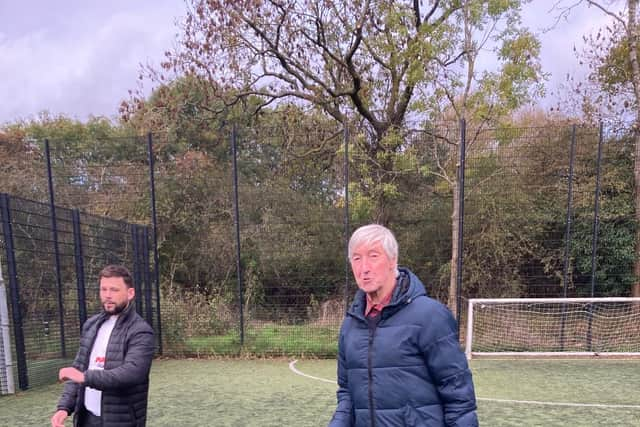
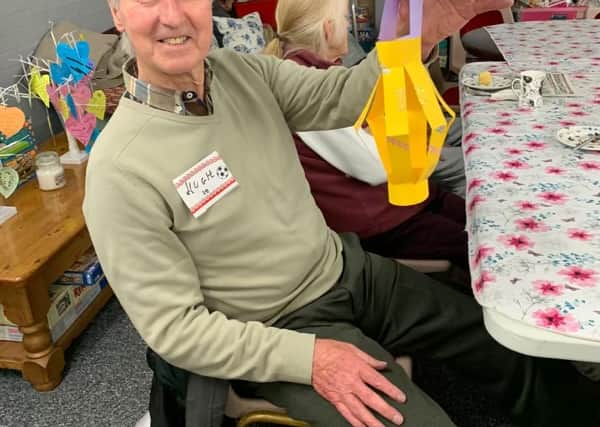
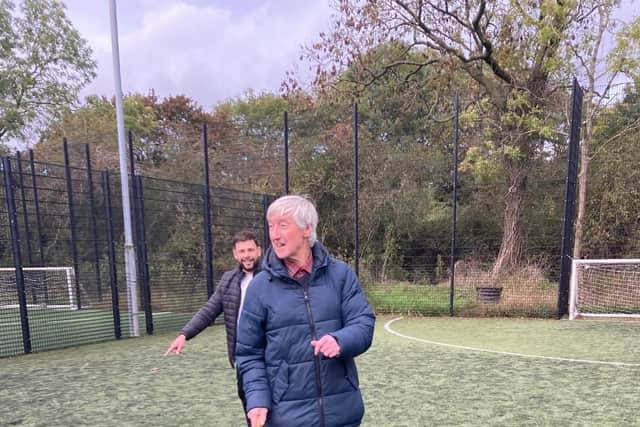
Despite the disease Hugh still enjoys a number of activities with the support of his family, including dementia friendly football at the Huncote Leisure Centre.
“Finding the Dementia Friendly Walking Football has been wonderful,” said Alan.
“You can just tell he loves having the football at his feet.
“He’s lost most of his skills but he still loves it and it definitely puts a smile on his face.”
“He still kicks towards the goal,” said Rosalyne.
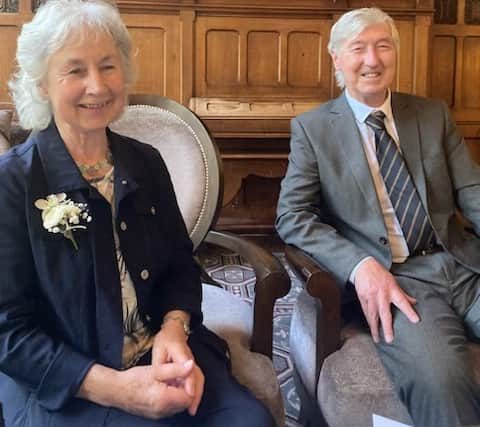
“When we play dominos together, he’s a bit slow to start, but then eventually he beats me,” she added.
They hope Hugh’s experience of playing Dementia Friendly Walking Football will help inspire people with Alzheimer’s to research activities in their local area.
Alan said support groups, including the Sapcote Memory Hub and the Leicester Musical Memory Box, have proved invaluable to improving his father’s quality of life.
“People should be looking for help out there, looking for things to do rather than just sitting around.
“We get dad doing something about six days a week on average.
“It makes such a difference and he gets so much enjoyment out of it.”
The Alzheimer’s Society offers support to people through the hardest, most frightening times.
Visit alzheimers.org.uk or phone the Dementia Support Line on 0333 150 3456.