
Expert group to decide on future regulation of marches
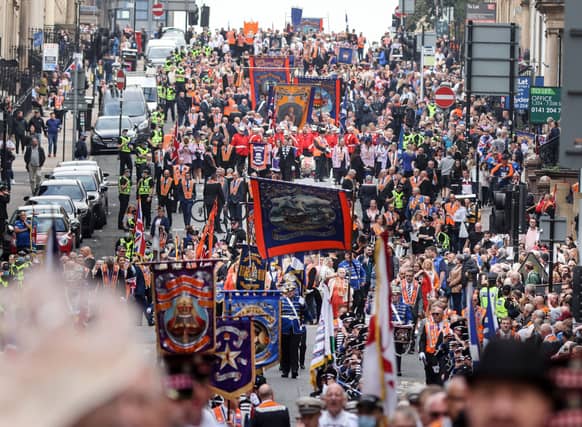

The Scottish Government has announced the establishment of a group to look at the future of regulating marches and processions.
It will examine models used in other countries – including the Parades Commission in Northern Ireland.
The Parades Commission has the power to cancel or reroute marches deemed to be a danger to public safety.
Justice Secretary Keith Brown announced the move on Thursday, answering a written question in Holyrood.
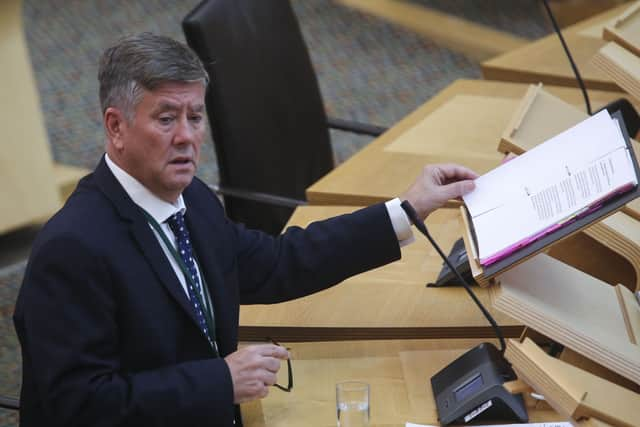
“The working group will consider what can be learned from other models used in relation to the regulation of marches and parades, including, but not limited to, the Parades Commission in Northern Ireland, and consider whether any of this learning can be usefully adapted and applied in Scotland to improve the regulation of marches and parades.”
The remit of the group, he added, would be to identify “challenges” in the running of marches and the notification process by which authorities are alerted to them.
A balance must be struck “between the human rights of organisers/participants with those communities impacted by these events”, the remit added.
The group will look at the best ways to address these challenges.
Professor Dominic Bryan of Queens University Belfast, Scottish Community Safety Network chief executive Lorraine Gillies, Scottish Mediation director Graham Boyack, and Dr Michael Hamilton of the University of East Anglia will make up the working group.
An initial report, the Justice Secretary said, will be submitted by the summer.
The prospect of a Parades Commission-style regulator was raised last year in Holyrood, when First Minister Nicola Sturgeon said she would instruct Mr Brown to look at what more could be done after 14 arrests were made in Glasgow in the wake of an Orange Order march, as well as reports of “racist and sectarian singing”.