
Explainer: What events led to chaotic scenes in South Korea?
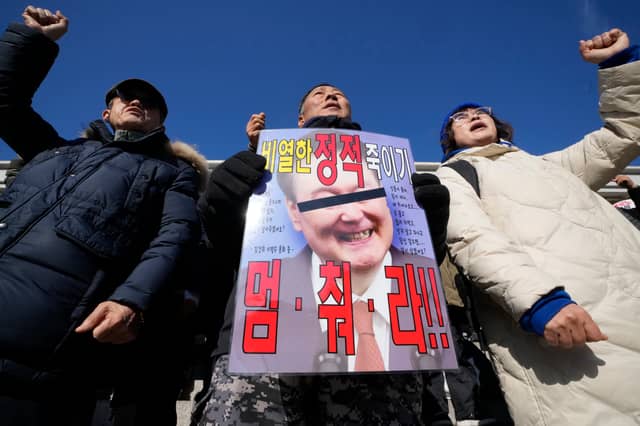

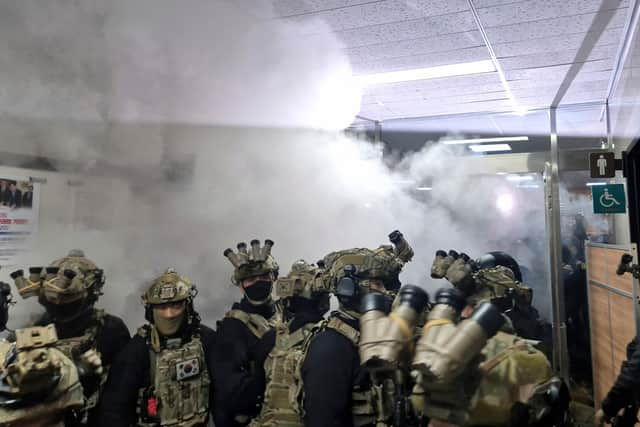
For many observers, wild pre-dawn scenes in Seoul, with armed troops and legislators storming South Korea’s parliament building after President Yoon Suk Yeol declared martial law, seemingly came out of nowhere.
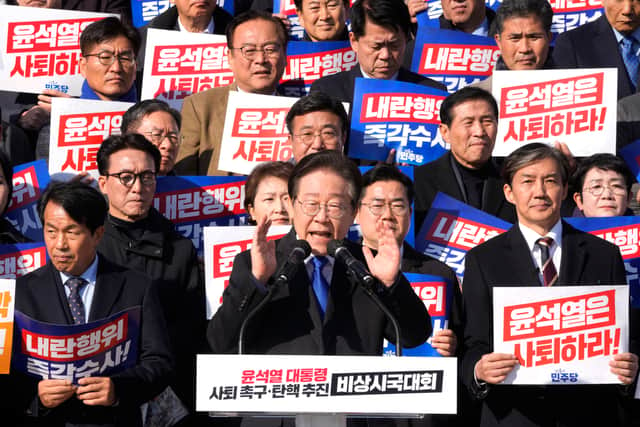
But the chaotic events – still playing out as opposition leaders introduce an impeachment motion and call for Mr Yoon’s immediate resignation – should be seen in the context of South Korea’s recent tumultuous political and social history.
-Nationwide doctors’ strike
For months, health, not politics, has been the major focus of many South Koreans.
An extended strike by thousands of junior doctors who have refused to see patients or attend surgeries has disrupted operations at hospitals across the country.
The strife is especially acute in a nation facing a major demographic crisis. South Korea has one of the fastest-aging, fastest-shrinking populations in the developed world. There is hardly a family that has not struggled with medical care for loved ones.
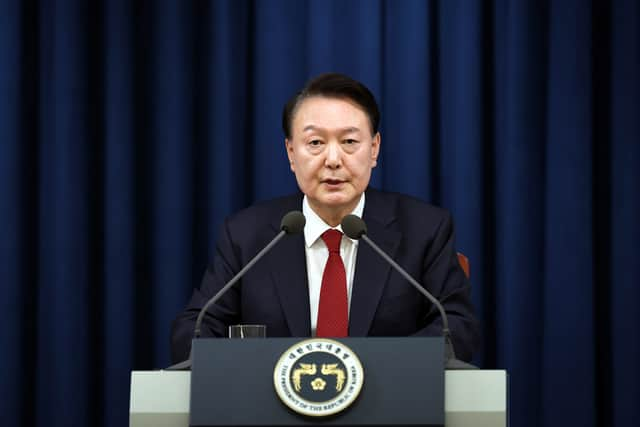
Mr Yoon’s government has taken a hard line, warning that doctors must return to work or face licence suspensions and prosecutions. He has said the strike poses “a grave threat to our society”.
At the heart of the issue is the government plan to raise South Korea’s annual medical school admissions cap by 2,000 from the current 3,058.
The enrolment plan is meant to add up to 10,000 doctors by 2035 to cope with the country’s fast-aging population. Officials say South Korea has 2.1 physicians per 1,000 people – far below the average of 3.7 in the developed world.
The striking doctors-in-training predict that medics facing greater competition would potentially over-treat patients, increasing public medical expenses.
-Opposition in turmoil
Investigations and legal proceedings against major political figures are common in South Korea.
Almost all former presidents, or their family members and key associates, have been mired in scandals near the end of their terms or after they left office.

Mr Lee, who was stabbed in an attack and underwent surgery earlier this year, says Mr Yoon’s promotion of divisive politics has worsened an already toxic national discourse.
Last month, Mr Lee was convicted of violating election law and sentenced to a suspended prison term for making false statements during a presidential campaign. He faces three other trials over corruption and other criminal charges.
It remains unclear whether the Supreme Court will decide on any of the cases before the next presidential vote in March 2027.
Mr Lee has denied any wrongdoing.
It is unclear how events in coming days will play out, but the martial law declaration could be a boon to Mr Lee, especially if it results in an early exit for Mr Yoon and a presidential election.
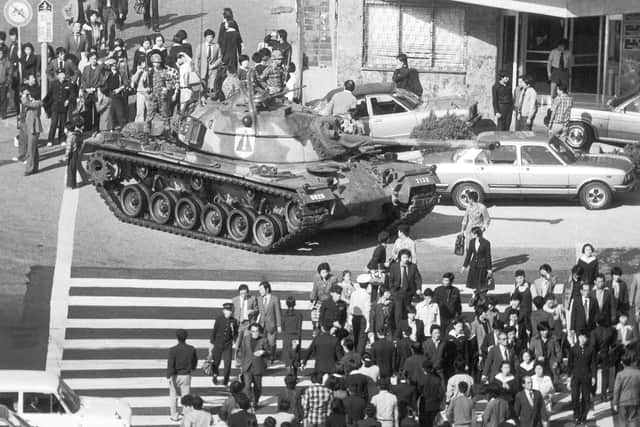
-Mass protests drove elected president out of office
Perhaps the most epochal event in recent South Korean political history – and one many people will be thinking of as Mr Yoon faces the consequences of his declaration – was the downfall of conservative former president Park Geun-hye.
After near-daily protests in 2016 that saw millions take to the streets around the country, Ms Park was the first democratically elected leader to be forced from office since democracy came to South Korea in the late 1980s.

The daughter of assassinated dictator Park Chung-hee, Ms Park became South Korea’s first female president in late 2012, beating Mr Moon in an election by a million votes.
Conservatives celebrated her father as a hero who pulled the country out of post-war poverty, despite his suppression of human rights.
She was impeached in late 2016 and was formally removed from office and arrested the following year.
Among the main charges she faced was collusion with her long-time confidante, Choi Soon-sil, to take millions of dollars in bribes and extortion from some of the country’s largest business groups – including electronics giant Samsung – while she was in office.
Ms Park has described herself as a victim of political revenge.