
Final group of Unifil peacekeepers prepare for deployment
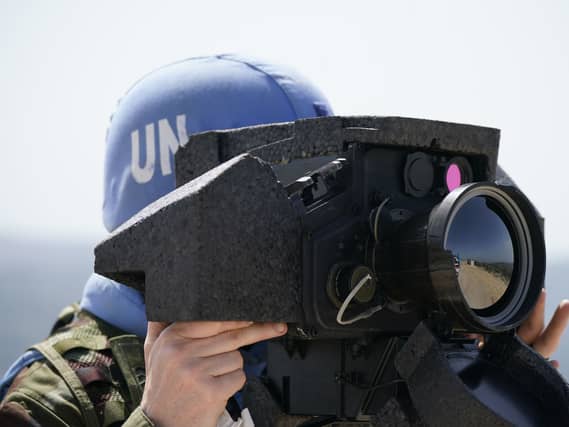

The operational mandate for the Unifil is currently scheduled to end on New Year’s Eve.
Ireland’s last batch of peacekeepers being sent to Lebanon are “very conscious” of those who “did not return” home, the officer overseeing the deployment has said.
The operational mandate for the Unifil (United Nations Interim Force In Lebanon) mission, in which Irish peacekeepers are deployed, is currently scheduled to end on New Year’s Eve after the UN Security Council did not approve its continuation, with a subsequent drawdown and withdrawal expected to take place in 2027.
Irish personnel continue to serve as part of a joint Irish-Polish Battalion, alongside troops from Hungary.
Ireland acts as the lead nation, providing the commanding officer as well as the majority of personnel and key logistical supports.
Personnel are deployed in Sector West, with its main base at Bint Jbeil and forward positions along the Blue Line between Lebanon and Israel.
Asked about the emotions among members on the drawdown, Lieutentant Colonel Cormac Brady said: “We have a number of veterans – between 30-40,000 – that have served in that Unifil mission.
“So yes, it is palpable. Yes, it is something that we’re aware of, and certainly it’s something that you know prior to deployment we as a collective, will discuss more. “
Lt Col Brady was speaking as the next group of Irish peacekeepers conducted a “mission readiness exercise” in the Glen of Imaal, Co Wicklow, to prepare them for potential scenarios and challenges overseas.
The exercises comes as the 69th Infantry Group, which he will lead in Lebanon, completes the last stage of training in preparation for deployment.
He said: “We’re very conscious of 48 members of the Defence Forces family did not return from Unifil – and the effect that that has on family members at home, and the effect that that’s had to friends and so on.
“It’s something we’re aware of – but very clearly for the 69th, we are now focused solely on ensuring that we have adequate training completed prior to the deployment, so that we’re actually fit for purpose, that we’re confident in what we’re doing.”
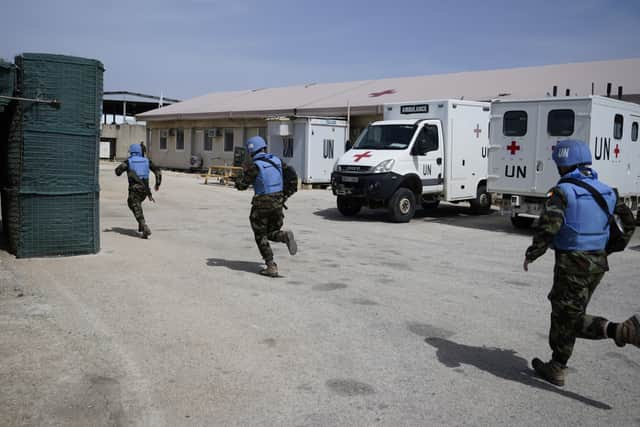
Lt Col Brady said he has been in touch with the current battalion commander and said: “Certainly the current situation out there is calm.”
He said: “It is volatile – but it has enabled us from that information to prepare appropriately for the mission.”
He added: “Our training and our preparation for this mission have been very comprehensive, and I don’t have concerns about those.”
The exercises include “battlefield inoculation” and the shooting of live rounds and explosions as part of simulated mortar fire – as well as drills on evacuations, ambushes and patrols.
The 69th Infantry Group is deploying almost 300 personnel from the Irish Defence Forces in November, taking over from the 128th Infantry Battalion who were deployed in May.
Lt Col Brady said there are risks in the deployment but the training is designed to mitigate against these, adding that the peacekeepers will be using the Defence Forces’ new integrated body armour system.
The personnel of the 69th Infantry Group, are primarily drawn from the 2 Brigade area of responsibility with the lead unit being Dundalk’s Aiken Barracks (27th Infantry Battalion).
There are two father-and-son duos among the 69th.
Private Nathan Loughnan, from Cavan, said the intensive training in the months leading up to the deployment has helped with confidence.
He said: “You join the army because you want to go overseas and you want to be a UN peacekeeper – so for it being the last mission as of now – it is good to get over on this one.”
His father, Corporal Jeremiah Loughnan, will be returning to Lebanon for the third time, and said: “I’m proud to see my son follow on a family tradition.
“My father was in the Defence Forces, and my brothers – and my father actually served overseas with my brother. So we’re driving on the tradition of travelling overseas.”
Cpl Loughnan said he will be in a logistics role – essentially packing down the camp, describing the withdrawal as “upsetting” and “devastating”.
He said Lebanon was ingrained within the consciousness of every soldier.
He added: “It is going to be interesting – and sad as well because we have good connections and interaction with the local people in Lebanon and it is going to be sad saying our goodbyes for good.”
Sergeant Seamus O’Donnacha, of the Tactical Operation Centre, said it is an “honour in itself” to be serving with his son Private Alex O’Donnacha.
Sgt O’Donnacha told reporters: “This is my fourth time to Lebanon and the Irish has a great tradition inside Lebanon for peacekeeping, and it is sad in a way that we’re actually leaving.
“Hopefully, now another mission will come up soon but in the bigger picture, it is sad, because since 1978, we have over 30,000 troops that served in Lebanon, and it’s an end of an era.”
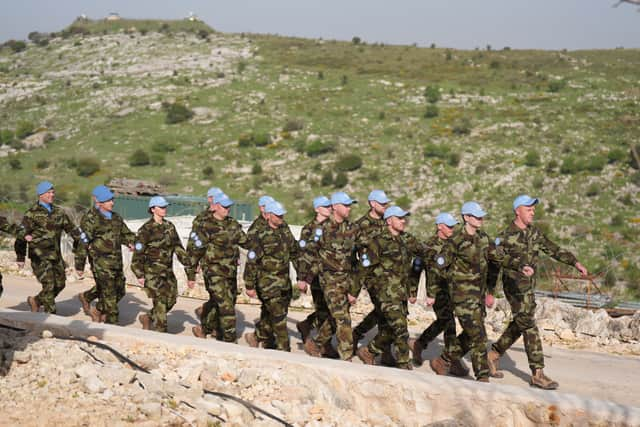
The deployment will be Co Leitrim Private Muireann Cullen’s first deployment overseas, who said that recent training has built confidence despite some remaining nerves.
“We’re going to learn a lot – there’s a huge amount of opportunities,” she said.
Asked how her family was feeling, she said: “My mum would be a little bit nervous – but she’s excited and proud. My grandad would have done a few Unifil missions so she’s happy to see it.”
Gunner Gabriella Erichovaite, from Athlone, said she was “a bit nervous” at her first overseas mission but also “excited at the same time”, adding: “I’m expecting to gain experience to see how it is, to actually put our training into action and get to know people.”
Corporal Leah Dolan, from Galway – also going overseas with the Defence Forces for the first time, added: “I’m excited to go over. It’s a brand new experience for me, so it should be very interesting.”